A Case Study on How Businesses Must Adapt to the Future of Search
Search engine optimization has undergone significant changes over the past two decades. What once revolved around keyword placement, backlinks, and ranking positions has evolved into a sophisticated ecosystem driven by user intent, machine learning, and artificial intelligence.
At Nova Vision, we understand that modern SEO is no longer just about achieving higher rankings—it is about creating meaningful digital experiences that connect businesses with the right audience at the right time. Our team continuously adapts to the latest search engine innovations, helping businesses stay competitive through data-driven SEO strategies and cutting-edge digital marketing solutions.
The introduction of AI-powered search experiences represents one of the biggest shifts in the history of search engines. Businesses that once focused solely on ranking in traditional search results are now navigating a landscape where AI-generated answers, conversational search experiences, and zero-click interactions are becoming increasingly common.
At Nova Vision, we help businesses embrace this new era of AI-driven search by developing future-ready SEO strategies that enhance online visibility, strengthen brand authority, and drive qualified organic traffic. By combining technical SEO, high-quality content, user experience optimization, and AI-focused search strategies, Nova Vision ensures businesses remain visible and competitive as search technology continues to evolve.
Understanding Traditional SEO
Traditional SEO focuses on optimizing websites to rank within Google's search engine results pages (SERPs).
For years, the objective was relatively straightforward:
-
Identify target keywords
-
Create optimized content
-
Build backlinks
-
Improve technical performance
-
Increase rankings
-
Drive organic traffic
When users searched for information, Google displayed a list of websites ranked according to relevance and authority.
Users then clicked on one of these results to find answers.
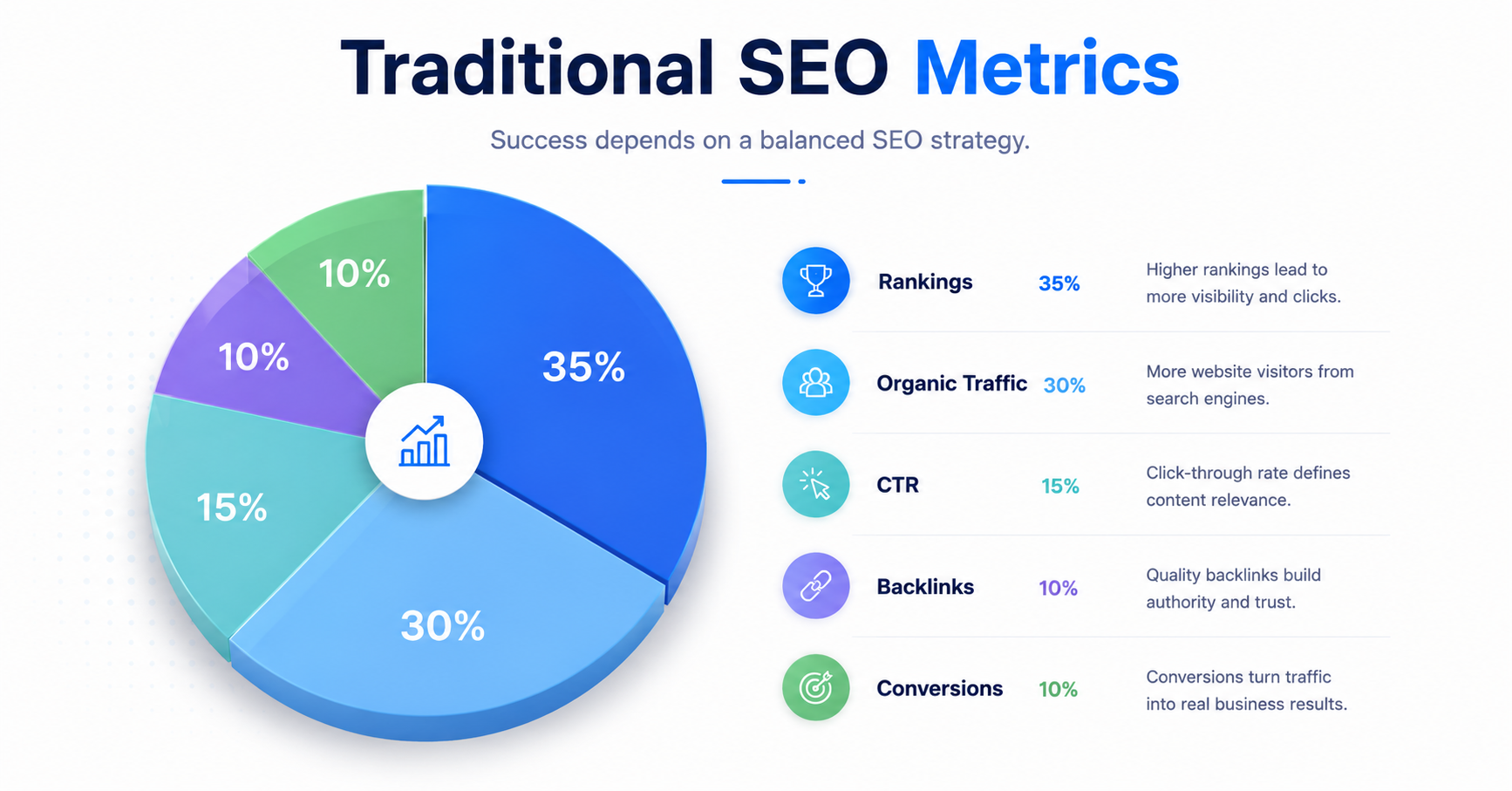
Success was largely measured through:
-
Keyword rankings
-
Organic traffic
-
Click-through rates
-
Conversions
-
Backlink growth
For many businesses, ranking on the first page of Google became the primary objective of SEO.
What Is Google AI Search?
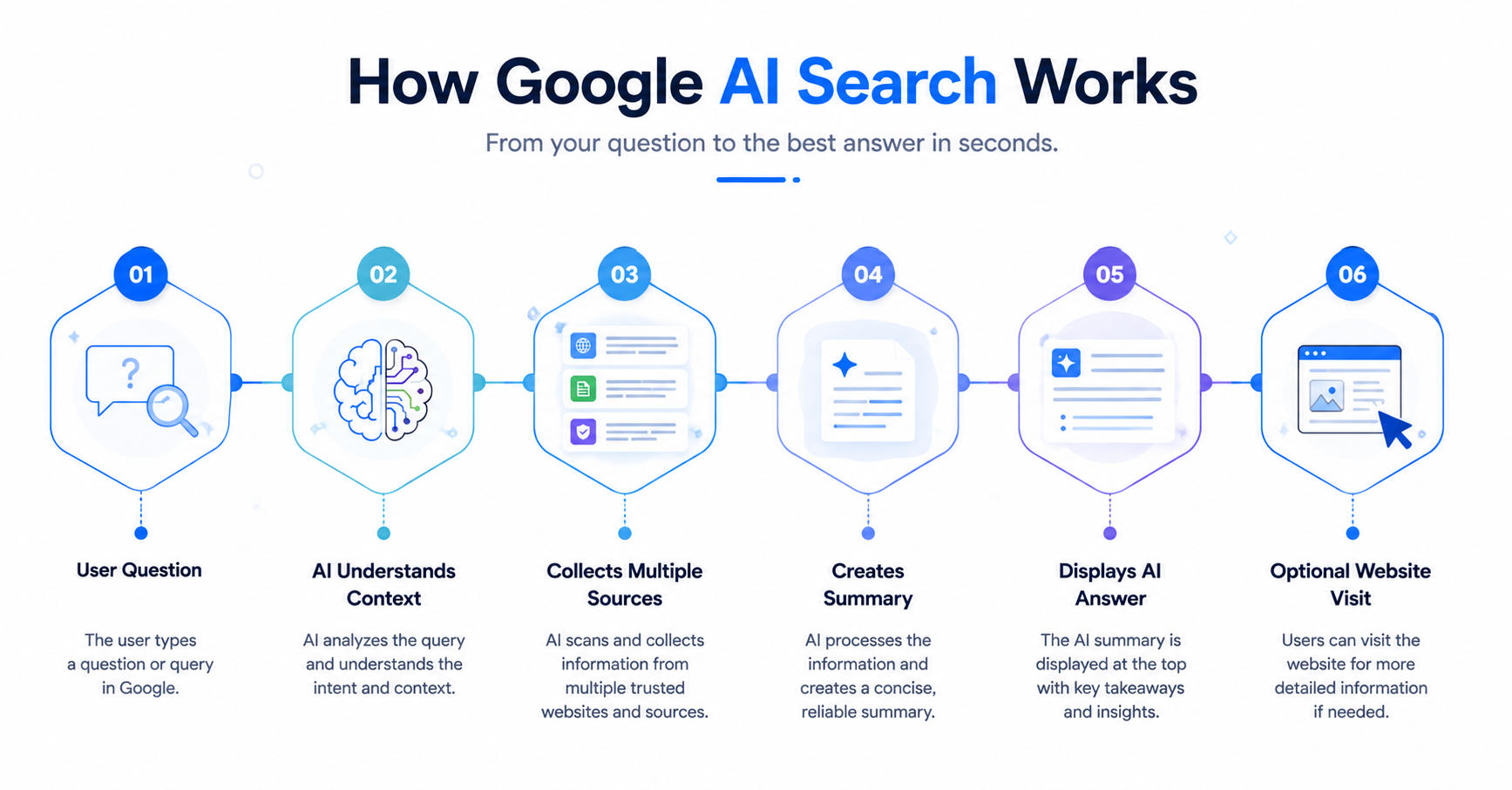
Google AI Search represents a more advanced search experience powered by artificial intelligence.
Instead of simply presenting a list of website links, AI systems analyze information from multiple sources and generate summarized responses directly within search results.
AI-powered search attempts to:
-
Understand context
-
Interpret intent
-
Provide direct answers
-
Summarize information
-
Offer conversational responses
Rather than requiring users to visit multiple websites, AI-generated search experiences often provide answers immediately.
This creates a fundamentally different relationship between users, search engines, and websites.
The Evolution of Search Behavior
To understand the impact of AI search, consider how user behavior has changed.
Traditional Search Query
A user might search:
"Best digital marketing strategies for small businesses"
Google displays:
-
Blog articles
-
Agency websites
-
Guides
-
Industry publications
Users click through multiple websites before finding answers.
AI Search Experience
The same query may now generate:
-
An AI summary
-
Key recommendations
-
Actionable insights
-
Follow-up questions
Users receive information instantly without necessarily visiting a website.
This shift creates new opportunities and challenges for businesses.
Case Study Scenario
To understand these changes, let's examine a hypothetical business.
Company Background
A growing service-based company relied heavily on SEO to generate leads.
Its marketing strategy focused on:
-
Blog content
-
Keyword optimization
-
Link building
-
Local SEO
For several years, the company experienced steady growth through organic search traffic.
However, after AI-powered search features became more prominent, the company noticed changes in user behavior.
The Challenge
Despite maintaining strong rankings, several trends emerged:
Reduced Click-Through Rates
Pages continued ranking well, but fewer users clicked through to the website.
Increased Zero-Click Searches
Users received answers directly from search results.
Changing Search Intent
Searches became more conversational and question-based.
Increased Competition
Businesses were competing not only against websites but also against AI-generated summaries.
The company realized that traditional SEO alone was no longer sufficient.
Traditional SEO Strengths
Despite changes in search technology, traditional SEO remains valuable.
Long-Term Traffic Generation
Well-optimized content can continue attracting visitors for years.
Brand Visibility
Ranking highly still increases credibility and recognition.
Lead Generation
Organic traffic remains one of the most cost-effective lead sources.
Authority Building
SEO helps businesses establish expertise within their industries.
Sustainable Growth
Unlike paid advertising, SEO can deliver ongoing results without continuous ad spend.
These benefits ensure that SEO remains an essential component of digital marketing.
Where AI Search Changes the Game
AI-powered search introduces new dynamics.
Answer-First Experiences
Users increasingly receive information without visiting websites.
Conversational Queries
Search behavior resembles natural language conversations.
Contextual Understanding
AI interprets intent more effectively than traditional keyword matching.
Multi-Source Responses
AI-generated answers often combine information from multiple websites.
This means businesses must optimize not only for rankings but also for inclusion within AI-generated responses.
Content Strategy: Traditional SEO vs AI Search
Traditional SEO Content
Historically, content focused on:
-
Target keywords
-
Search volume
-
On-page optimization
-
Ranking opportunities
The objective was often to rank for specific search terms.
AI Search Content
AI prioritizes:
-
Expertise
-
Clarity
-
Context
-
Authority
-
Comprehensive answers
Content must demonstrate genuine value rather than simply targeting keywords.
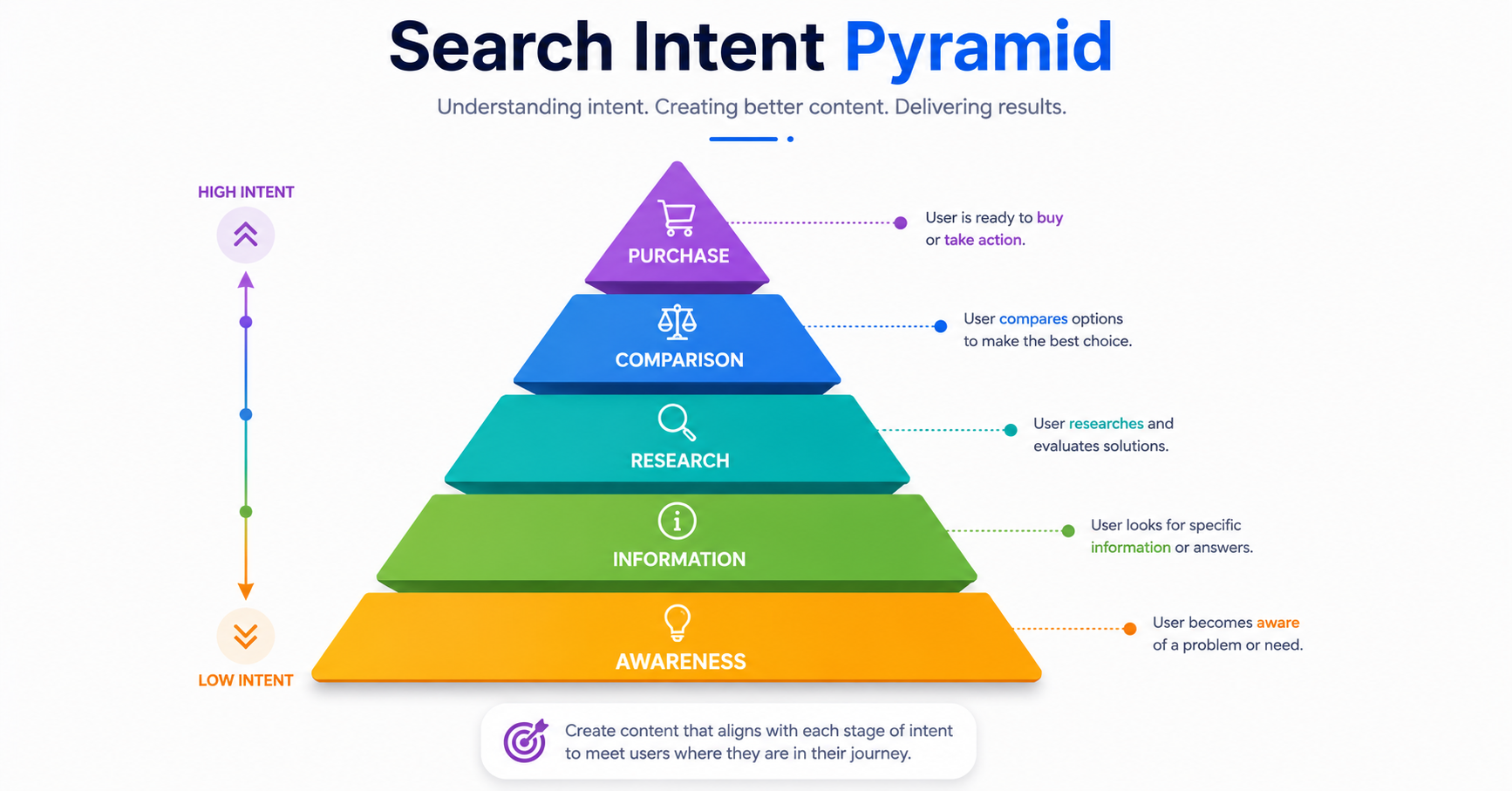
The Growing Importance of Search Intent
Search intent has become one of the most important ranking considerations.
Traditional SEO often emphasized keywords.
AI search emphasizes understanding.
For example:
Traditional Query
"SEO services"
AI-Oriented Query
"What type of SEO services does a local business need to improve online visibility?"
The second query reflects deeper user intent.
Businesses that create content addressing real customer questions are more likely to succeed.
How Content Quality Becomes a Competitive Advantage
AI systems evaluate information differently than traditional ranking algorithms.
High-quality content generally includes:
-
Expert insights
-
Original perspectives
-
Clear explanations
-
Updated information
-
Practical examples
Generic content offers limited value in an AI-driven search environment.
The businesses most likely to succeed are those producing content that demonstrates genuine expertise.
Technical SEO Still Matters
Some marketers assume AI search will eliminate the need for technical SEO.
This assumption is incorrect.
Technical optimization remains essential because search engines still need to:
-
Crawl websites
-
Understand content
-
Index pages
-
Evaluate user experience
Important factors include:
-
Site speed
-
Mobile responsiveness
-
Structured data
-
Internal linking
-
Website architecture
Strong technical foundations support both traditional rankings and AI visibility.
The Rise of Topical Authority
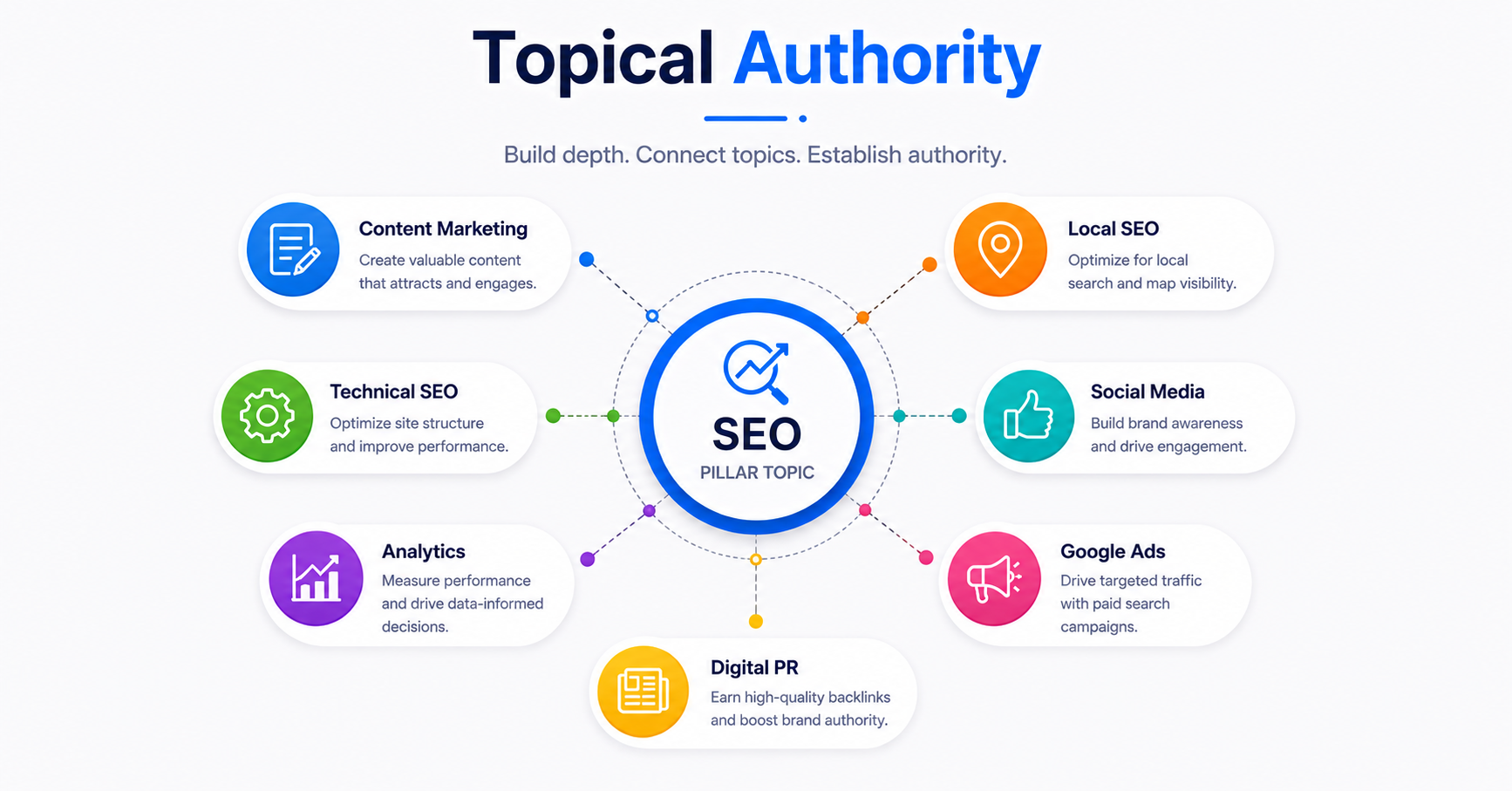
One of the most significant trends in modern SEO is topical authority.
Rather than creating isolated articles, businesses benefit from building comprehensive content ecosystems around core subjects.
For example:
A digital marketing agency might create content covering:
-
SEO
-
Content marketing
-
Local SEO
-
Technical SEO
-
Analytics
-
Social media marketing
Collectively, these resources establish authority.
AI systems often favor websites demonstrating depth and expertise within specific topics.
How User Behavior Is Reshaping Search Marketing
One of the most significant impacts of AI-powered search is the way it influences user behavior. In traditional search environments, users often visited multiple websites before finding the information they needed. They compared sources, read blog articles, explored service pages, and evaluated different viewpoints before making decisions.
Today, AI-driven search experiences are shortening that journey. Users increasingly expect immediate answers, concise summaries, and personalized recommendations. This shift means businesses must rethink how they present information online.
Rather than creating content solely to attract clicks, organizations should focus on delivering genuine value. Content should be structured in a way that allows both users and search engines to quickly identify important information. Clear headings, concise explanations, frequently asked questions, and well-organized content can improve visibility in both traditional search results and AI-generated summaries.
Businesses that understand changing user expectations are more likely to maintain strong digital visibility as search technology evolves.
Why Brand Authority Matters More Than Rankings
For many years, SEO success was measured largely by keyword rankings. While rankings remain important, brand authority is becoming an increasingly valuable asset in the AI search era.
When AI systems generate responses, they often prioritize information from sources that demonstrate expertise and credibility. As a result, businesses that consistently publish trustworthy, insightful, and well-researched content may gain greater visibility than those relying solely on keyword-focused optimization.
Brand authority can be strengthened through:
-
Publishing original industry insights
-
Sharing expert opinions
-
Creating detailed guides and resources
-
Maintaining accurate and up-to-date content
-
Earning mentions from reputable websites
-
Demonstrating real-world experience
Over time, these efforts help establish a brand as a reliable source of information. This not only supports SEO performance but also increases customer trust and engagement.
The Importance of Diversifying Traffic Sources
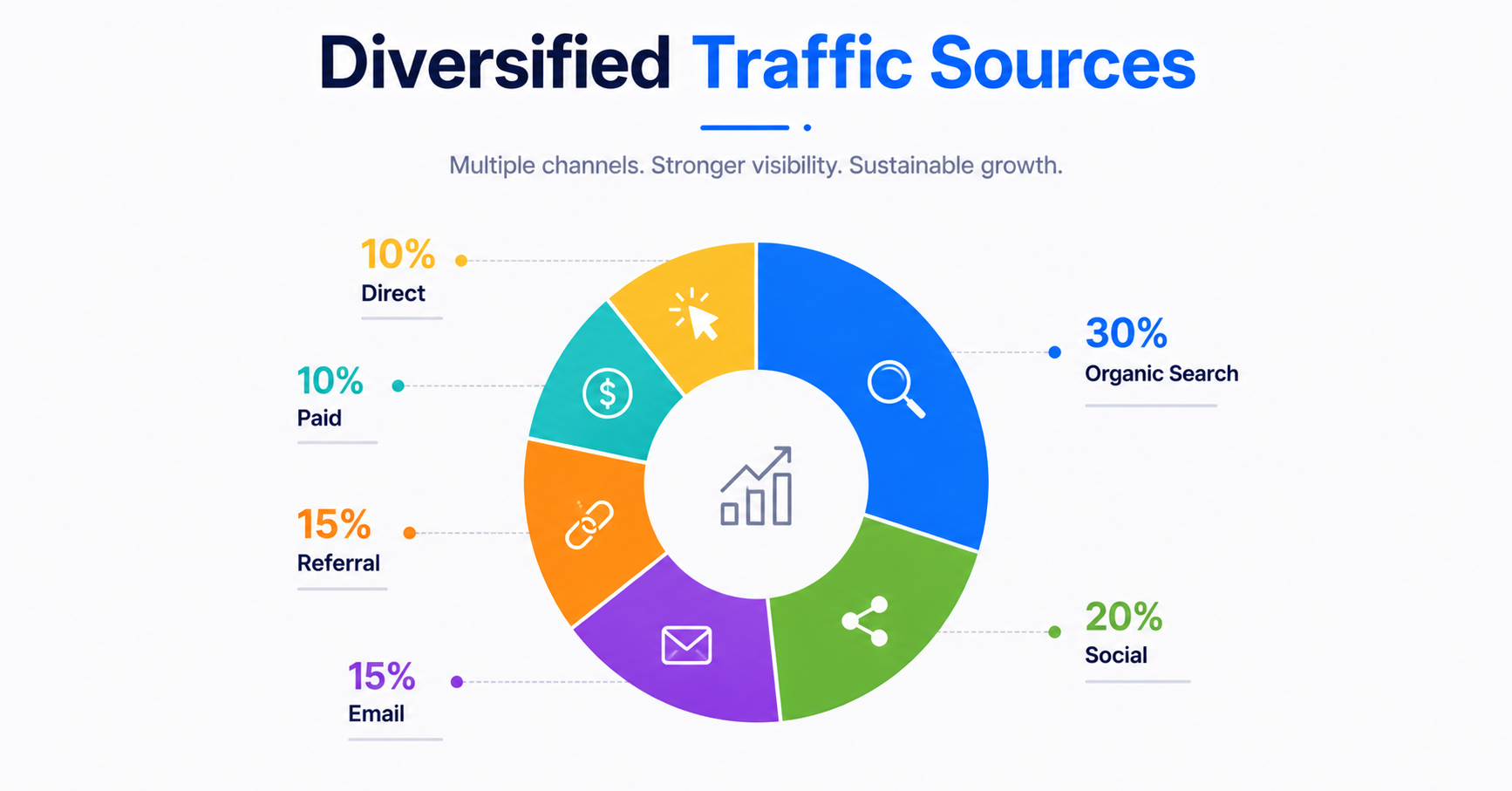
The rise of AI-powered search highlights the importance of not relying exclusively on search engine traffic. Businesses that depend entirely on organic rankings may become vulnerable to changes in search behavior, algorithm updates, or AI-generated responses that reduce click-through rates.
A more resilient digital marketing strategy includes multiple channels such as:
-
Organic search
-
Content marketing
-
Email marketing
-
Social media
-
Referral traffic
-
Direct brand searches
-
Paid advertising
Diversification helps businesses maintain visibility even when search trends change. It also creates additional opportunities to engage audiences throughout the customer journey.
For example, a visitor who discovers a brand through an informative blog post may later connect with the business through social media, subscribe to a newsletter, or return directly to the website. These interactions strengthen brand recognition and reduce dependence on any single traffic source.
Preparing for the Next Generation of Search
The evolution of search technology is unlikely to slow down. Artificial intelligence will continue improving its ability to understand context, analyze content, and deliver personalized responses.
Businesses that want to remain competitive should focus on building sustainable digital assets rather than chasing short-term SEO tactics. High-quality content, strong technical foundations, positive user experiences, and genuine expertise will remain valuable regardless of how search engines evolve.
The future of search belongs to organizations that prioritize helpful information, customer needs, and long-term authority. By combining traditional SEO best practices with AI-ready content strategies, businesses can position themselves for success in an increasingly intelligent search ecosystem.
Ultimately, the goal is no longer just to rank on Google. The goal is to become a trusted source of information that search engines, AI systems, and users recognize as valuable. Those businesses that embrace this shift today will be better prepared for the opportunities and challenges of tomorrow's digital landscape.
Why E-E-A-T Matters More Than Ever
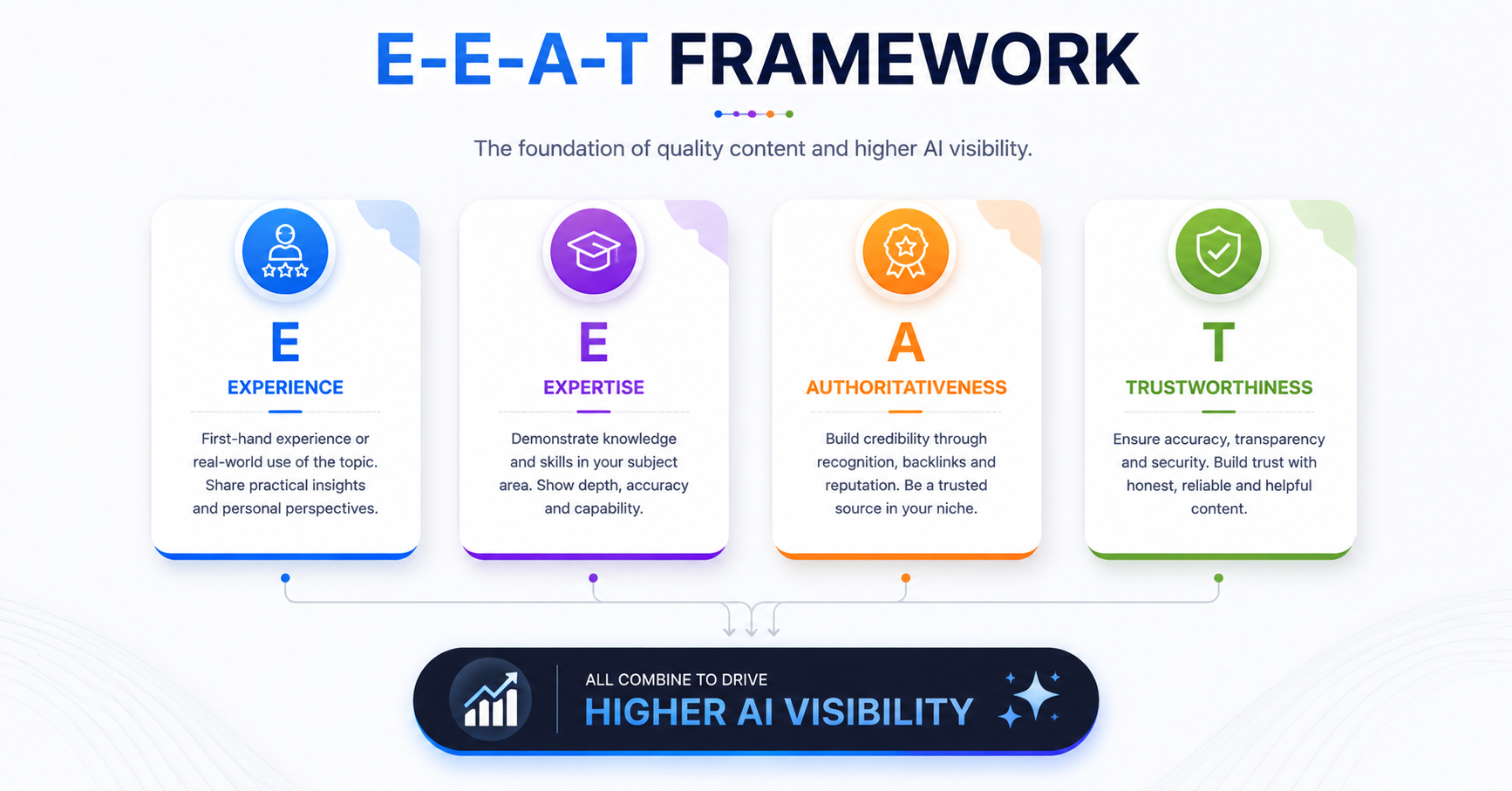
Google increasingly emphasizes:
- Experience
- Expertise
- Authoritativeness
- Trustworthiness
These signals influence how content is evaluated.
Businesses should focus on:
-
Publishing expert insights
-
Sharing real-world experience
-
Maintaining accuracy
-
Demonstrating credibility
Strong E-E-A-T signals improve visibility across both traditional and AI-powered search environments.
Case Study Results After Strategic Adaptation
The company responded to changing search behavior by implementing several adjustments.
Content Expansion
New content focused on answering customer questions rather than simply targeting keywords.
Topic Clusters
Related articles were organized into comprehensive content hubs.
Enhanced User Experience
Website navigation and readability were improved.
Authority Building
Industry expertise became a central content theme.
Structured Data Implementation
Schema markup helped search engines understand content more effectively.
Outcomes
After adapting its strategy, the company observed several positive results.
Improved Visibility
Content appeared more frequently across various search experiences.
Stronger Engagement
Visitors spent more time interacting with resources.
Higher Lead Quality
Traffic became more targeted and conversion-focused.
Greater Brand Recognition
Educational content strengthened industry credibility.
Most importantly, the company became less dependent on individual keyword rankings.
Traditional SEO and AI Search Are Not Opponents
One common misconception is that AI search will replace SEO entirely.
In reality, AI search builds upon many SEO principles.
Traditional SEO remains essential because:
-
Websites still provide source information.
-
Search engines still require content.
-
Technical optimization remains important.
-
Authority still influences visibility.
The difference is that businesses must now optimize for both human users and AI systems.
Best Practices for the Future
Organizations preparing for the future of search should focus on:
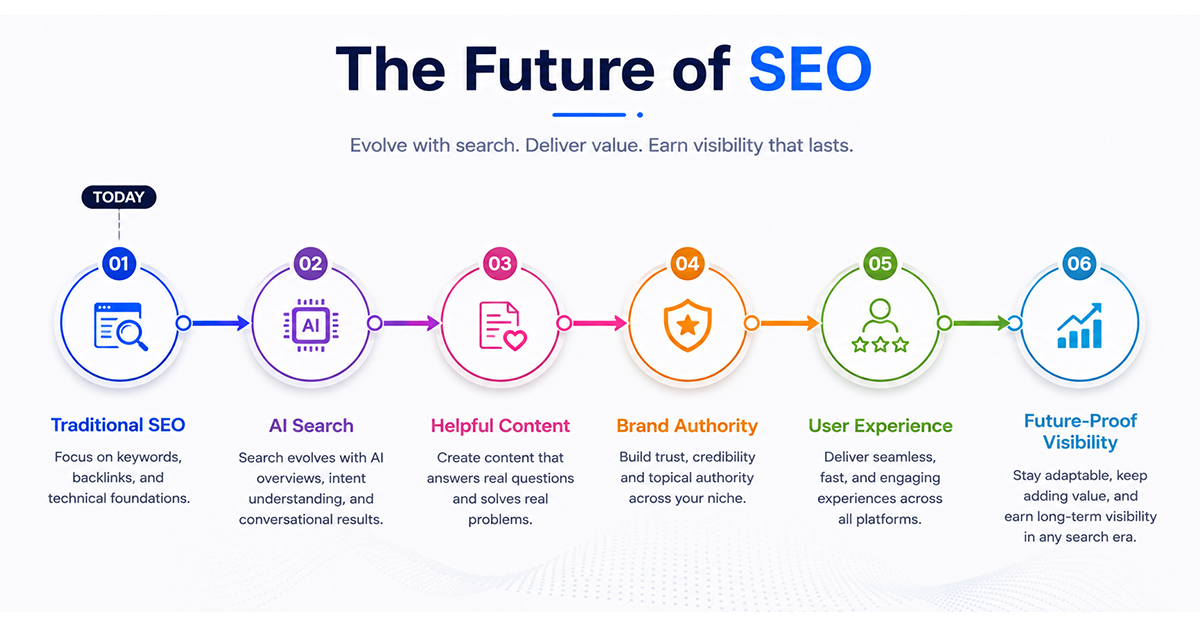
Creating Helpful Content
Answer customer questions thoroughly.
Demonstrating Expertise
Share real knowledge and experience.
Improving Technical Performance
Maintain a fast, user-friendly website.
Building Authority
Develop comprehensive topical coverage.
Prioritizing User Experience
Make content easy to navigate and understand.
Adapting to Search Behavior
Monitor how users search and interact with content.
The Role of Nova Vision in Modern SEO
As search evolves, businesses require strategies that go beyond traditional optimization techniques.
Nova Vision helps organizations adapt to modern search environments through:
-
SEO strategy development
-
Content marketing
-
Technical optimization
-
Website performance improvements
-
Digital growth consulting
By combining data-driven SEO practices with user-focused content strategies, businesses can improve visibility across both traditional search results and emerging AI-powered experiences.
The future of search is not about choosing between Google AI Search and traditional SEO.
It is about understanding how they work together.
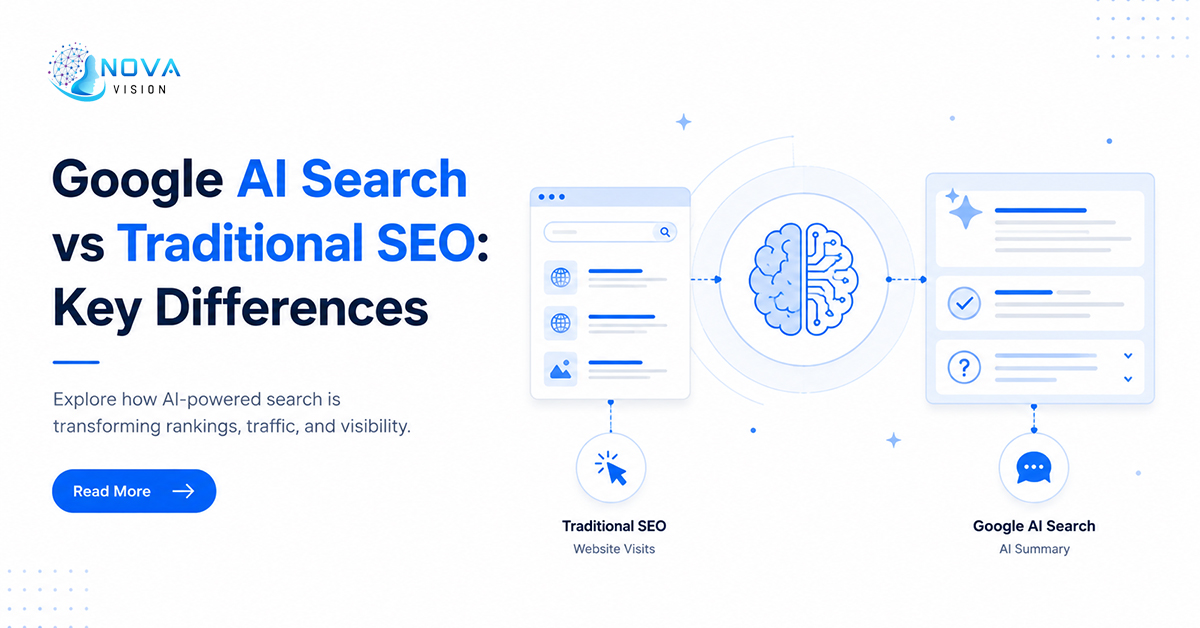
Traditional SEO focuses on rankings, traffic, and website optimization.
AI search focuses on understanding, context, and direct answers.
Businesses that continue relying solely on outdated SEO tactics may struggle as search behavior evolves. Conversely, organizations that embrace expertise-driven content, technical excellence, and user-focused experiences will be better positioned for long-term success.
The companies that thrive in the next generation of search will not simply optimize for algorithms. They will create valuable resources that serve both users and AI systems alike.
As search continues evolving, adaptability will become one of the most important competitive advantages any business can possess.