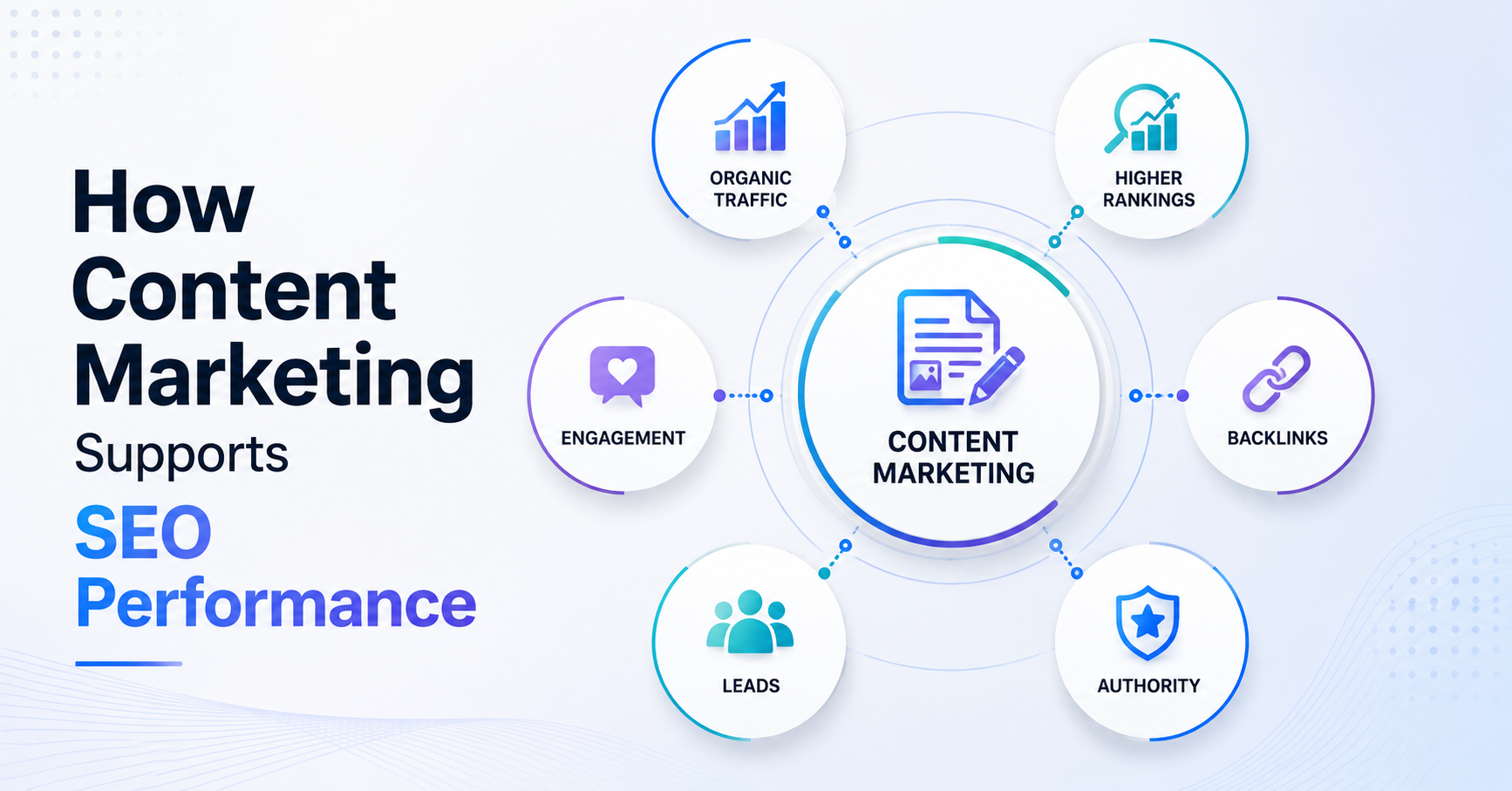
Many businesses believe that SEO is simply about adding keywords to web pages and waiting for rankings to improve. While keywords remain important, modern search engine optimization has evolved significantly. Search engines now prioritize relevance, expertise, user experience, and valuable information.
This is where content marketing becomes a powerful partner to SEO. Content marketing and SEO are often treated as separate digital marketing strategies, but in reality, they work best when combined. SEO helps people discover your content, while content marketing gives them a reason to stay, engage, and convert. Together, they create a sustainable growth engine that drives organic traffic, generates leads, and builds long-term brand authority.
At Nova Vision Mediatech, content marketing is integrated into broader SEO strategies to help businesses improve search visibility, attract qualified audiences, and create meaningful digital experiences. The agency combines SEO, content creation, digital strategy, and performance marketing to support long-term growth.
Understanding the Relationship Between Content Marketing and SEO
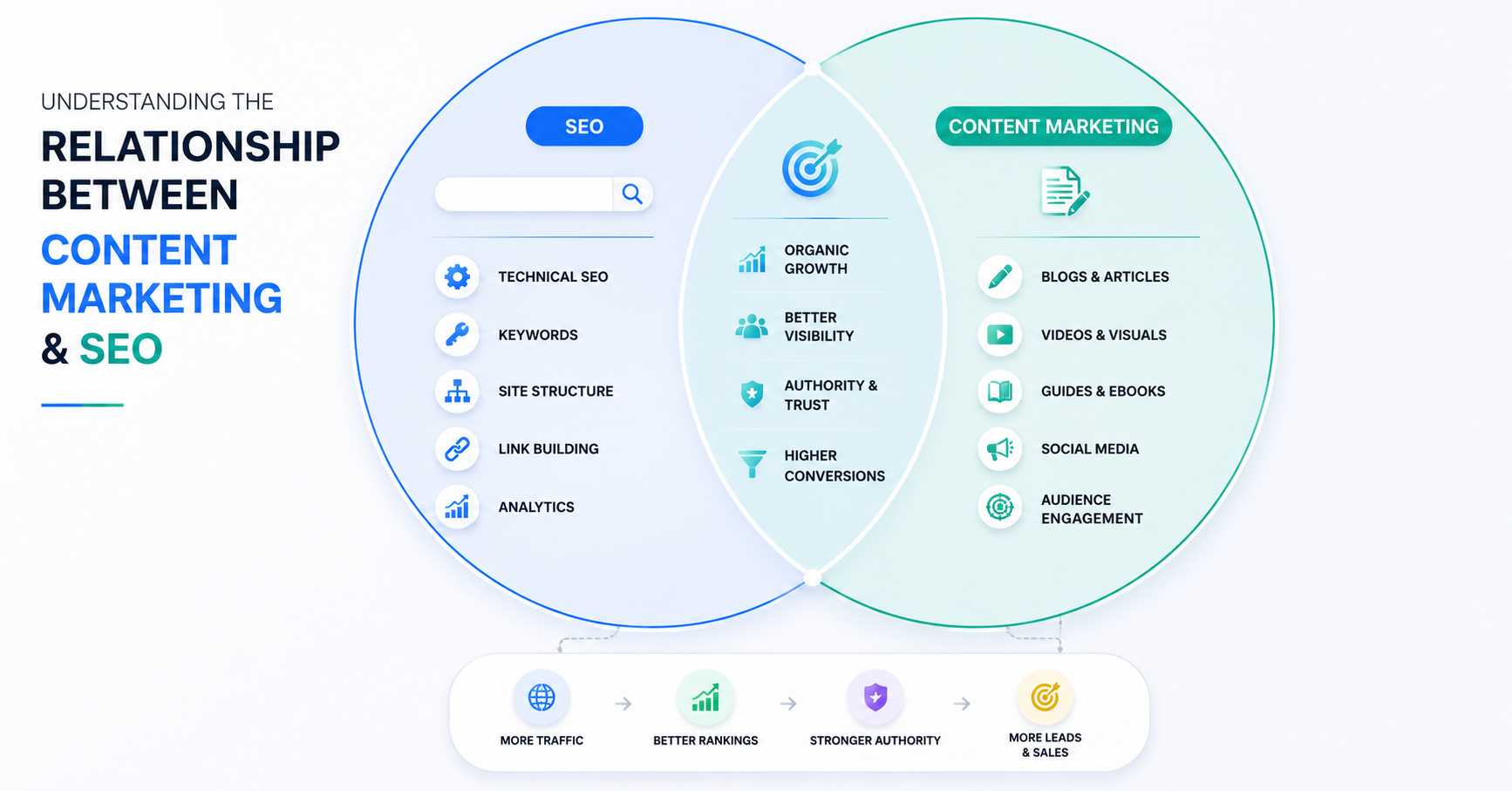
SEO and content marketing share a common objective: helping the right audience find valuable information. SEO focuses on technical optimization, keyword targeting, site structure, and search engine visibility. Content marketing focuses on creating useful, engaging, and informative content that addresses audience needs.
Without content, SEO has very little to optimize.
Without SEO, even exceptional content may struggle to reach its intended audience. The most successful digital strategies combine both disciplines to create a consistent flow of relevant traffic and customer engagement.
Search Engines Reward Valuable Content
Google's primary goal is to deliver the most relevant and useful information to users.
When someone searches for a question, product, service, or solution, search engines evaluate countless pages to determine which content best satisfies that search intent.
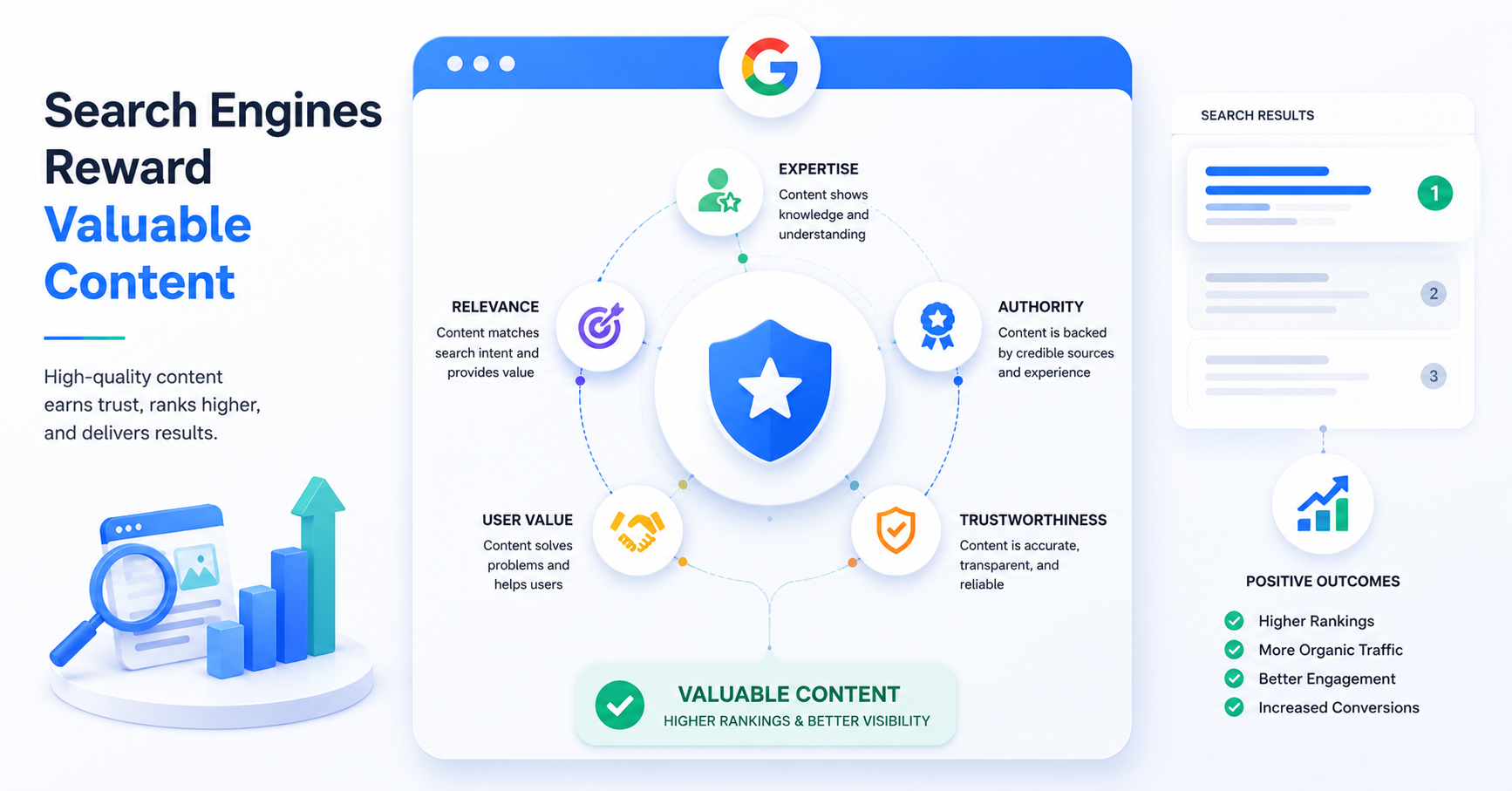
High-quality content helps websites demonstrate:
- Expertise
- Relevance
- Authority
- Trustworthiness
- User value
When a website consistently publishes useful content, search engines gain more confidence in recommending that website to users.
This is why businesses that invest in educational blog posts, guides, case studies, and industry insights often achieve stronger organic visibility over time.
Content Expands Keyword Opportunities
One of the biggest advantages of content marketing is its ability to target a wide range of search queries.
A service page may focus on a few primary keywords, but blog articles allow businesses to target hundreds of related search terms.
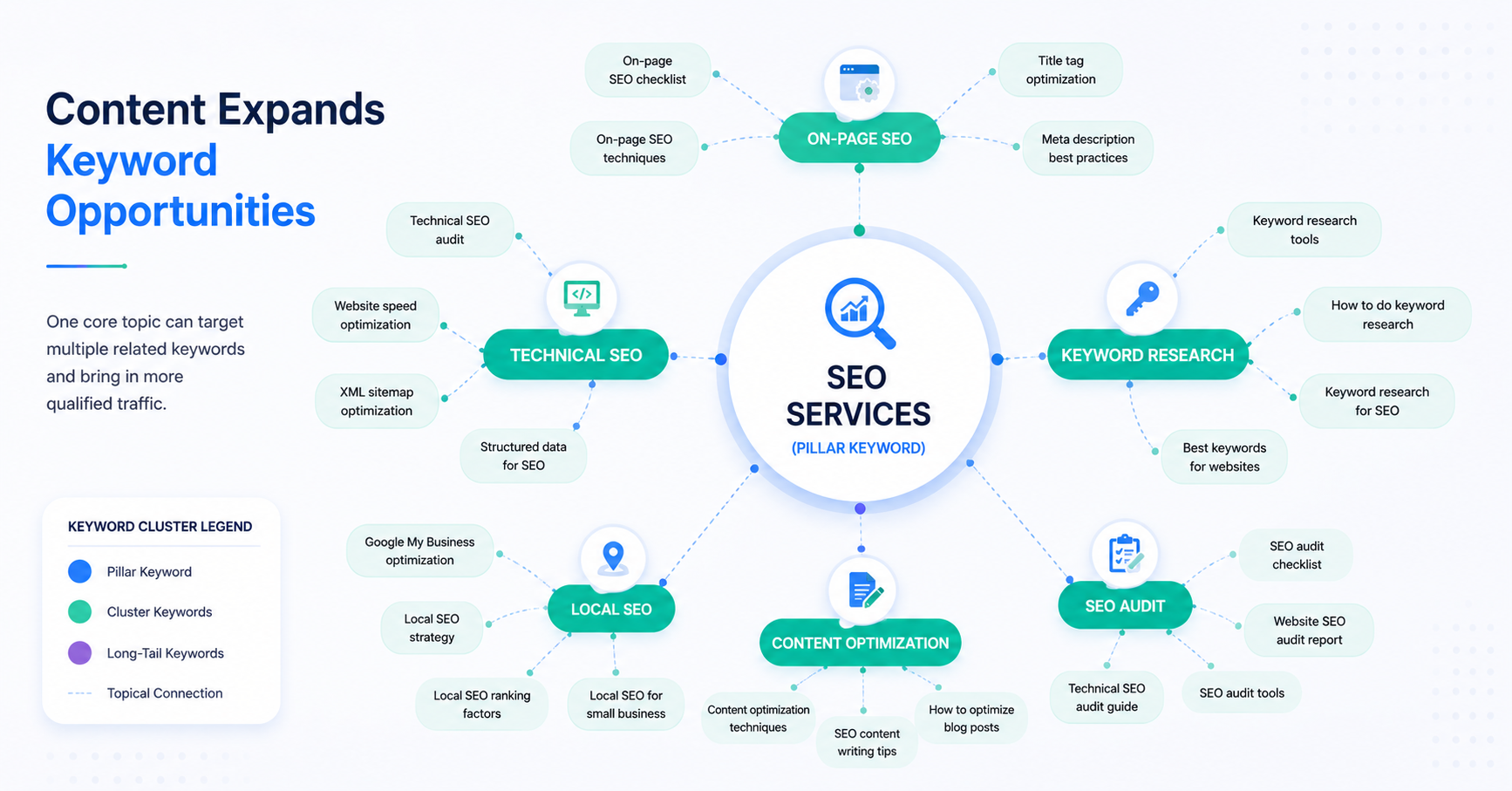
For example, a company offering SEO services can create content around:
- SEO best practices
- Local SEO strategies
- Technical SEO audits
- Keyword research techniques
- SEO for small businesses
- Content optimization tips
Each article creates an opportunity to rank for additional keywords and attract users at different stages of the buying journey.
As content grows, so does the website's ability to capture search traffic.
Supporting Search Intent Through Relevant Content
Modern SEO is increasingly focused on search intent.
Search engines no longer rank pages solely because they contain keywords. They evaluate whether content truly answers the user's question.
Content marketing supports this objective by creating resources tailored to specific audience needs.
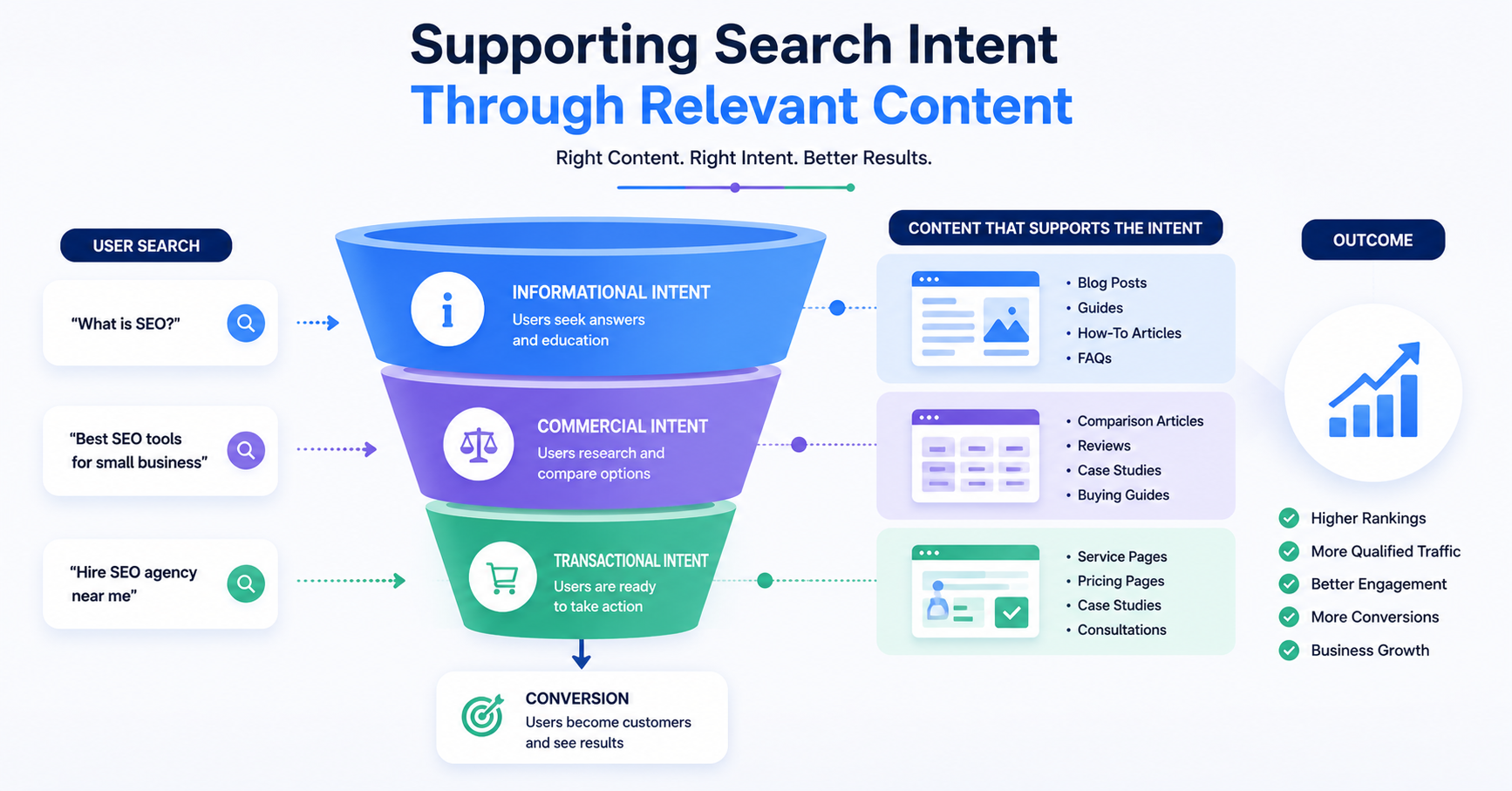
Different types of content can address different search intents:
Informational Intent
Users seek answers and education.
Examples:
- What is SEO?
- How does content marketing work?
- Why is digital marketing important?
Commercial Intent
Users are researching options before making decisions.
Examples:
- Best SEO agency for startups
- Content marketing services comparison
- SEO pricing guide
Transactional Intent
Users are ready to take action.
Examples:
- Hire SEO experts
- Digital marketing agency near me
- SEO services consultation
By creating content for each stage of the customer journey, businesses can attract visitors before they are ready to purchase and nurture them toward conversion.
Content Improves Website Engagement Metrics
Search engines pay attention to user behavior signals.
Although Google does not publicly disclose every ranking factor, engagement metrics often indicate whether users find content useful.
Quality content encourages visitors to:
- Spend more time on a website
- Explore additional pages
- Read multiple articles
- Engage with resources
- Return for future visits
When visitors consistently find value in content, it sends positive signals that support overall SEO performance.
Building Authority Through Educational Content
Authority is one of the most important elements of successful SEO.
Businesses that regularly publish valuable industry insights position themselves as trusted sources of information.
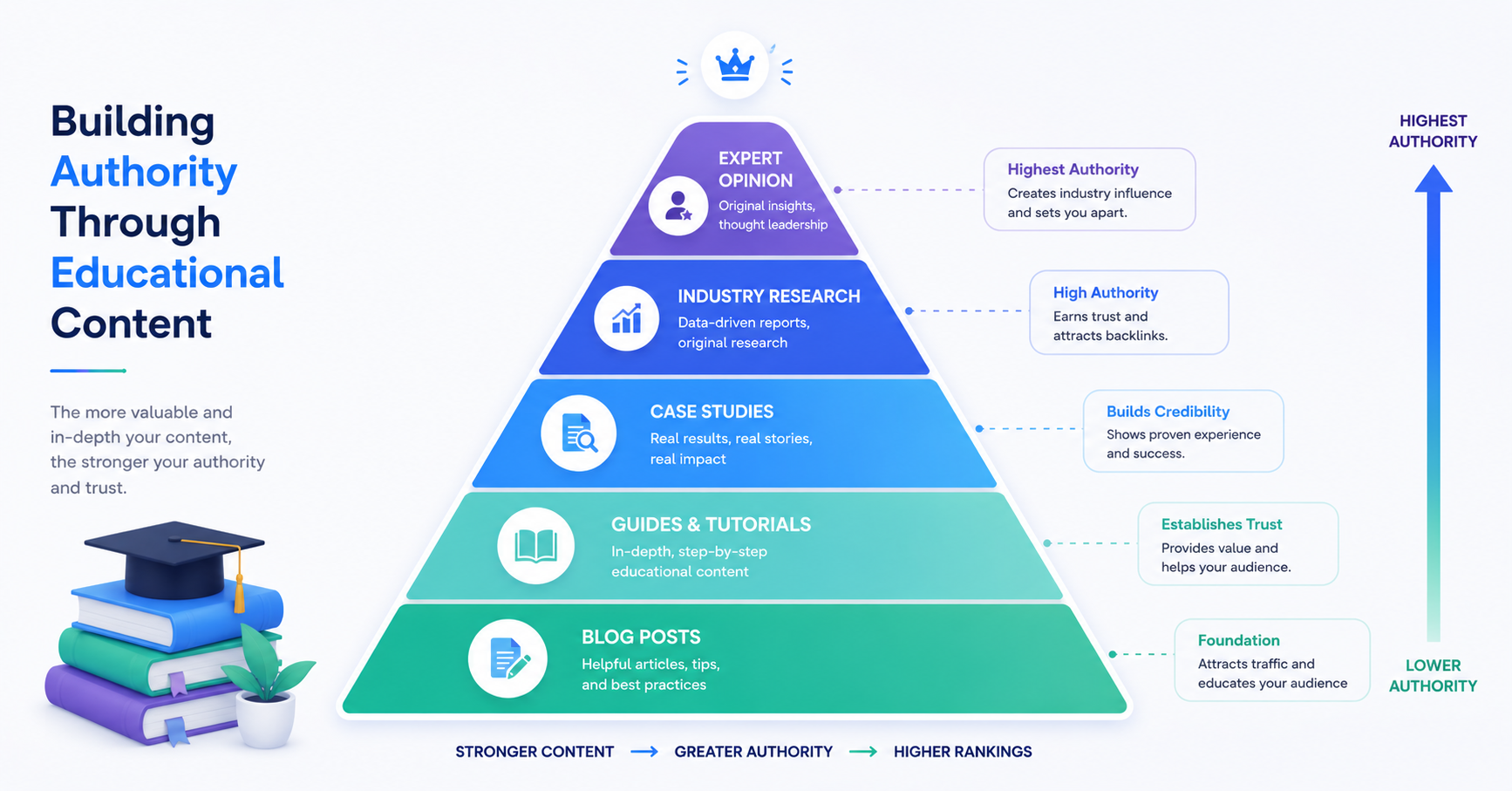
Educational content helps establish credibility by demonstrating:
- Industry knowledge
- Practical expertise
- Problem-solving capability
- Thought leadership
Over time, this authority can influence both search rankings and customer trust.
Companies that educate their audiences often become the first choice when prospects are ready to purchase services.
Content Marketing Generates Natural Backlinks
Backlinks remain an important component of SEO.
When other websites link to your content, search engines view those links as indicators of credibility and relevance.
However, backlinks are difficult to earn without valuable content.
High-quality content naturally attracts links because people want to reference useful resources.
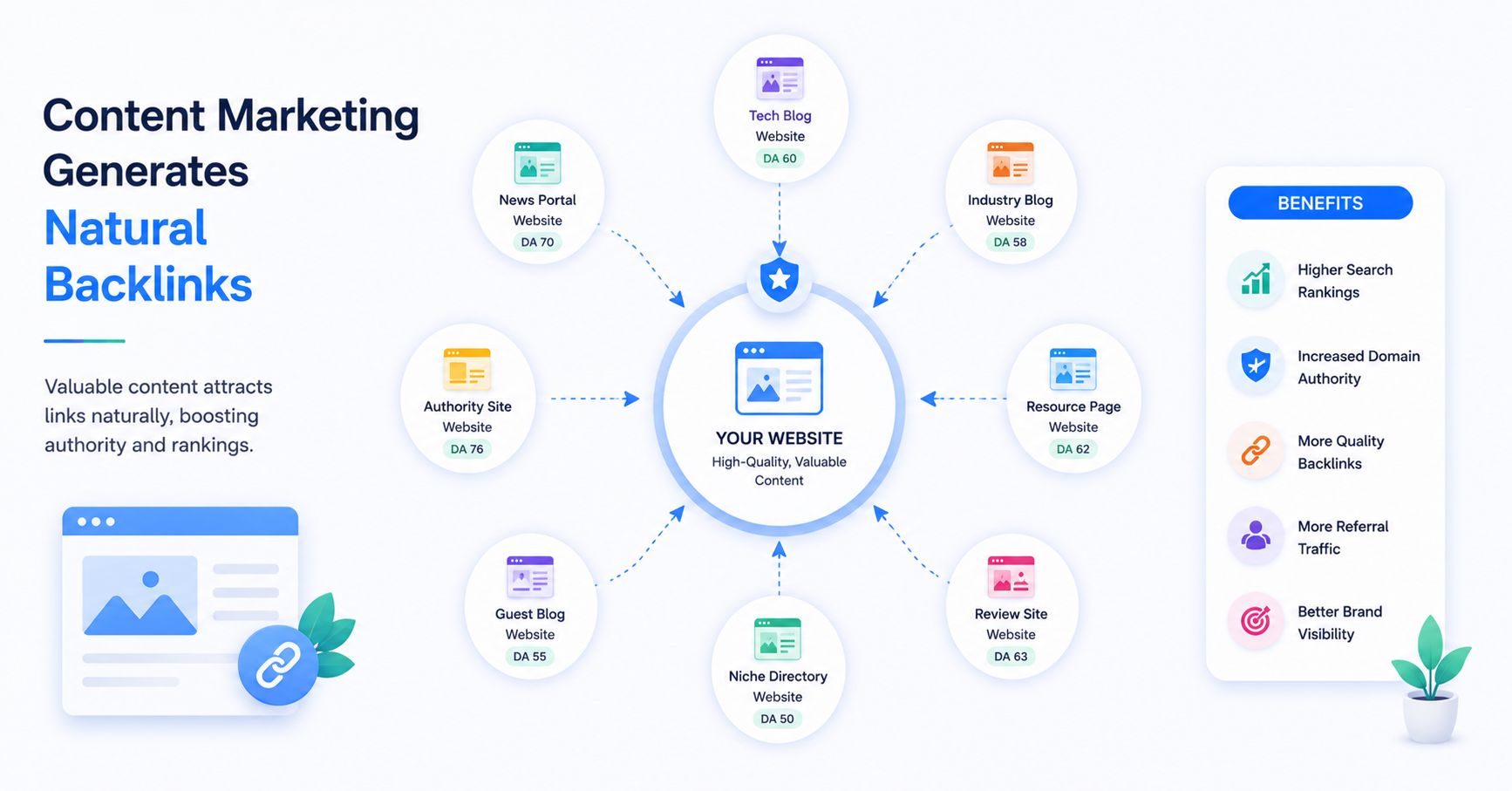
Content formats that frequently generate backlinks include:
- Original research
- Industry reports
- Detailed guides
- Statistics roundups
- Expert opinions
- Case studies
The stronger the content, the greater the opportunity to earn natural links from other websites.
Fresh Content Helps Maintain Search Visibility
Search engines favor websites that remain active and relevant.
Regular content publication signals that a website continues to provide updated information.
Fresh content can:
- Increase crawl frequency
- Create new ranking opportunities
- Address emerging trends
- Capture seasonal search demand
- Improve overall website relevance
Businesses that consistently publish valuable content often maintain stronger search visibility compared to competitors with static websites.
Supporting Technical SEO Efforts
Content marketing does not replace technical SEO, but it enhances its effectiveness.
A technically optimized website with poor content will struggle to perform.
Similarly, excellent content on a poorly optimized website may never reach its potential.
Successful SEO requires both:
Technical SEO
- Site speed
- Mobile optimization
- Structured data
- Crawlability
- Internal linking
Content Marketing
- Valuable information
- Keyword relevance
- Audience engagement
- Authority building
- Link acquisition
When combined, these elements create a comprehensive SEO strategy.
Content Marketing Drives Long-Term ROI
Unlike paid advertising, content continues generating value long after publication. A well-optimized article can attract visitors for months or even years.
Benefits include:
- Ongoing organic traffic
- Lead generation
- Brand awareness
- Improved rankings
- Lower customer acquisition costs
This long-term value makes content marketing one of the most cost-effective digital marketing investments available today.
The Role of Content Marketing in Building Customer Trust
One of the most overlooked benefits of content marketing is its ability to establish trust before a customer ever contacts a business. Modern consumers rarely make immediate purchasing decisions. Instead, they spend time researching solutions, comparing providers, reading reviews, and gathering information online.
When a business consistently publishes helpful, informative, and accurate content, it positions itself as a reliable source of knowledge. This trust-building process plays a significant role in supporting SEO performance because search engines aim to connect users with websites that demonstrate expertise and credibility.
For example, a company that regularly publishes guides, industry insights, and practical solutions is more likely to become a trusted resource within its niche. Visitors begin to associate the brand with valuable information, increasing the likelihood that they will return to the website when they need products or services.
Trust is difficult to earn through advertising alone. Content marketing allows businesses to build genuine relationships with their audience by helping them solve problems and make informed decisions.
Creating Content for Every Stage of the Buyer's Journey
A successful SEO strategy recognizes that not all visitors are ready to make a purchase immediately. Some users are discovering a topic for the first time, while others are actively comparing service providers or preparing to take action.
Content marketing supports SEO by addressing each stage of the buyer's journey.
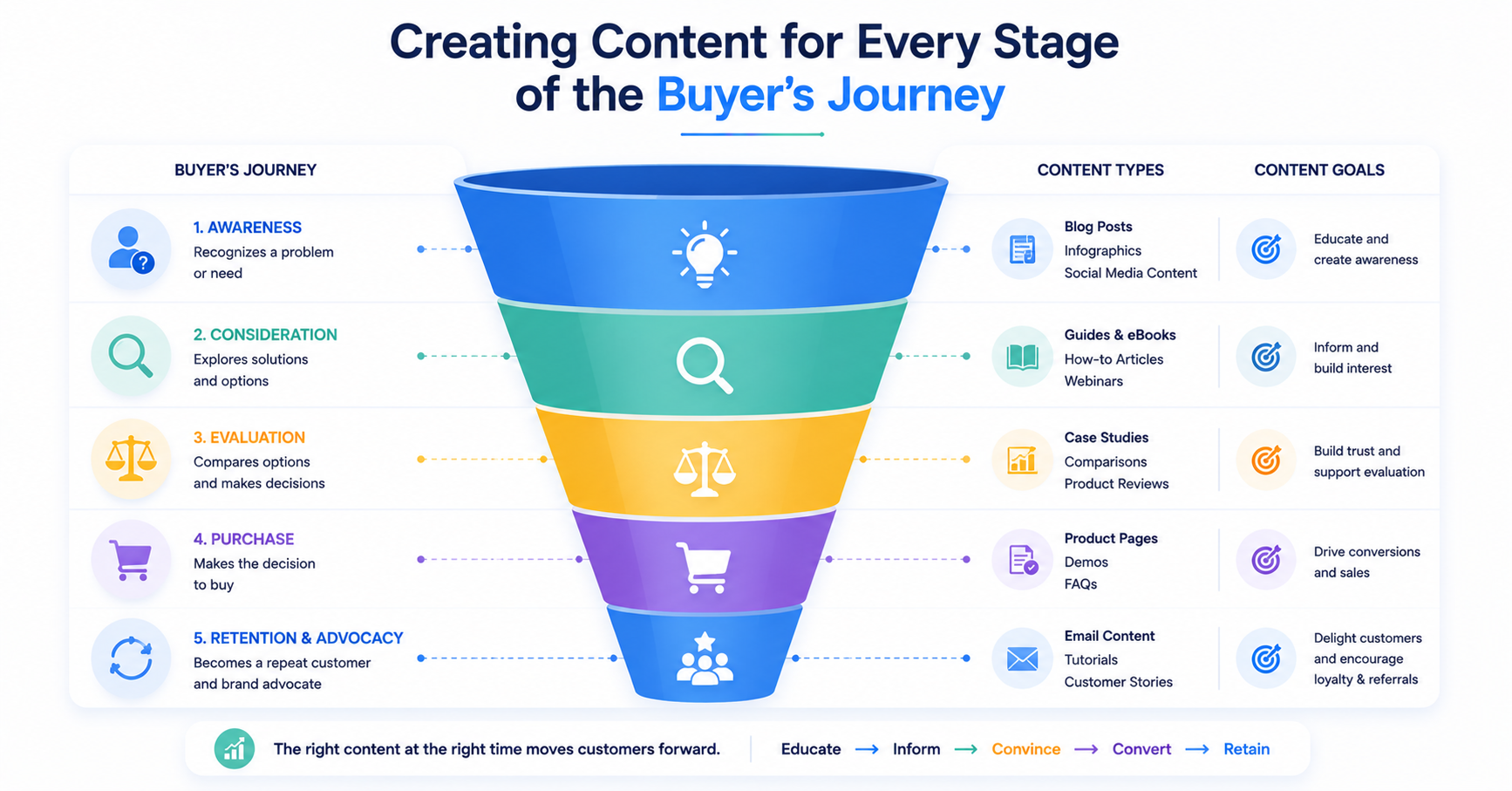
Awareness Stage
At this stage, users are identifying a problem or exploring a topic.
Examples of content include:
- Educational blog posts
- Industry trends
- Beginner guides
- Informational articles
This type of content attracts new visitors through organic search and introduces them to the brand.
Consideration Stage
Once users understand their challenge, they begin evaluating possible solutions.
Useful content includes:
- Comparison articles
- Expert insights
- Case studies
- Detailed service explanations
This content helps visitors move closer to making a decision while strengthening the website's authority.
Decision Stage
When users are ready to choose a provider, they look for reassurance and proof of expertise.
Examples include:
- Client success stories
- Testimonials
- Service pages
- Frequently asked questions
By creating content for every stage of the customer journey, businesses can increase their chances of attracting, nurturing, and converting organic traffic into customers.
Enhancing Internal Linking Through Content
Internal linking is an important SEO practice that helps search engines understand the structure of a website.
Content marketing naturally creates opportunities for effective internal linking. Every new article provides a chance to connect related pages and guide users toward additional resources.
For example, a blog discussing keyword research can link to articles about SEO audits, content optimization, or local SEO strategies. These links help distribute authority across the website while encouraging visitors to explore more content.
Strong internal linking improves user experience, increases page views, and supports search engine crawling. As content libraries expand, websites gain more opportunities to build meaningful connections between pages.
Content Marketing Supports Voice Search Optimization
Voice search continues to influence how people interact with search engines. Users increasingly rely on voice assistants to ask questions in a conversational manner.
Unlike traditional searches, voice queries are often longer and more specific.
Examples include:
- What is the best way to improve SEO performance?
- How does content marketing help businesses grow?
- Why is content important for search rankings?
Content marketing helps businesses target these conversational search patterns by creating detailed articles that answer common questions naturally.
FAQ sections, how-to guides, and educational resources are particularly effective for voice search optimization because they align closely with the way users speak when conducting searches.
As voice search adoption continues to grow, businesses that invest in informative content will be better positioned to capture this evolving source of traffic.
Encouraging Social Sharing and Brand Visibility
Although social media signals are not direct ranking factors, social sharing can significantly influence SEO performance.
Valuable content often attracts shares across platforms such as LinkedIn, Facebook, Instagram, and X. Increased visibility can expose content to new audiences, generate website traffic, and create opportunities for backlinks.
When people find content useful, they are more likely to share it with colleagues, friends, and industry peers. This expanded reach helps businesses strengthen their online presence while increasing brand recognition.
Content that performs well socially can also attract attention from journalists, bloggers, and industry publications, creating additional opportunities for organic link acquisition.
Improving Content Longevity Through Evergreen Topics
One of the most powerful aspects of content marketing is the ability to create evergreen content.
Evergreen content remains relevant long after publication and continues attracting visitors over time. Unlike news articles or trend-based content, evergreen resources address topics that people search for consistently.
Examples include:
- SEO fundamentals
- Content marketing best practices
- Keyword research techniques
- Website optimization guides
- Lead generation strategies
A single evergreen article can generate traffic, leads, and engagement for years when properly maintained and updated.
This long-term value contributes significantly to SEO performance by creating a stable source of organic traffic that compounds over time.
Measuring the SEO Impact of Content Marketing
To understand the effectiveness of content marketing, businesses should track key performance indicators that reveal how content contributes to SEO success.
Important metrics include:
- Organic traffic growth
- Keyword rankings
- Time on page
- Bounce rate
- Backlink acquisition
- Conversion rates
- Pages per session
- Returning visitors
Analyzing these metrics helps identify which content resonates most with audiences and supports ongoing optimization efforts.
Successful content marketing is not simply about publishing articles. It involves continuously evaluating performance and refining strategies based on data and user behavior.
Future-Proofing SEO Through Quality Content
Search engine algorithms continue to evolve, but one principle remains consistent: search engines aim to provide users with the most relevant and valuable information available.
While specific ranking factors may change, high-quality content will continue to play a central role in SEO success. Businesses that prioritize user-focused content are better equipped to adapt to algorithm updates and shifting search trends.
Rather than chasing short-term tactics, organizations should focus on creating content that educates, informs, and delivers genuine value. This approach builds a strong foundation for sustainable SEO growth while supporting broader marketing objectives.
In an increasingly competitive digital landscape, content marketing remains one of the most reliable ways to strengthen search visibility, establish authority, and create meaningful connections with target audiences. When combined with a well-structured SEO strategy, quality content becomes a long-term asset that continues generating results long after it is published.
The Role of Content in Modern Digital Marketing
Today's digital landscape is more competitive than ever.
Consumers expect brands to provide useful information before asking for a sale.
Content marketing helps businesses:
- Educate audiences
- Build trust
- Demonstrate expertise
- Strengthen relationships
- Support SEO goals
This customer-first approach aligns closely with how modern search engines evaluate websites.
As a result, content marketing has become a foundational component of successful SEO strategies.
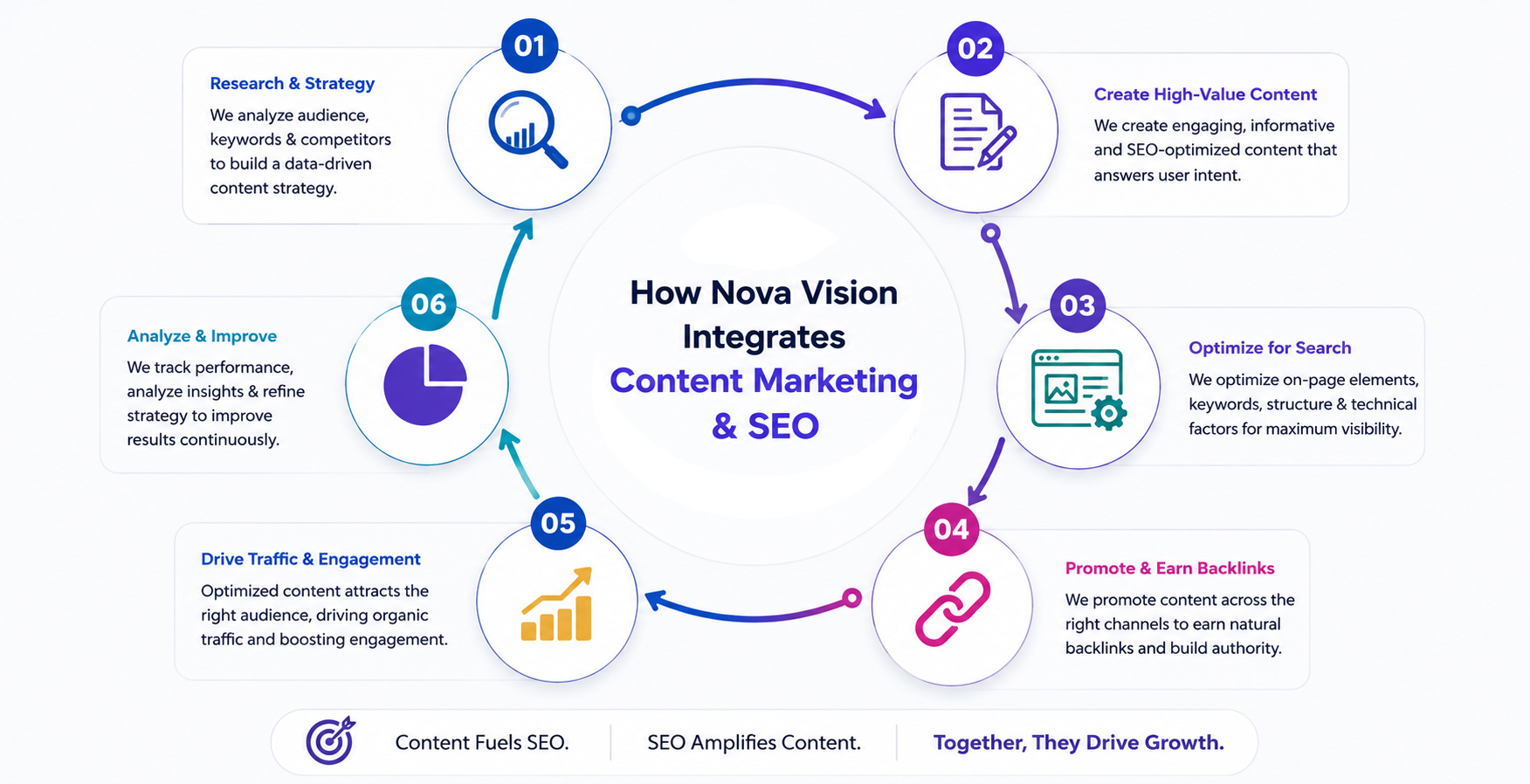
How Nova Vision Integrates Content Marketing and SEO
At Nova Vision Mediatech, SEO is supported through a combination of content creation, search optimization, digital strategy, and performance-focused execution. The agency emphasizes SEO, content creation, digital marketing, and analytics-driven decision-making to help brands achieve sustainable online growth.
Rather than focusing solely on rankings, the objective is to create content that delivers value to users while supporting broader business goals.
This integrated approach helps businesses attract qualified traffic, improve engagement, and generate measurable results through organic search.
SEO and content marketing are no longer separate disciplines. They are interconnected strategies that strengthen one another. SEO helps content reach the right audience. Content marketing provides the value that search engines want to deliver.
Together, they help businesses:
- Increase organic visibility
- Build authority
- Improve engagement
- Earn backlinks
- Generate leads
- Achieve sustainable growth
As search engines continue prioritizing user-focused experiences, businesses that invest in quality content will remain better positioned to compete online. By combining strategic SEO with valuable content creation, organizations can build a digital presence that delivers results long into the future.