In today's digital landscape, your website has only a few seconds to make a positive first impression. If a page loads slowly, visitors are more likely to leave before they even see your products, services, or content. While businesses often focus on attractive design and engaging content, website speed is equally important because it directly influences search engine rankings, user satisfaction, and conversion rates.
Website speed is no longer just a technical consideration. It has become a major business factor that impacts customer trust, online visibility, and revenue. Search engines aim to provide users with the best possible experience, which is why page loading speed has become an essential ranking signal. A faster website not only helps improve SEO but also creates a seamless browsing experience that encourages visitors to stay longer and interact with your business.
At Nova Vision Mediatech, we help businesses build high-performing websites that combine speed, usability, and SEO best practices to maximize online growth. Our approach integrates technical optimization with user-focused design, ensuring websites not only rank higher but also convert visitors into customers.
Why Website Speed Matters
Website speed refers to the amount of time it takes for a webpage to load completely and become interactive. Modern internet users expect almost instant access to information. Even a small delay can negatively affect user behavior.
Imagine visiting an online store where every page takes several seconds to load. Most users would abandon the website and look for another option. The same applies to service-based businesses, blogs, corporate websites, and e-commerce stores.
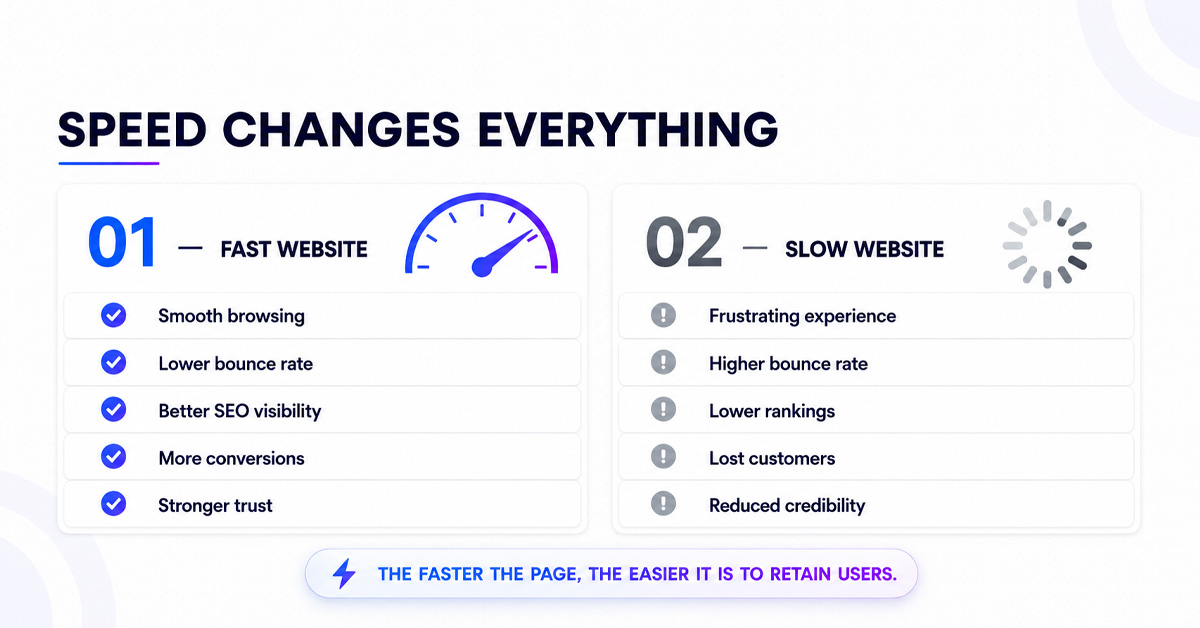
A fast-loading website creates confidence, while a slow website creates frustration.
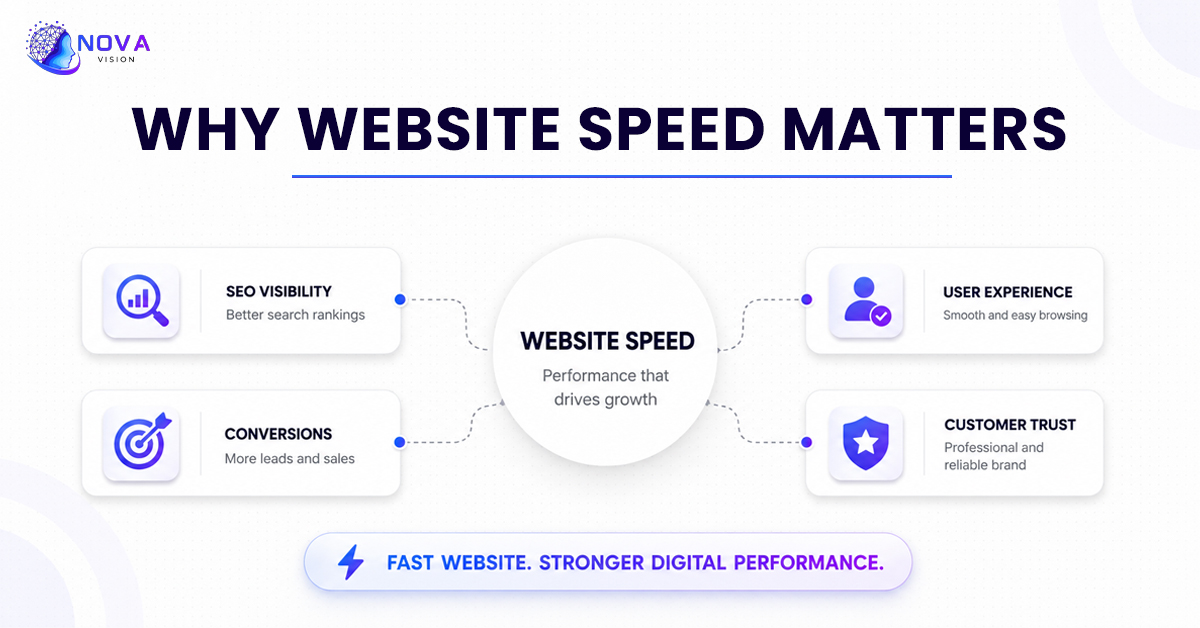
For businesses competing online, website speed directly influences:
-
User engagement
-
Search engine visibility
-
Lead generation
-
Sales conversions
-
Customer satisfaction
-
Brand credibility
The faster your website performs, the easier it becomes to attract and retain visitors.
Website Speed as an SEO Ranking Factor
Google continuously updates its search algorithms to improve user experience. One of the strongest indicators of a quality website is how quickly users can access its content.
Search engines evaluate various technical performance signals, including page loading speed and Core Web Vitals. These metrics help Google determine whether users are likely to enjoy browsing your website.
A slow website may experience:
-
Lower keyword rankings
-
Reduced crawl efficiency
-
Higher bounce rates
-
Lower organic traffic
-
Reduced indexing of pages
Conversely, websites that load quickly are more likely to achieve stronger visibility in search results because they provide a better browsing experience.
Website speed works together with other SEO factors such as:
-
Quality content
-
Mobile responsiveness
-
Internal linking
-
Technical SEO
-
Website security
-
Structured data
-
User engagement
Improving website performance strengthens the overall SEO foundation.
The Connection Between Website Speed and User Experience
User experience (UX) measures how easily visitors interact with a website.
Every second matters.
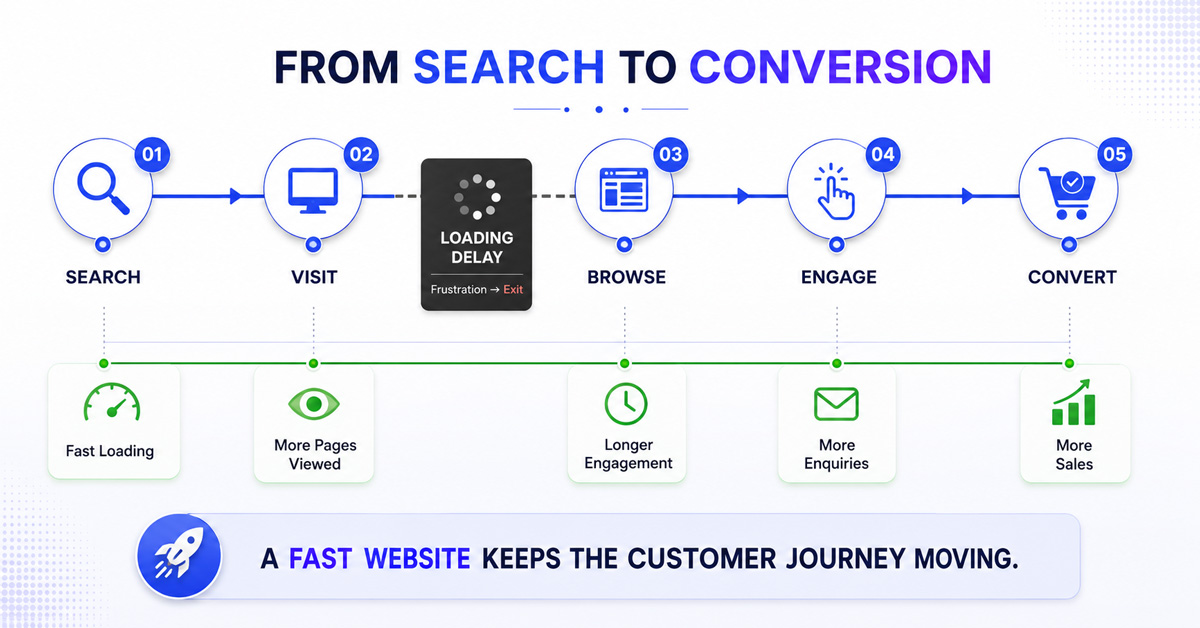
When users click a search result, they expect immediate access to information. Delays create frustration, causing visitors to leave before exploring additional pages.
Fast websites encourage users to:
-
Browse more pages
-
Read complete articles
-
Watch videos
-
Submit enquiry forms
-
Complete purchases
-
Return in the future
Slow websites often have the opposite effect.
Poor loading times interrupt the browsing journey and reduce trust in the brand.
Businesses investing heavily in advertising can waste significant marketing budgets if visitors abandon slow-loading pages before converting.
How Slow Websites Increase Bounce Rate
Bounce rate refers to visitors leaving a website after viewing only one page.
When users encounter slow-loading pages, many decide not to wait.
This behavior signals search engines that users may not find the page valuable, potentially affecting rankings over time.
Reducing bounce rate requires more than quality content—it also requires fast website performance.
When visitors enjoy a smooth browsing experience, they naturally spend more time exploring additional pages.
Faster Websites Generate More Conversions
Every business website has one primary goal:
Generate conversions.
Conversions may include:
-
Purchasing products
-
Filling enquiry forms
-
Booking appointments
-
Downloading brochures
-
Calling the business
-
Subscribing to newsletters
Slow websites introduce friction into every conversion step.
Visitors become impatient while waiting for forms, payment pages, or product pages to load.
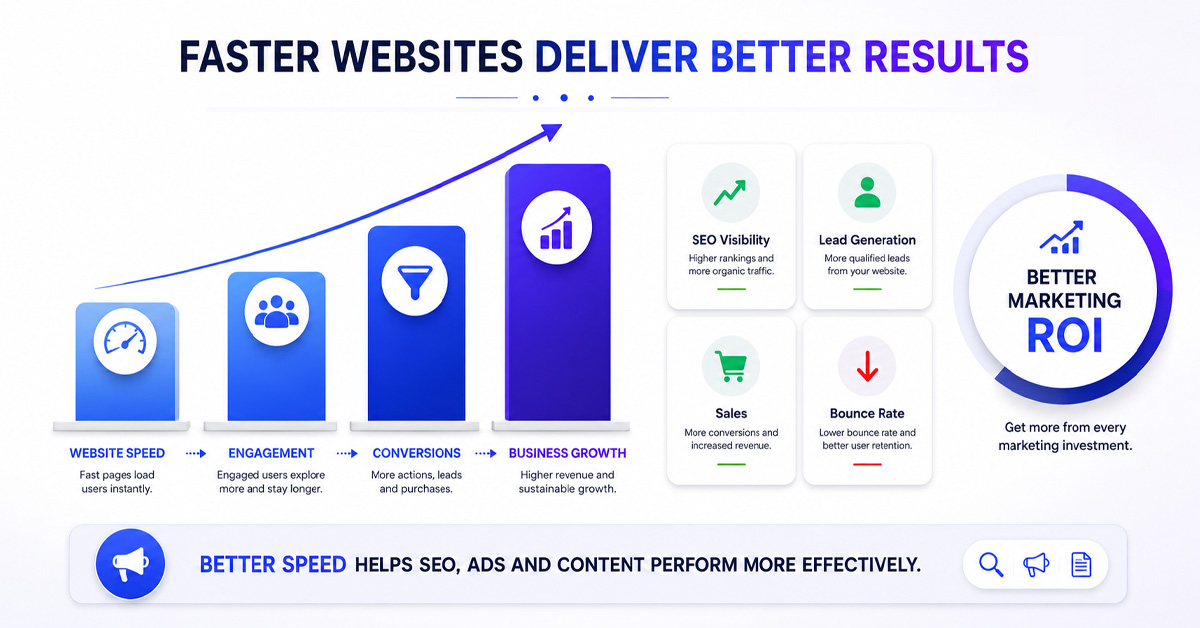
Faster websites create smoother customer journeys, making users more likely to complete desired actions.
For businesses investing in Google Ads, social media advertising, or SEO, improving website speed often increases marketing ROI without increasing advertising spend.
Mobile Users Expect Instant Loading
Today, the majority of internet traffic comes from smartphones.
Mobile users often browse while travelling, shopping, or multitasking. They expect websites to load quickly regardless of network conditions.
Google primarily evaluates the mobile version of websites through mobile-first indexing.
A slow mobile experience can reduce:
-
Organic rankings
-
User engagement
-
Lead generation
-
Online sales
Responsive design alone is not enough.
Businesses must ensure that images, scripts, fonts, and layouts load efficiently across all mobile devices.
Core Web Vitals and Website Performance
Google introduced Core Web Vitals to measure real-world user experience.
These metrics evaluate how quickly pages become usable and visually stable.
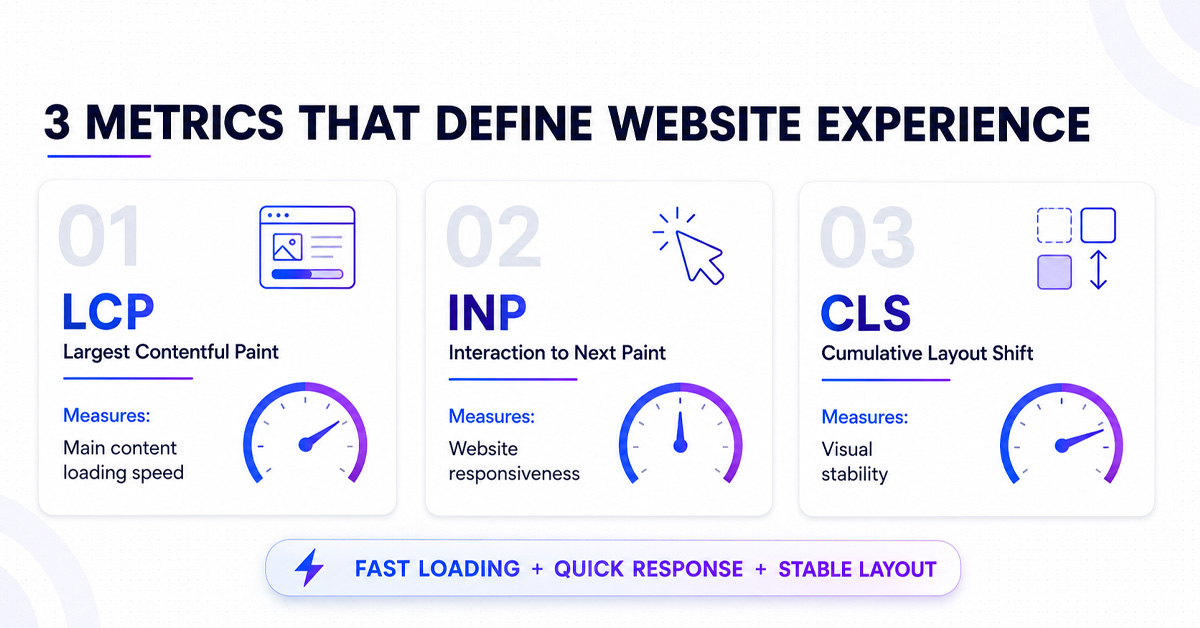
The three primary metrics include:
Largest Contentful Paint (LCP)
Measures how quickly the main content loads.
Interaction to Next Paint (INP)
Measures how responsive the website feels when users interact.
Cumulative Layout Shift (CLS)
Measures visual stability while pages load.
Improving these metrics enhances both user experience and search performance.
Common Reasons Websites Load Slowly
Many websites become slow because of technical issues that accumulate over time.
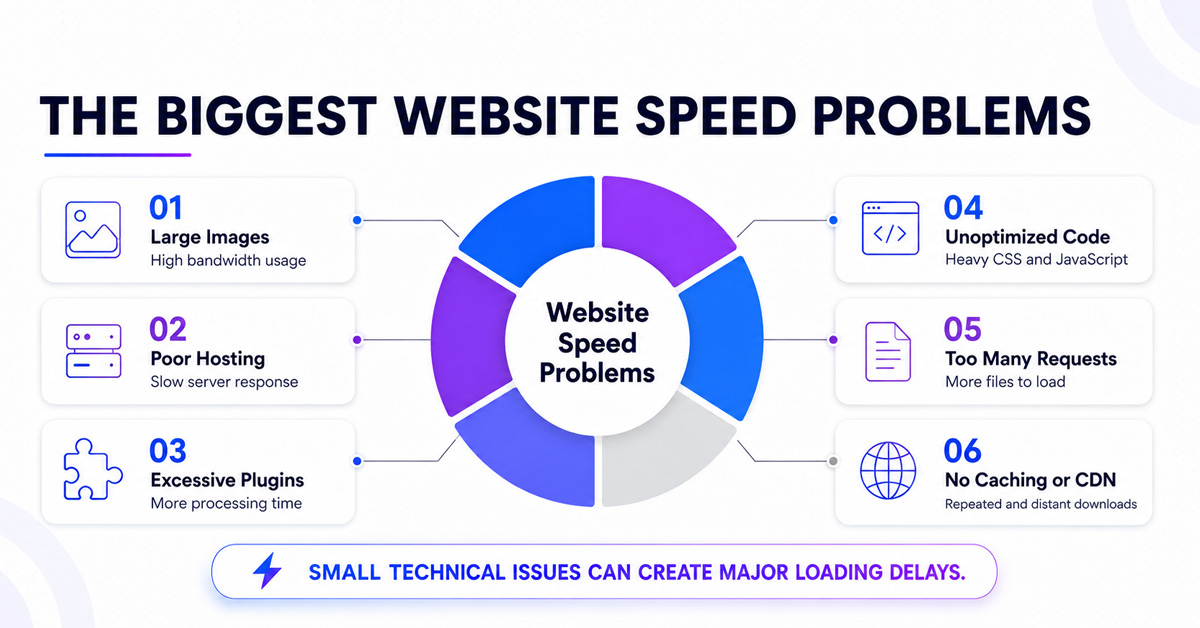
Some of the most common causes include:
Large Images
High-resolution images consume excessive bandwidth and increase loading times.
Optimizing images without sacrificing quality significantly improves performance.
Poor Web Hosting
Cheap or overloaded hosting servers struggle during periods of high traffic.
Reliable hosting improves website responsiveness and uptime.
Excessive Plugins
Many websites install unnecessary plugins that increase processing time.
Removing unused plugins reduces server load.
Unoptimized Code
Large CSS and JavaScript files slow page rendering.
Code optimization helps browsers display content faster.
Too Many HTTP Requests
Every image, script, and stylesheet requires an additional server request.
Reducing unnecessary requests accelerates page loading.
Lack of Browser Caching
Caching allows returning visitors to load pages much faster.
Without caching, browsers repeatedly download the same files.
No Content Delivery Network (CDN)
CDNs distribute website files across multiple global servers.
Visitors access content from the nearest server, reducing loading delays.
Website Speed and Customer Trust
Website performance influences how customers perceive a brand.
Fast websites communicate:
-
Professionalism
-
Reliability
-
Quality
-
Technical excellence
Slow websites may create the impression that a business is outdated or unreliable.
Trust is especially important for:
-
Healthcare websites
-
Financial services
-
Real estate companies
-
Educational institutions
-
E-commerce businesses
Performance contributes directly to customer confidence.
Website Speed and E-Commerce Success
Online shopping depends heavily on speed.
Customers browse multiple products before purchasing.
Every additional second spent waiting increases the likelihood of cart abandonment.
Fast e-commerce websites help customers:
-
Find products quickly
-
Compare options
-
Add items to carts
-
Complete secure payments
Performance improvements often lead to measurable revenue growth.
Website Speed Supports Content Marketing
Businesses invest considerable effort creating blogs, videos, and educational resources.
However, slow-loading content discourages readers from staying long enough to engage.
Fast-loading articles encourage visitors to:
-
Read more content
-
Share articles
-
Explore related topics
-
Subscribe for updates
Content marketing performs significantly better on optimized websites.
Website Speed Improves Digital Advertising Results
Businesses running Google Ads, Meta Ads, or other paid campaigns need optimized landing pages.
Even highly targeted advertising campaigns cannot succeed if visitors abandon slow pages.
Fast landing pages typically improve:
-
Conversion rate
-
Quality Score
-
Cost per click efficiency
-
Lead quality
Optimized website performance allows advertising budgets to deliver stronger returns.
Best Practices to Improve Website Speed
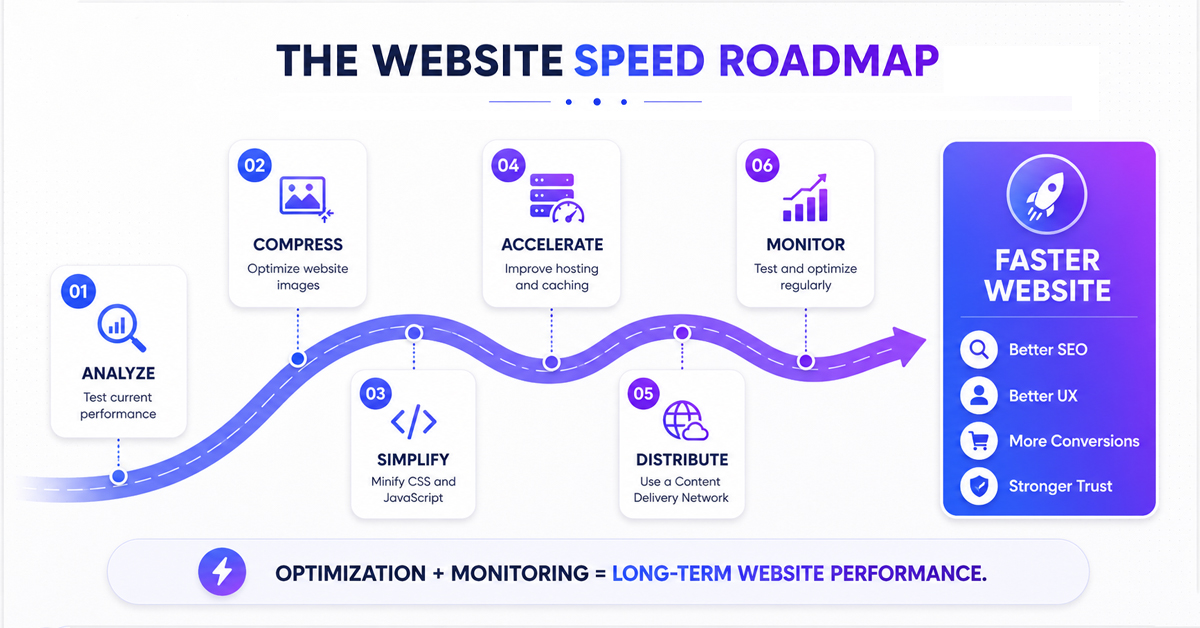
Improving website speed requires continuous optimization rather than a one-time fix.
Businesses should focus on:
Compress Images
Use modern image formats while maintaining visual quality.
Enable Browser Caching
Allow browsers to store frequently accessed resources.
Minify CSS and JavaScript
Reduce unnecessary characters and code size.
Remove Unused Plugins
Keep only essential website functionality.
Upgrade Hosting
Choose high-performance hosting capable of handling traffic spikes.
Use a Content Delivery Network
Deliver website assets through geographically distributed servers.
Reduce Redirects
Minimize unnecessary page redirections.
Optimize Database Performance
Regular database maintenance improves overall speed.
Implement Lazy Loading
Load images only when visitors scroll to them.
Monitor Website Performance Regularly
Regular testing identifies issues before they affect users.
Why Website Speed Requires Professional Optimization
Many businesses attempt to improve website speed through basic plugins alone.
While plugins can help, professional optimization considers:
-
Server configuration
-
Technical SEO
-
User behavior
-
Code optimization
-
Conversion optimization
-
Mobile responsiveness
-
Performance monitoring
A complete optimization strategy delivers long-term improvements instead of temporary fixes.
At Nova Vision Mediatech, website performance is integrated into every digital marketing strategy. From SEO and UI/UX design to conversion-focused landing pages and technical optimization, the team builds websites that are designed to load quickly, improve search visibility, and convert visitors into customers. Their data-driven approach ensures every website supports measurable business growth rather than simply looking visually appealing.
Website speed is one of the most important factors influencing both SEO and user experience. A fast website improves search engine rankings, reduces bounce rates, increases customer satisfaction, and generates more conversions. In an increasingly competitive digital environment, businesses cannot afford to overlook website performance.
Whether you operate an e-commerce store, corporate website, healthcare platform, educational portal, or service-based business, investing in website speed creates long-term benefits across every stage of the customer journey.
If your website loads slowly or struggles to convert visitors, now is the perfect time to optimize its performance. At Nova Vision Mediatech, we combine technical SEO expertise, website optimization, UI/UX improvements, and digital marketing strategies to build fast, search-friendly websites that drive sustainable business growth. A faster website is more than just a technical upgrade—it's an investment in better rankings, happier users, and stronger business results.