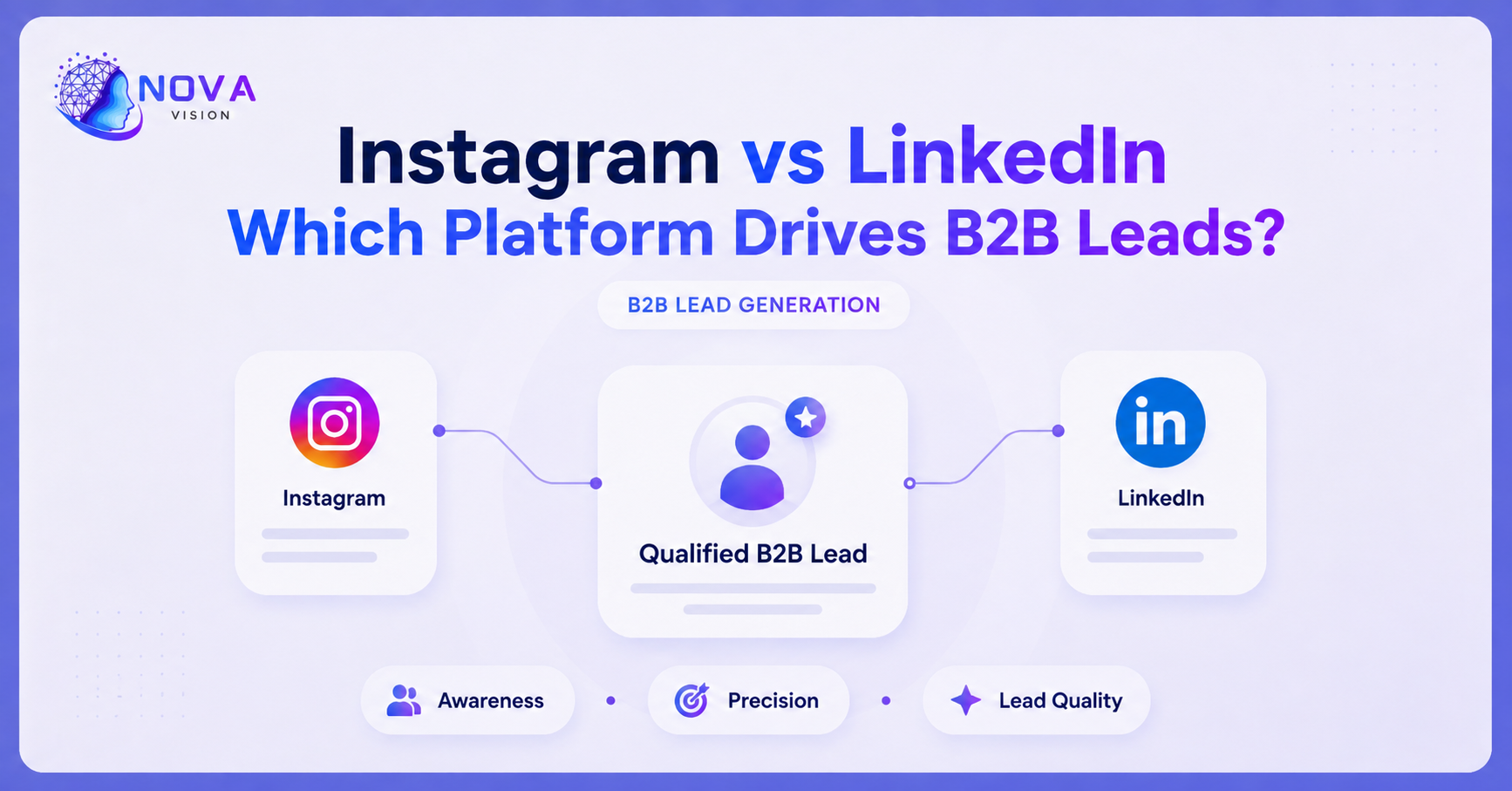
If you run a B2B business and your marketing team is split between "we need to be on Instagram" and "LinkedIn is where our buyers actually are," you're not alone. It's one of the most common budget debates we run into at Nova Vision and the honest answer isn't as simple as picking a side.
Both platforms can generate B2B leads. But they generate different kinds of leads, at different speeds, through different content, and they reward completely different strategies. Picking the wrong one or splitting your budget evenly without a reason is one of the fastest ways to burn ad spend without moving the needle.
This post breaks down how each platform actually performs for B2B, so you can decide where your budget belongs.
The Real Difference Between the Two Platforms
Instagram built its reputation on B2C social media fashion, food, fitness, lifestyle brands with highly visual products. LinkedIn built its reputation as the professional social media platform for B2B decision-makers, job titles, company pages, and a feed built around professional context.
That reputation isn't wrong, but it's incomplete. B2B buyers are still people who scroll Instagram every day they just don't buy enterprise software because of a Reel. Meanwhile, LinkedIn has expanded well beyond the résumé-and-networking platform it used to be, with organic reach and video content now playing a much bigger role in its social media strategy than they did a few years ago.
The real question isn't "which platform is B2B" it's "which social media platform matches how your specific buyer actually makes a decision."
How LinkedIn Actually Performs for B2B Leads
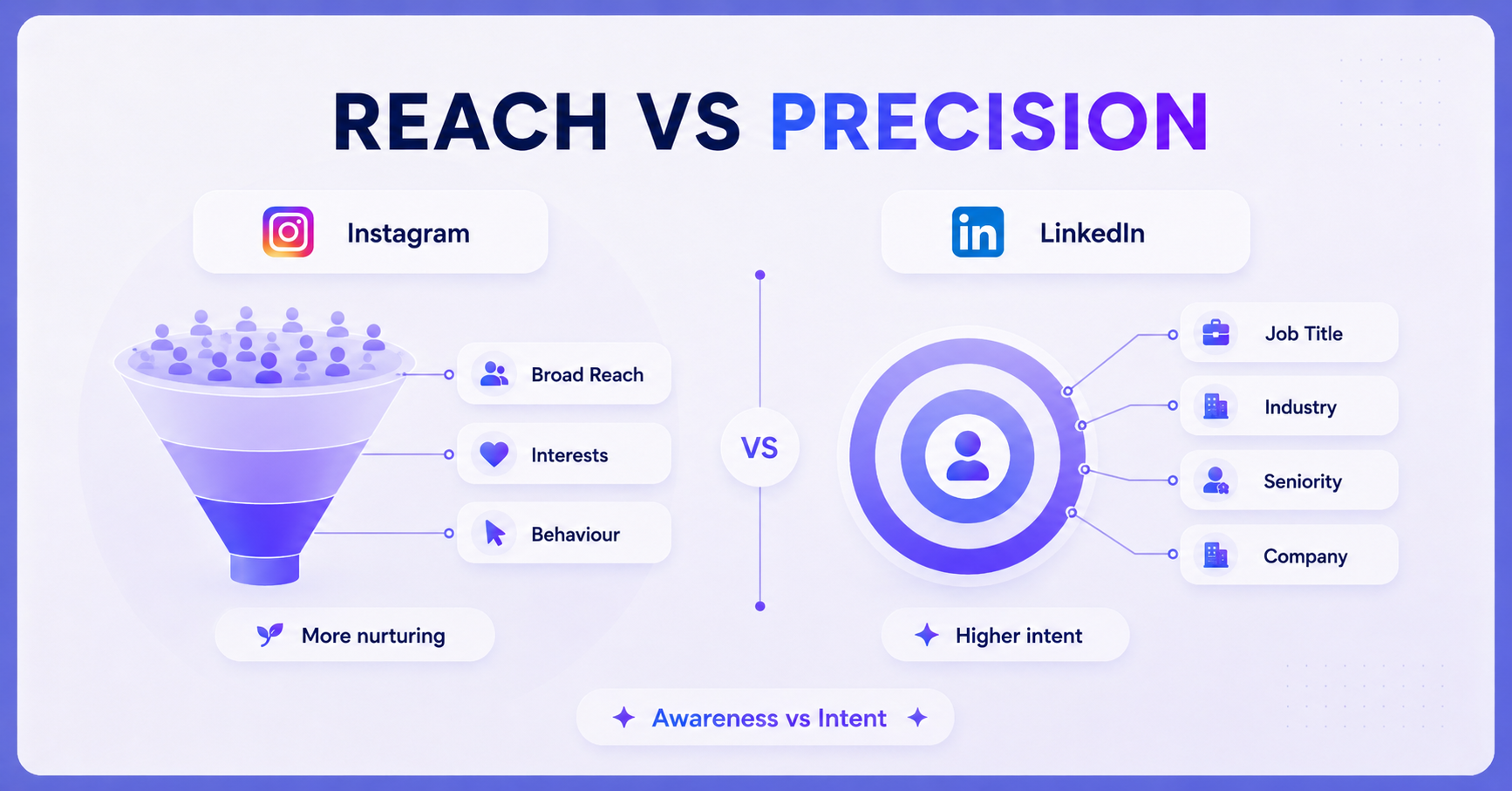
LinkedIn's advantage comes down to one thing: targeting precision. You can build ad audiences by job title, seniority, company size, industry, and even specific companies a level of targeting no other platform offers at that depth. If you're selling to, say, "VP of Operations at manufacturing companies with 200+ employees," LinkedIn lets you build that exact audience directly.
This precision shows up in lead quality. LinkedIn leads tend to arrive further along in the buying journey someone who fills out a LinkedIn lead form after reading a thought-leadership post already has some context on who you are and what you do. That tends to translate into higher-intent conversations, even if the overall lead volume is lower than what Instagram can generate.
What performs well on LinkedIn:
-
Thought-leadership posts from founders and executives (personal profiles consistently outperform company pages for organic reach)
-
Case studies and data-backed results
-
Native LinkedIn video and carousel posts, which the algorithm currently favors over external links
-
LinkedIn Ads targeted by job title and company attributes for demand generation
The trade-off: LinkedIn ad costs per click and per lead run meaningfully higher than Instagram's. You're paying for precision, and that precision isn't cheap. It's also a slower-building platform organically consistency over months matters more than any single viral post.
How Instagram Actually Performs for B2B Leads
Instagram doesn't get enough credit in B2B conversations, and that's a mistake for certain business types. If your buyer persona is a small business owner, a solo founder, an agency owner, or anyone who runs their business the same way they run their personal brand, Instagram is often where they spend real time including work-adjacent time.
Instagram also does something LinkedIn generally doesn't do well: build brand awareness at scale, cheaply. Reach and impressions per rupee spent are typically far more favorable on Instagram, which makes it a strong top-of-funnel platform — getting your name in front of a large, relevant audience before you ever ask for a lead.
What performs well on Instagram for B2B:
-
Behind-the-scenes content showing your team, process, and culture B2B buyers respond well to seeing the people behind a company
-
Short-form video (Reels) explaining a problem your service solves, in plain language
-
Client testimonials and results shared as visual content, not just text
-
Retargeting ads to warm audiences who've already engaged with your brand elsewhere
The trade-off: Instagram's targeting is behavioral and interest-based, not firmographic you can't isolate "CFOs at logistics companies" the way you can on LinkedIn. That means more of your reach is wasted on people who will never become buyers, even if the cost per impression is lower.
Cost Per Lead: The Number That Actually Matters
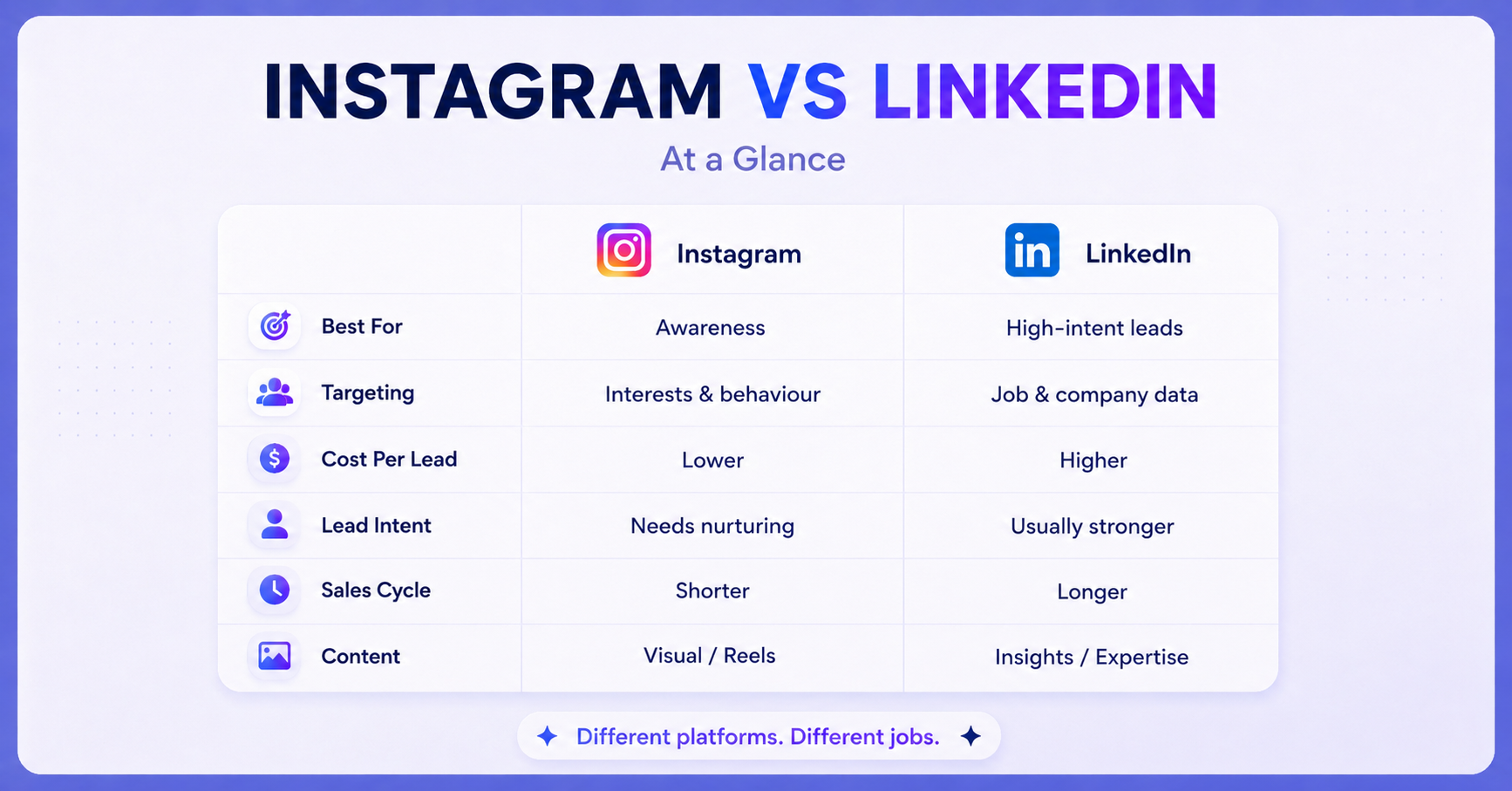
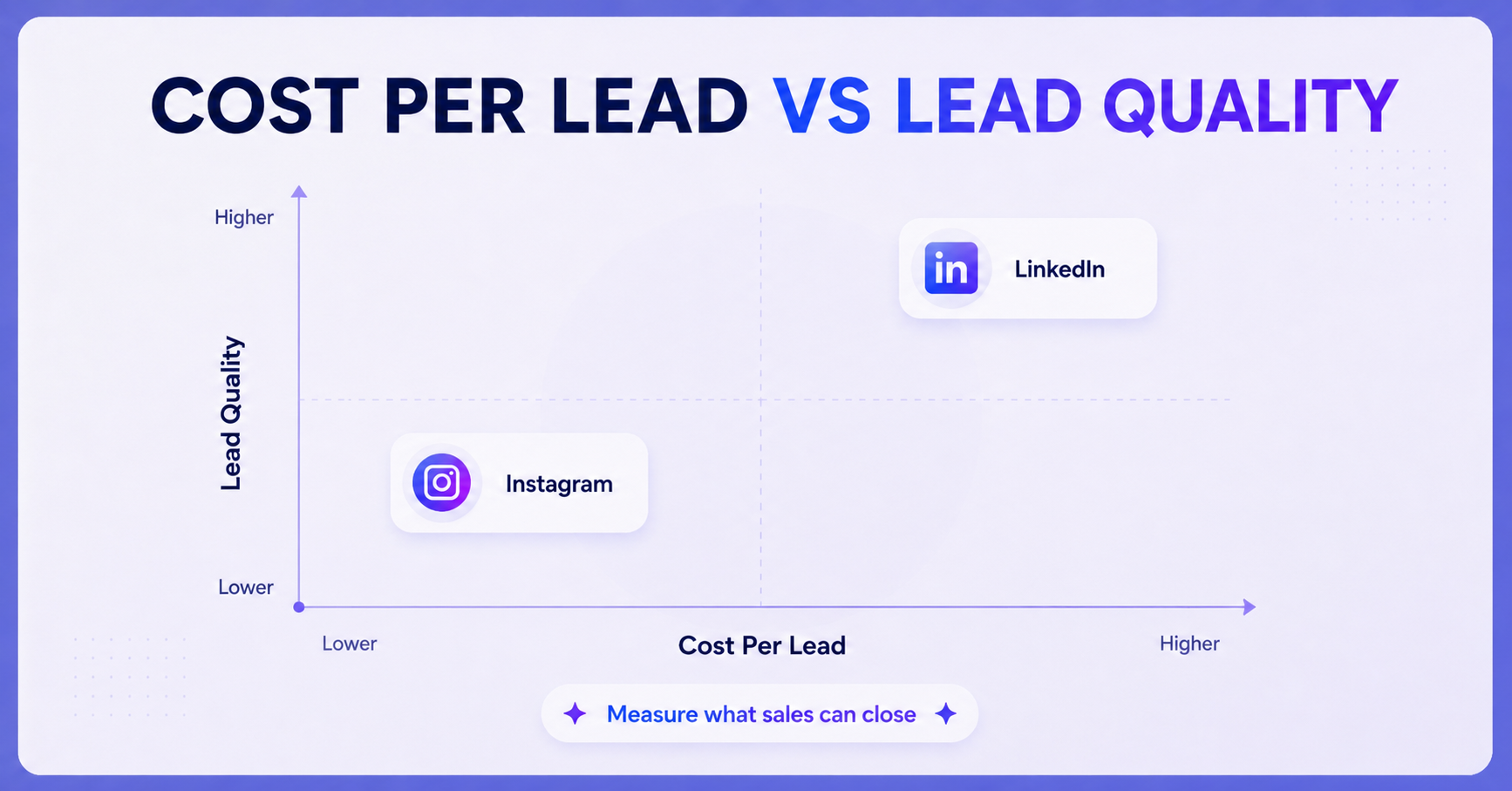
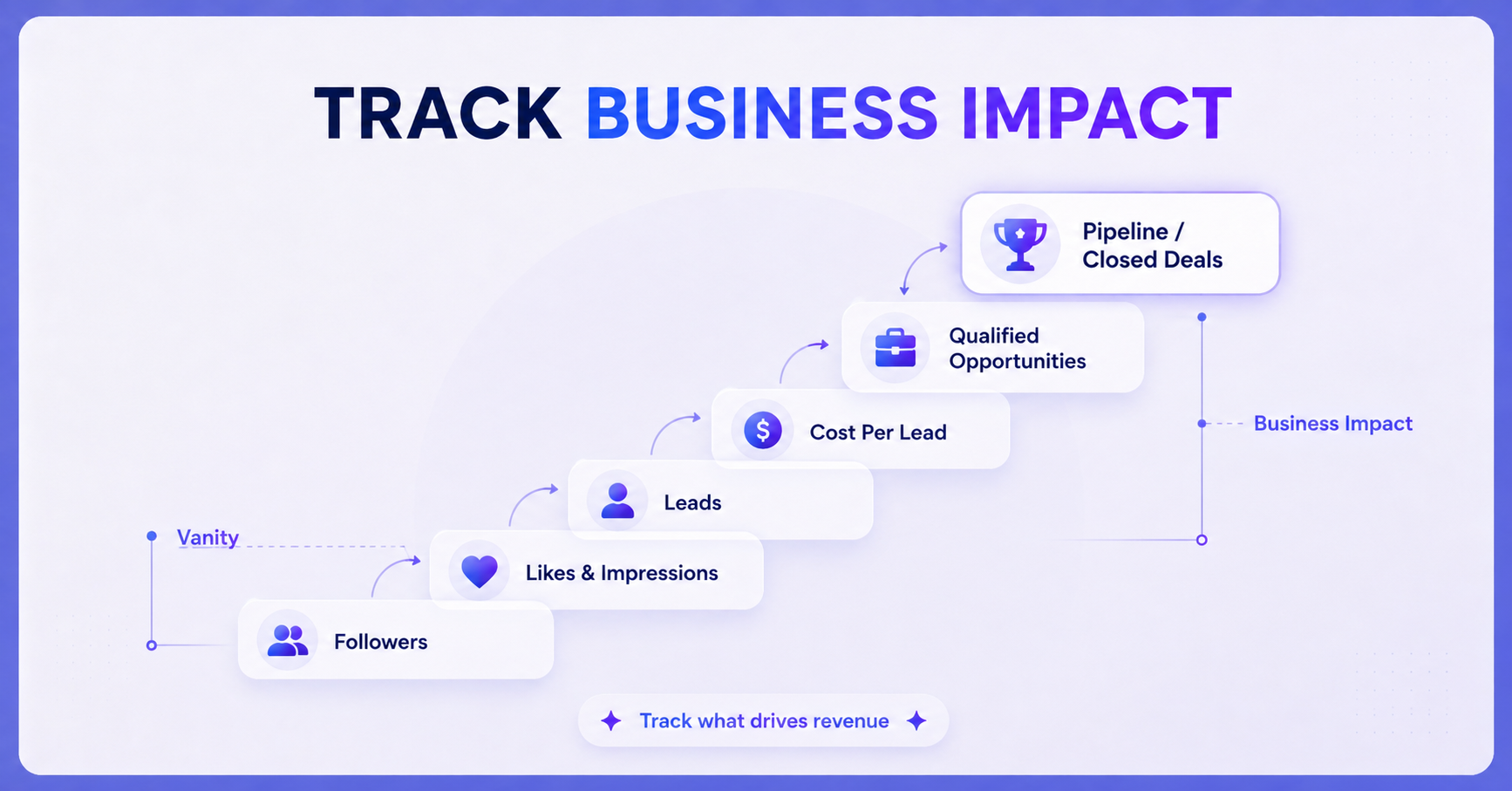
Raw follower counts and likes don't pay bills cost per lead and lead quality do. Broadly, here's how the two platforms tend to compare for B2B:
-
LinkedIn: Higher cost per lead, but leads typically arrive with more context and closer to a buying decision. Better suited to longer sales cycles and higher-ticket B2B offers.
-
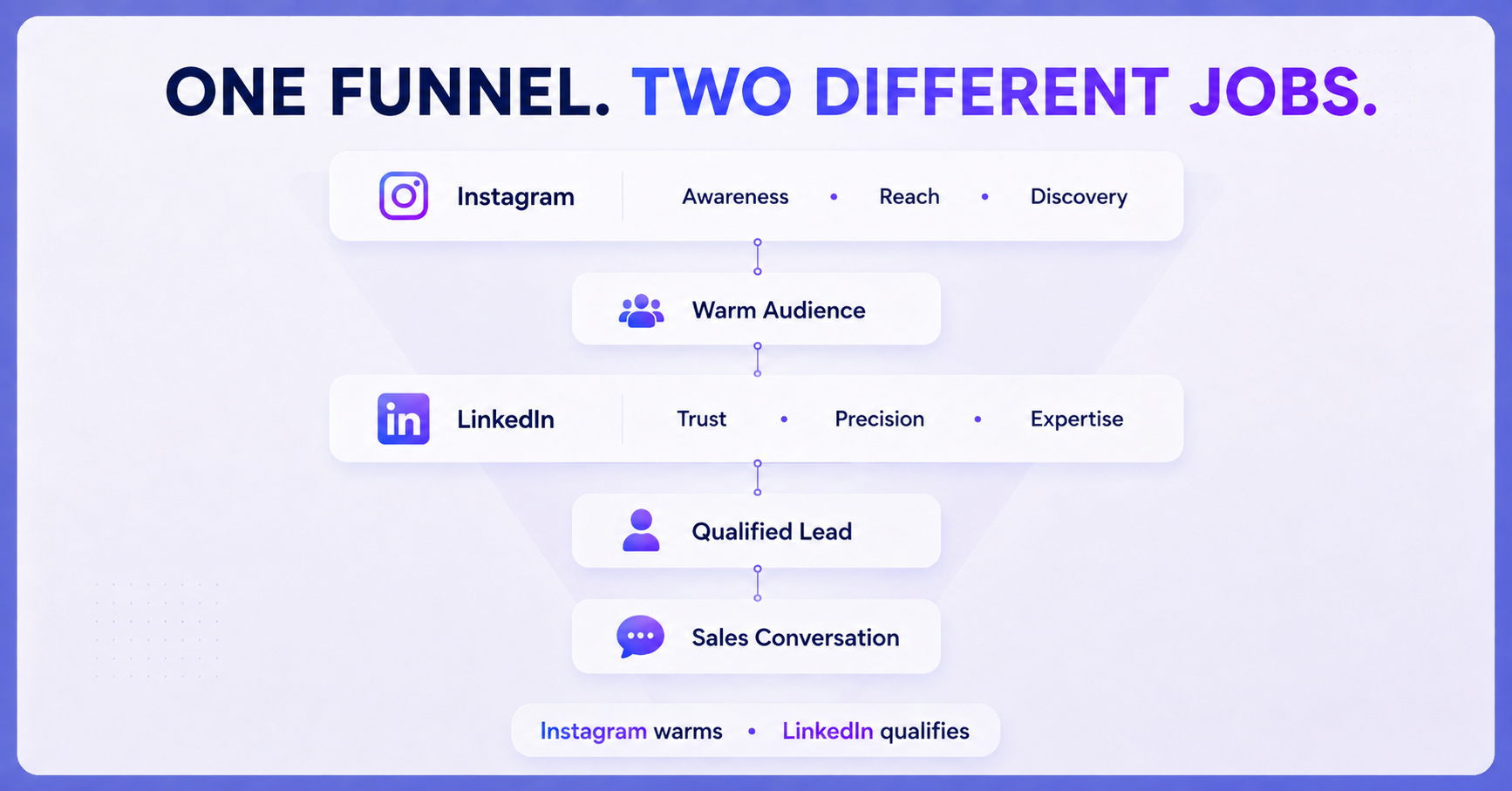
Instagram: Lower cost per lead and impression, but leads often need more nurturing before they're sales-ready. Better suited to building awareness and filling the top of a funnel that LinkedIn or email later converts.
This is exactly why treating it as an either/or question misses the point. The platforms aren't competing for the same job they're doing two different jobs in the same funnel.
A Framework for Deciding Where to Focus
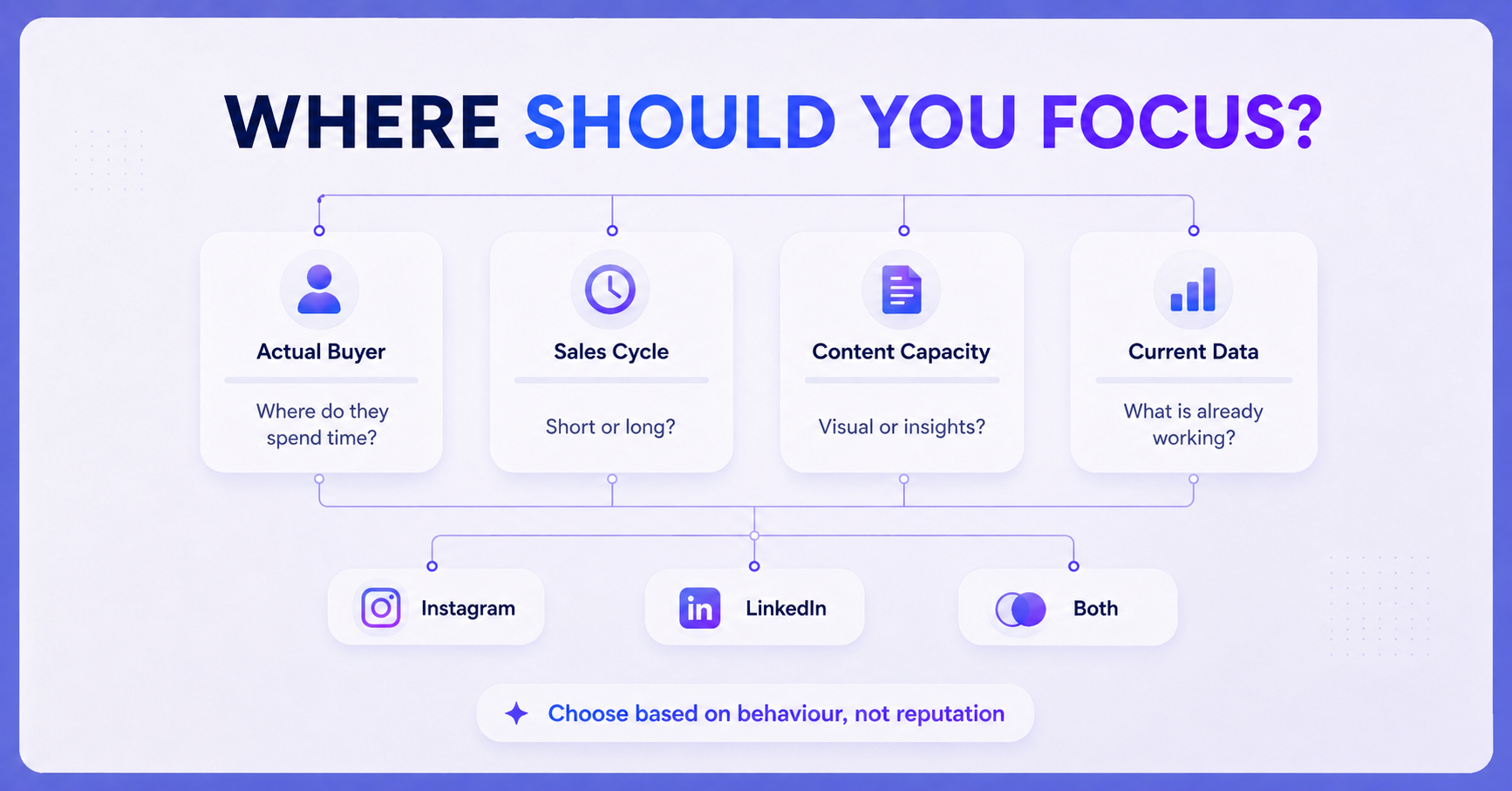
Rather than picking a platform based on reputation, work through these questions:
1. Who is your actual buyer, and how do they behave online? A CFO evaluating enterprise software behaves very differently online than a boutique studio owner looking for a new vendor. The former is more reachable through LinkedIn's professional context; the latter often blurs personal and professional browsing on Instagram.
2. How long is your sales cycle? Long, high-consideration B2B sales cycles (enterprise software, consulting, large contracts) tend to favor LinkedIn's precision targeting and thought-leadership content. Shorter, lower-friction B2B purchases (tools, services, smaller contracts) can convert well from Instagram's broader, cheaper reach.
3. What's your content capacity? LinkedIn organic growth rewards consistent, personal, founder-led content over months. Instagram rewards visual storytelling and short-form video. Be honest about which format your team can actually sustain a platform strategy only works if you can execute it consistently.
4. What's actually working right now? If you're already running both, look at where your existing leads are actually coming from not where you assumed they'd come from. This is often the most overlooked step: gut instinct about "where B2B lives" is frequently wrong once the data comes in.
The Case for Running Both — Strategically
For most B2B businesses, the strongest answer isn't "pick one" it's "run both, but assign them different jobs." Instagram builds awareness and warms an audience cheaply at scale. LinkedIn converts that awareness into qualified, sales-ready conversations through precision targeting and thought leadership.
This is the approach behind Nova Vision's own Social Media Marketing (Organic + Paid) service building platform-specific strategies rather than copy-pasting one content calendar across every channel. A B2B client's LinkedIn presence and Instagram presence should rarely look identical, because they're talking to the same buyer at different points in their journey.
Common Mistakes B2B Brands Make on Both Platforms
Even with the right platform chosen, execution mistakes are what actually kill B2B social results. A few of the most common:
Treating LinkedIn like a digital resume instead of a content platform. Many B2B company pages post nothing but job openings and press releases, then wonder why organic reach is flat. LinkedIn's algorithm currently rewards personal profiles and genuine thought leadership far more than polished corporate announcements a founder's honest post about a lesson learned will usually outperform a branded graphic every time.
Running the same ad creative on both platforms. What stops the scroll on Instagram bold visuals, fast cuts, casual tone — often reads as out of place in LinkedIn's more professional feed, and vice versa. Native, platform-specific creative consistently outperforms repurposed content.
Measuring vanity metrics instead of pipeline impact. Follower growth and likes feel good to report, but they don't tell you whether social is actually contributing to closed deals. Without tracking that ties specific leads back to specific platforms and campaigns, it's impossible to know where budget is actually working.
Giving up too early. Organic social, especially on LinkedIn, compounds slowly. A founder who posts consistently for three months before quitting because "it's not working" is usually quitting right before the algorithm and audience trust start to build meaningfully.
Ignoring community management. A lead form that generates a response, or a comment that goes unanswered for days, is a lost opportunity especially in B2B, where a slow reply can read as a lack of professionalism. Both platforms reward brands that engage quickly and like a real person, not a bot.
Real-World Signal: What the Data Shows
Client results vary by industry and offer, but the pattern holds across most B2B and B2B-adjacent engagements: campaigns that combine organic content with a paid layer consistently outperform either channel run alone. Organic builds the trust and context; paid accelerates reach to the right audience once that context exists. Nova Vision's own client engagements have seen results like 480% average revenue growth and a 3.2x average ROI over six-month periods when organic and paid social are run as one coordinated engine rather than two separate efforts a pattern that holds whether the primary platform is Instagram, LinkedIn, or a deliberate mix of both.
What Success Actually Looks Like
It's worth being clear-eyed about timelines. Organic growth on either platform typically shows early movement within the first month, with real, compounding results over three to six months. Paid campaigns can generate measurable leads faster — often within the first 30 days but the ceiling on paid performance is usually set by how strong the organic foundation and creative underneath it already are.
The metric worth tracking isn't follower count on either platform it's cost per lead and, further down the funnel, cost per qualified opportunity. A platform that generates ten low-intent leads for the same spend as three high-intent ones from the other platform isn't necessarily winning; it depends entirely on what your sales team can actually close.
Frequently Asked Questions
1.Is LinkedIn always better than Instagram for B2B companies?
Not always. LinkedIn tends to outperform for longer, higher-consideration sales cycles where precise job-title and company targeting matters. Instagram can outperform for B2B brands with a strong visual story, a shorter sales cycle, or a buyer persona that behaves more like a consumer online small business owners, solo founders, and creative-industry buyers, for example.
2. Should a B2B startup with a limited budget choose just one platform?
If budget genuinely forces a choice, match the platform to your sales cycle: shorter and lower-ticket favors Instagram's cheaper reach; longer and higher-ticket favors LinkedIn's precision. But even a small budget split most spend on the primary platform, a smaller test budget on the other often outperforms going all-in on one channel too early.
3. How many posts per week should a B2B brand publish on each platform?
A useful starting rhythm is 5–7 posts per week on Instagram and 3–5 per week on LinkedIn, with consistency mattering more than volume. A steady, sustainable rhythm outperforms sporadic bursts of content on either platform.
4. Can paid ads on Instagram generate genuinely qualified B2B leads, or is it only useful for awareness?
Paid Instagram ads can generate qualified leads, particularly when retargeting an audience that has already engaged with your brand elsewhere. Used purely for cold outreach without any retargeting layer, Instagram ads tend to perform better as an awareness and top-of-funnel tool than a direct-response lead generator.
The Bottom Line
There's no universal winner between Instagram and LinkedIn for B2B lead generation there's only the right platform, or the right combination, for your specific buyer, sales cycle, and content capacity. The businesses that get this right aren't the ones that pick a side; they're the ones that assign each platform a clear job and measure it against the right metric.
Not sure which platform mix is right for your business? Book a free strategy call with Nova Vision and we'll map out a social media plan built around your actual buyers not a generic content calendar.