In 2026, attention is the scarcest resource in marketing. Brands that once poured budgets into polished two-minute hero videos are now watching short, snappy 15-second Reels quietly outperform them on almost every metric that matters completion rate, reach, and cost per engagement. At Nova Vision, we've spent this year testing both formats across client campaigns, and the pattern is consistent: shorter is winning, and it's not just a fluke of algorithm favoritism. It's a fundamental shift in how audiences consume video.
This post breaks down why 15-second Reels are pulling ahead, what the data actually shows, and how Nova Vision helps brands restructure their video strategy to match where attention is actually going in 2026.
The Numbers Behind the Shift
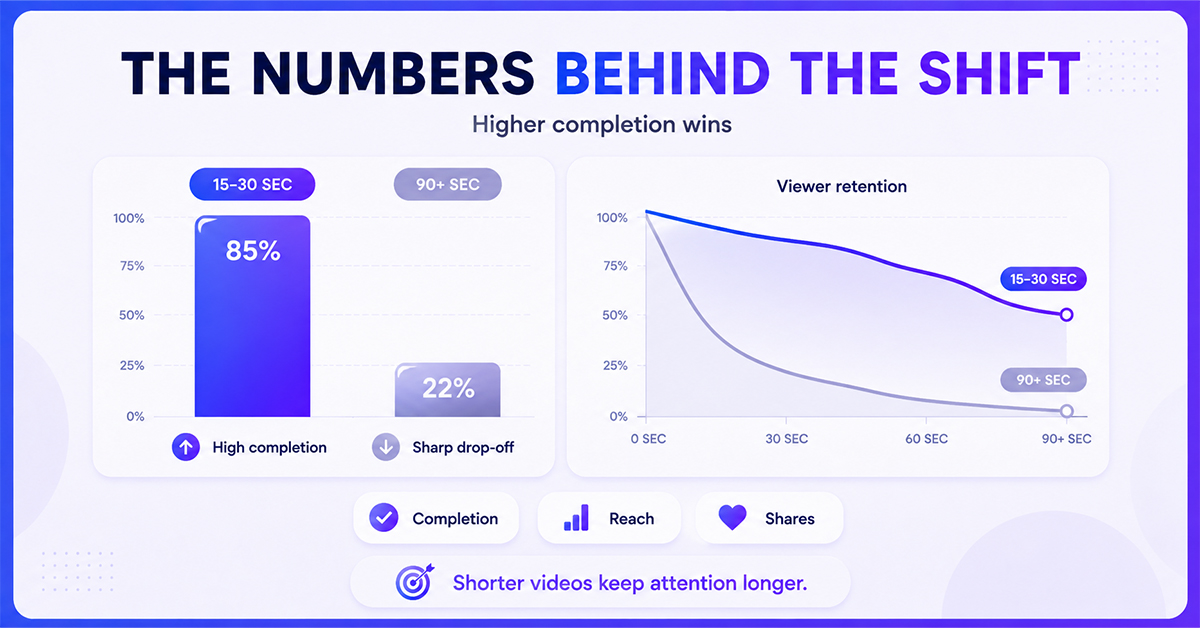
Short-form video isn't a trend anymore it's the default. Recent industry data shows 15-second Reels hitting completion rates as high as 91%, while videos crossing the 90-second mark see a sharp drop-off in viewers sticking around to the end. Even as platforms like Instagram, TikTok, and YouTube raise their upload length caps, audience behavior is moving in the opposite direction: viewers consistently reward videos under 30-60 seconds with higher completion, share, and save rates.
The takeaway for brands is simple. A longer runtime doesn't buy you more attention it usually costs you attention. The algorithm notices when people scroll away early, and that signal quietly suppresses future reach.
This isn't a small gap either. Across multiple 2026 industry reports, short clips under 90 seconds retain roughly 50-60% of viewers to the end, while engagement on formats over two minutes trails significantly behind, even on platforms that technically allow uploads of 20 minutes or more. The platforms are giving brands more room, but audiences aren't using it and that mismatch is where most wasted video budget is going in 2026.
What makes this worth paying attention to isn't just the completion rate it's what completion rate signals to the algorithm. A video watched all the way through gets treated as high-quality content and pushed to more feeds. A video that loses half its audience by the 20-second mark gets quietly throttled, no matter how much it cost to produce. Runtime isn't just a creative choice anymore it's a distribution lever.
Platform-by-Platform: Where the Gap Is Widest
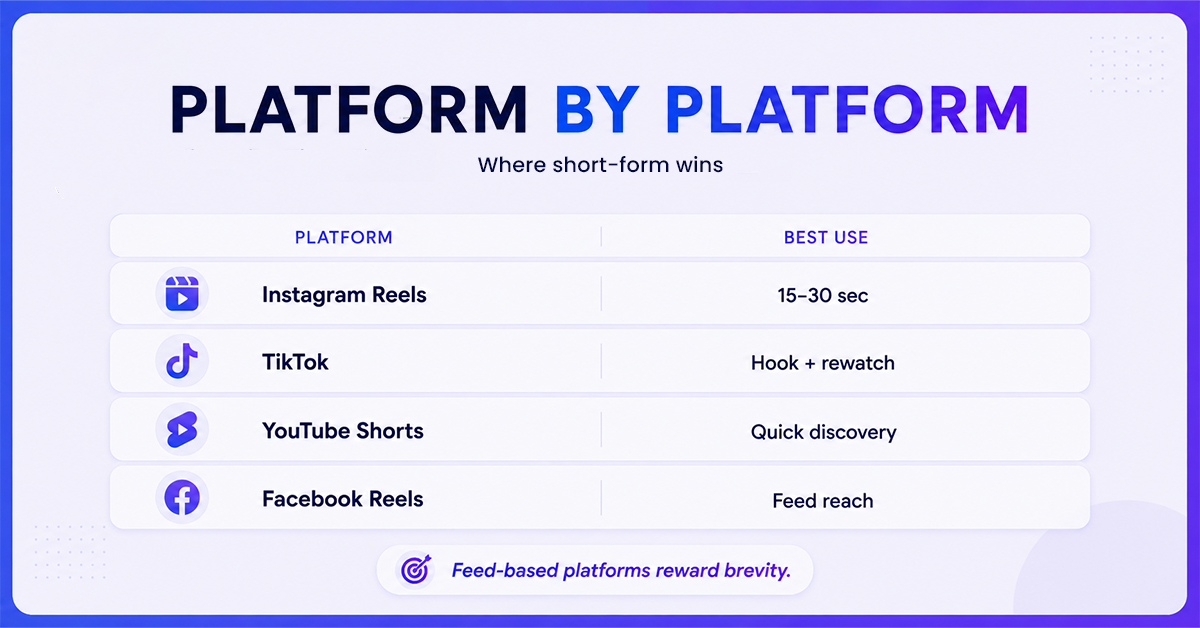
The short-form advantage isn't identical across every platform, which matters for where Nova Vision recommends brands invest first.
● Instagram Reels: The sweet spot sits around 15-30 seconds, with Reels in this range posting some of the highest engagement rates on the platform, which now leans heavily on Reels for time spent.
● TikTok: Tight, hook-driven videos still outperform longer uploads in views and shares TikTok rewards rewatchability more than any other platform, and short clips are easier to rewatch.
● YouTube Shorts: Shorts generate tens of billions of daily views platform-wide, and short cuts of longer content routinely outperform the original long-form video in reach.
● Facebook Reels: Now accounting for roughly half of all time spent on Facebook, Reels have become the platform's dominant format.
The pattern across every platform is the same: the feed environment rewards brevity, while owned or search-driven environments still have room for longer content.
Why Shorter Wins: The Attention Economy Explained
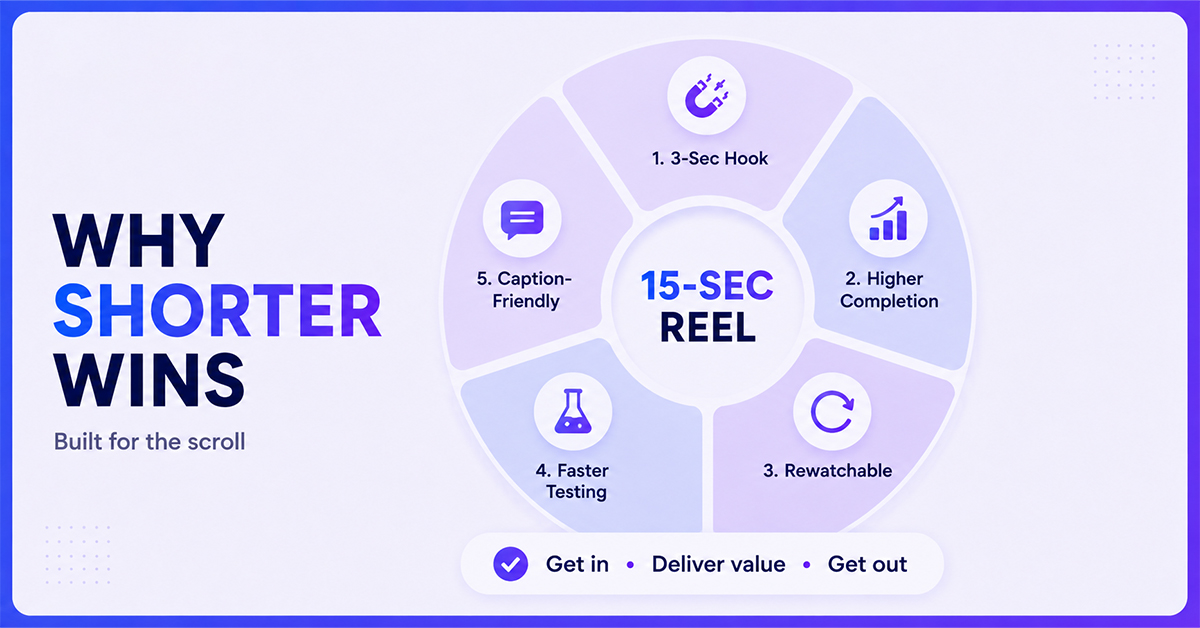
● The scroll is the competition: Every Reel is competing not against other brand videos, but against an endless feed of entertainment, friends' posts, and creators. A 15-second window respects that reality.
● The hook has 3 seconds to work: Short formats force brands to lead with the payoff instead of building up to it which is exactly how modern viewers watch.
● Algorithms reward completion, not effort: Platforms optimize for watch-through rate. A fully watched 15-second Reel signals quality more strongly than a half-watched 2-minute video.
● Repetition beats duration: A short, punchy Reel is more likely to be rewatched or shared, compounding its reach organically something a long video rarely achieves.
● Lower production risk, faster iteration: A 15-second Reel takes far less time and budget to produce than a polished two-minute film, letting brands test several ideas in the time it takes to produce one long-form video.
● Captions do the heavy lifting: Since a large share of video is watched with sound off, short videos built around strong captions and pacing see meaningfully higher watch time than videos depending on voiceover to land the message.
None of this is really about attention spans getting shorter, despite how often that explanation gets repeated. It's about choice volume. The format that respects that reality get to the point fast, deliver value, get out is the one that wins the scroll.
A Practical Comparison: 15 Seconds vs. 2 Minutes
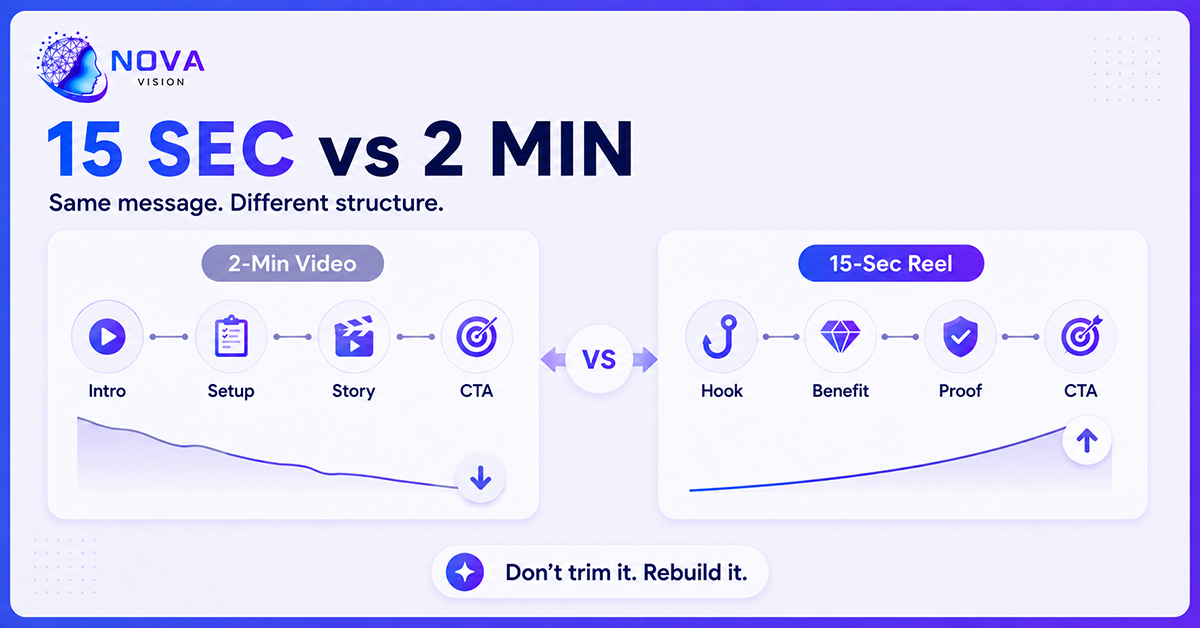
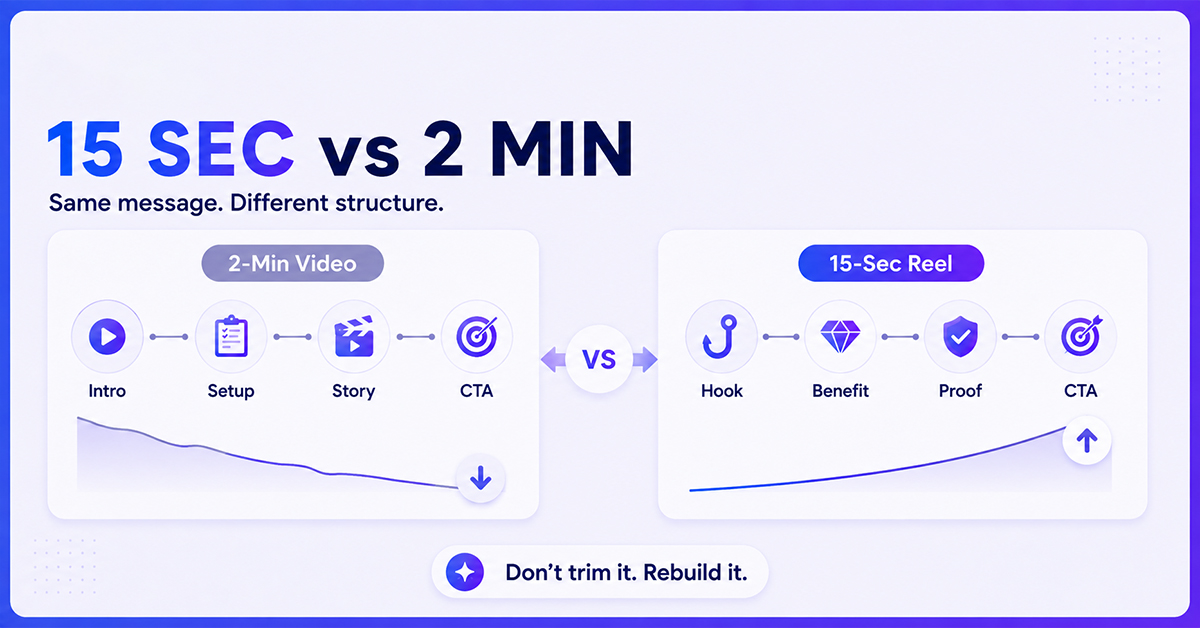
A 2-minute brand video typically front-loads a slow build: a logo intro, scene-setting, a narrative arc, and a call to action at the very end a structure borrowed directly from TV advertising. Feed-based platforms don't reward that structure. Most viewers have already scrolled past before the message lands.
A 15-second Reel flips that entirely. The payoff comes in the first three seconds, the message repeats visually throughout, and the call to action is baked into the caption rather than saved for a closing frame nobody sees. It's not a shorter version of the same video it's a fundamentally different piece of communication.
This is the mistake Nova Vision sees most often: brands trimming their 2-minute video down to 15 seconds instead of rebuilding it for the format. A trimmed video keeps the slow build and cuts it off mid-thought. A rebuilt video starts where the trimmed one would have ended.
Where 2-Minute Videos Still Matter
This doesn't mean long-form brand video is dead. Two-minute videos still have a place for product explainers, testimonials, or storytelling on owned channels like YouTube or a website landing page, where the viewer has already opted into deeper engagement. The mistake most brands make is using long-form content in short-form environments. A 2-minute video dropped into a Reels feed is fighting the platform's own behavior patterns.
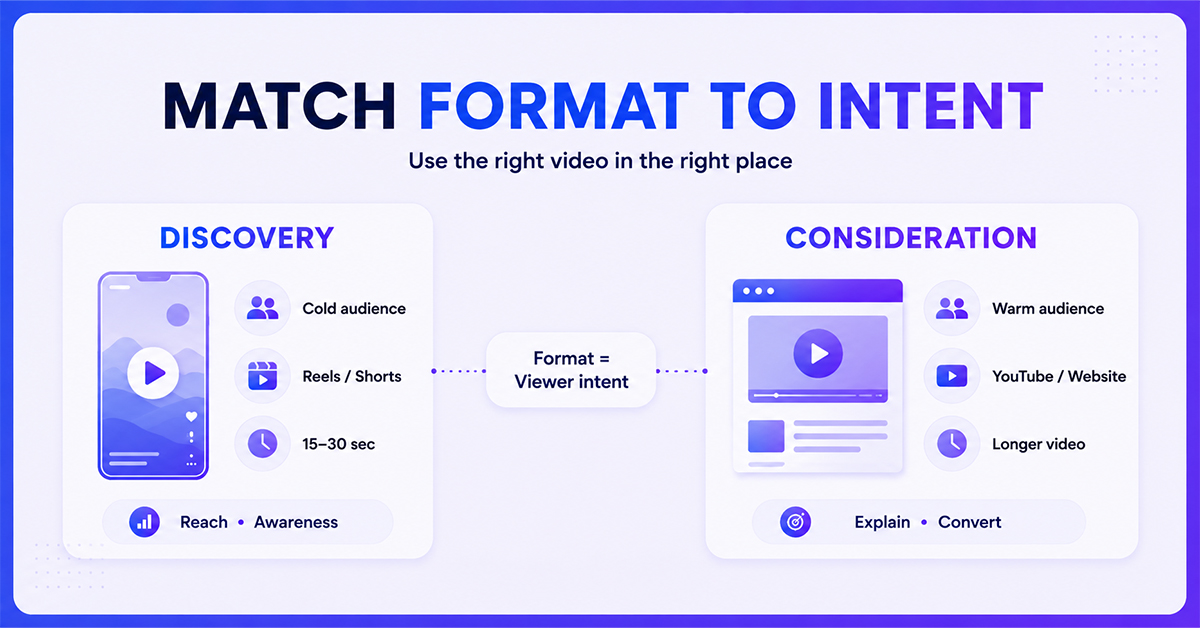
Nova Vision's approach isn't 'short-form only.' It's matching format to intent: short, high-frequency Reels for discovery and top-of-funnel reach, and longer video for consideration and conversion stages, placed where audiences expect to watch longer.
How Nova Vision Approaches Video Strategy in 2026
At Nova Vision, we help brands stop treating video length as a creative afterthought and treat it as a strategic decision instead. Our process typically involves:
● Auditing existing video assets to identify what can be re-cut into 15-30 second Reels without losing the core message
● Building hook-first scripts designed for the first 3 seconds, not the first 30
● Mapping content to funnel stage short Reels for reach, longer video for nurture and conversion
● Testing pacing and captions, since caption-heavy short videos consistently see higher watch-through rates
The goal isn't just more views it's building a video strategy that respects how people actually watch in 2026, rather than how brands wish they still watched.
Common Mistakes Brands Make When Shifting to Short-Form
● Cutting instead of rebuilding: Trimming a long video down loses the hook-first structure that makes short-form work in the first place.
● Treating every platform the same: A Reel optimized for Instagram rarely performs as well when reposted unchanged to TikTok or Shorts.
● Saving the CTA for the end: If the call to action only appears in the final second, most viewers never see it.
● Ignoring captions: Skipping captions on a video meant to be watched sound-off is one of the fastest ways to lose watch time.
● Measuring the wrong metric: Views alone don't tell the story completion rate and share rate are far better indicators of success.
How to Know Which Format Is Right for Your Next Video
Not every brand goal calls for the same format. Before deciding on length, it helps to ask: Where will this video live a feed the viewer didn't ask to see, or a page they clicked into on purpose? A cold audience scrolling a feed has committed nothing yet, which is why 15-second Reels work so well for top-of-funnel reach. A warm audience clicking into a product page or search result has already committed attention, which is where a 2-minute explainer can earn its runtime. Matching format to that level of commitment is what separates video budgets that convert from video budgets that just accumulate views.
A Hypothetical Campaign: What Reformatting Looks Like
To make this concrete, picture a mid-sized DTC brand launching a new product with a single two-minute hero video the kind most agencies still default to. It opens with a logo animation, moves into founder narration, cuts to lifestyle b-roll, and closes with a call to action in the final ten seconds. Posted natively to a Reels feed, a video like this typically loses the majority of its audience before the thirty-second mark, because nothing in the first three seconds gives a scrolling viewer a reason to stop.
Now picture the same core message rebuilt as a 15-second Reel. The opening frame shows the product already in use, with the single strongest benefit stated as on-screen text within the first second. The founder narration is compressed into one punchy line layered over quick cuts, and the call to action appears both on-screen and in the caption, not buried at the end. Nothing about the underlying product message has changed only the structure has. This is the kind of reformatting work that tends to close the gap between a video that gets made and a video that actually gets watched, and it's the difference Nova Vision looks for first when auditing a client's existing library.
The lesson generalizes well beyond any single campaign: the underlying story a brand wants to tell rarely needs to shrink. What needs to change is the order in which it's told.
Building a Short-Form-First Content Calendar
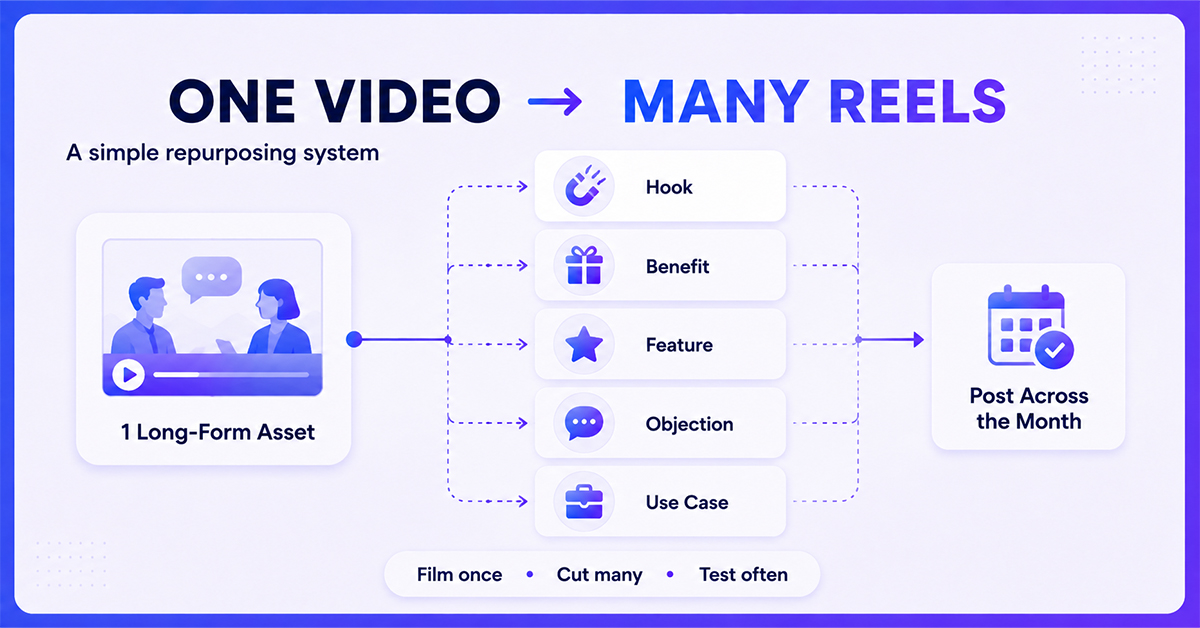
Shifting toward 15-second Reels isn't just a production decision it changes how a content calendar should be structured month to month. A single 2-minute video shoot can typically be broken into anywhere from five to ten short-form pieces, each built around one specific claim, feature, or moment rather than trying to carry the entire brand message at once.
● Start with one long-form asset per month as the raw material a product shoot, a founder interview, an event, or a testimonial session.
● Break it into single-idea clips: one Reel per benefit, one per objection handled, one per use case, rather than one video trying to say everything.
● Stagger posting across the month instead of releasing everything at once, so the algorithm sees consistent activity rather than a single burst followed by silence.
● Reuse top performers as paid creative once organic data shows which hook and pacing actually held attention this removes the guesswork from ad spend.
This approach also solves a problem most in-house teams run into eventually: production fatigue. Filming once and cutting many times is far more sustainable than treating every single Reel as its own shoot, and it keeps the brand's message consistent across dozens of short-form touchpoints instead of scattered across unrelated one-off videos.
Frequently Asked Questions
Does this mean brands should stop making long-form video entirely?
No. Long-form video still performs well in owned, opted-in environments YouTube search, website landing pages, sales enablement, and email. The shift is about matching length to environment, not eliminating longer content altogether.
Is 15 seconds a hard rule?
Not exactly. The data points to a range, generally 15-30 seconds for Instagram Reels and slightly longer for other platforms. What matters more than hitting an exact number is front-loading the message and cutting anything that doesn't earn its place in those first few seconds.
Will short-form content look less premium than a polished long-form video?
Not if it's built with intent. Short-form isn't an excuse for lower production value it's a different set of priorities. Strong hooks, clean captions, and tight pacing can feel just as premium as a cinematic two-minute film, often more so, because the viewer actually sees the whole thing.
How does Nova Vision measure success on short-form video?
Completion rate and share rate first, view count second. A video with fewer total views but a high completion rate is usually doing more for a brand than one with high views and a steep early drop-off, because completion is what the algorithm rewards with future reach.
Final Thoughts
The rise of 15-second Reels over 2-minute brand videos isn't a passing algorithm quirk it's a reflection of a feed-first content culture that's here to stay. Brands that adapt their video strategy around short, high-impact formats, while still using long-form content where it belongs, will consistently outperform those still investing heavily in lengthy productions.
Nova Vision helps brands navigate exactly this shift, building video strategies rooted in real performance data rather than outdated production habits. If your brand's videos are getting made but not watched, the length is the first thing worth rethinking