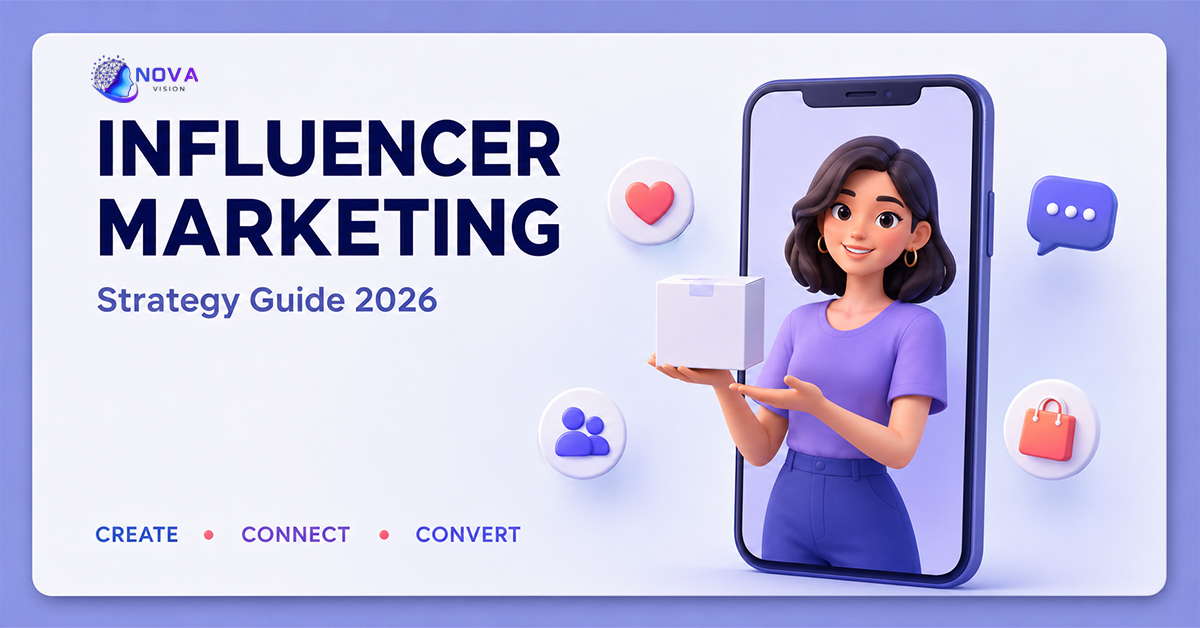
An Influencer Strategy Guide for 2026
A complete, data-backed, easy-to-follow guide to what influencer marketing is, why it works, and how to build a winning strategy — with real brand case studies and 2026 industry data.
Picture this: you're lying in bed, scrolling Instagram before sleep, and someone you've followed for two years — not a celebrity, just a person whose taste you trust — mentions a serum she's used every night for a month. You don't scroll past it. You screenshot it. You might even order it before you close the app.
That one small, ordinary moment, repeated across billions of screens every single day, is the engine behind a global industry now worth well over $32 billion. That's influencer marketing — and if you've ever wondered what it actually is, how it works, or whether it deserves a place in your 2026 marketing budget, this guide answers all of it.
We'll cover the plain-English definition, the numbers that matter right now, the different types of influencers, a step-by-step breakdown of how a campaign actually runs, real case studies from brands you already know, and a practical strategy you can start using this quarter. No jargon for the sake of it — just what genuinely works.
What Is Influencer Marketing? A Simple Definition
In the simplest terms, influencer marketing is a partnership between a brand and a person who has built genuine trust and an engaged audience online — on Instagram, YouTube, TikTok, LinkedIn, or even a blog. The brand pays, gifts, or otherwise compensates that person to talk about its product or service, and the influencer shares it with their audience in their own voice, style, and format.
Think of it as word-of-mouth marketing at scale. For as long as commerce has existed, a friend's recommendation has beaten almost any advertisement. Influencer marketing simply moves that same dynamic online, where the “friend” might be a skincare enthusiast with 40,000 followers or a home-cook with 8,000 devoted subscribers.
The key difference from traditional advertising is simple: a television ad talks at an audience. An influencer talks to their community, as one of them — and that's exactly why it works so well.
Why Influencer Marketing Matters in 2026
Influencer marketing isn't an experimental side-tactic anymore — it has become core marketing infrastructure for brands of every size, from small D2C startups to global FMCG companies.
Here's what the data says heading into 2026:
-
The global influencer marketing industry crossed $32.55 billion in 2025, up from under
$10 billion in 2020 — more than tripling in five years.
-
Most current industry estimates place the 2026 market above $40 billion.
-
59% of marketers plan to increase their influencer marketing budget in 2026 — not just maintain it.
-
The average return is $5.78 for every $1 spent, making it one of the highest-performing channels in digital marketing today.
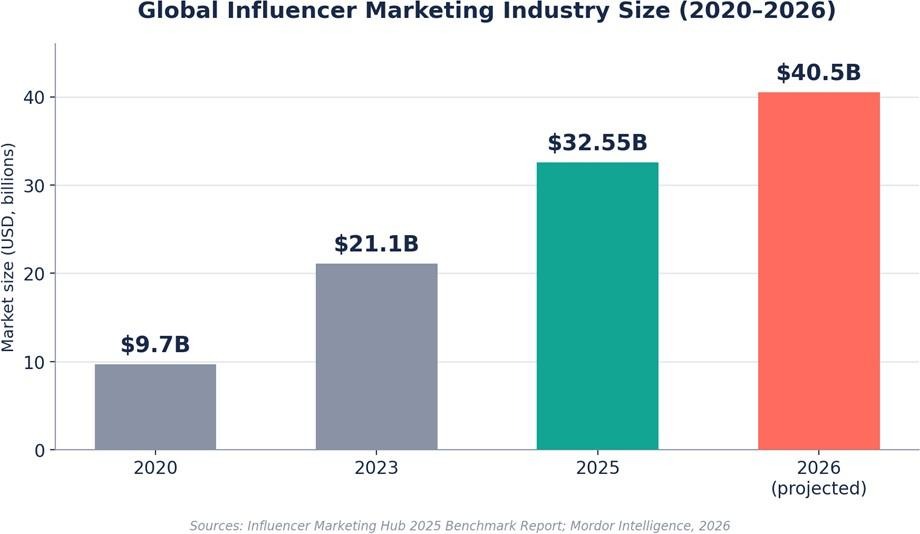
Figure 1: Global influencer marketing industry size, 2020–2026.
The pattern across every recent report is consistent: budgets are shifting away from traditional paid social, where costs keep climbing and creative fatigue sets in fast, and moving toward creator-led content that still feels personal, even at scale.
The Different Types of Influencers
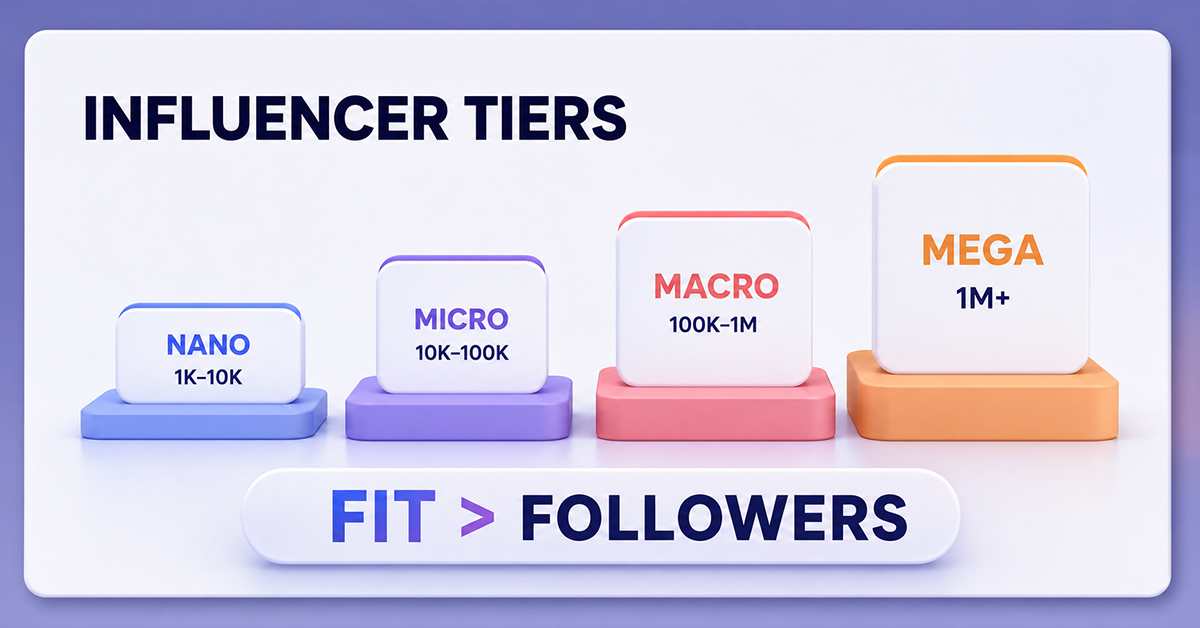
Not all influencers are the same, and follower count is honestly the least useful way to judge one. The market splits into four broad tiers, and each behaves very differently in terms of cost, trust, and results.
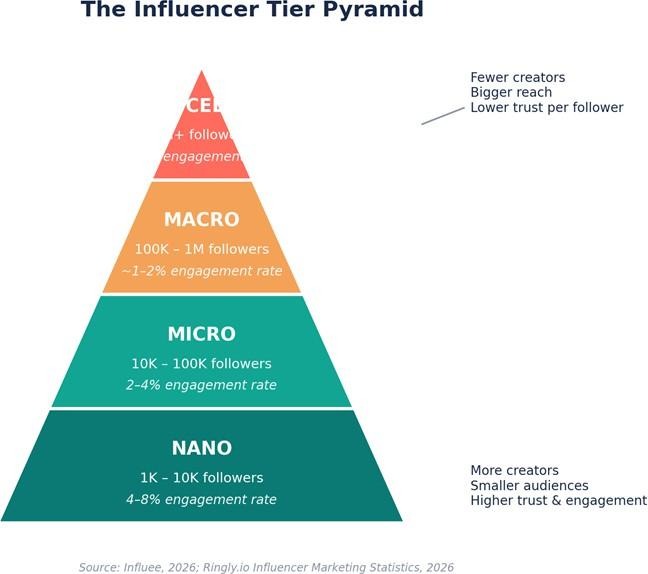
Figure 2: The influencer tier pyramid — follower range and typical engagement by tier.
|
Tier |
Followers |
Engagement |
Best For |
Typical Use |
|
Nano |
1K – 10K |
4–8% |
Hyperlocal trust, tight communities |
Gifting, local businesses |
|
Micro |
10K – 100K |
2–4% |
Best all-round ROI, niche authority |
Most brand campaigns, affiliate deals |
|
Macro |
100K – 1M |
~1–2% |
Broad reach, still relatable |
Product launches, awareness pushes |
|
Mega / Celebrity |
1M+ |
<1% |
Mass awareness, prestige |
Big launches, top-of-funnel reach |
Notice the pattern: as follower count goes up, the engagement rate goes down. That single fact is the reason the ROI numbers later in this guide surprise so many first-time marketers
How Influencer Marketing Works: The Campaign Flow
Whether it's a ₹5,000 nano-influencer gifting deal or a six-figure celebrity contract, almost every real influencer marketing campaign follows the same six-step flow.
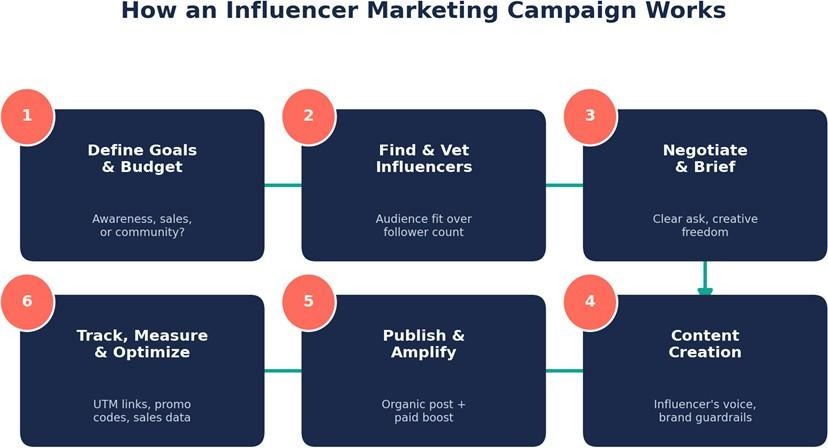
Figure 3: The six stages of a typical influencer marketing campaign.
-
Define goals and budget — decide upfront whether this campaign is meant to build awareness, drive sales, or grow community. Trying to chase all three with one campaign usually means measuring none of them well.
-
Find and vet influencers — look for audience overlap and authenticity, not just follower count. A smaller, well-matched creator consistently beats a bigger, mismatched one.
-
Negotiate and brief — agree on deliverables, timelines, and payment (cash, product, commission, or a mix), and give a clear brief that still leaves room for the creator's own voice.
-
Content creation — let the influencer lead with their natural style. Over-scripted content is easy to spot, and audiences trust it far less.
-
Publish and amplify — post organically first, then consider boosting the best-performing content with a small paid spend to extend its reach.
-
Track, measure, and optimize — use UTM links, unique promo codes, or affiliate tags on every single collaboration, so results can actually be tied back to spend.
Types of Influencer Marketing Campaigns
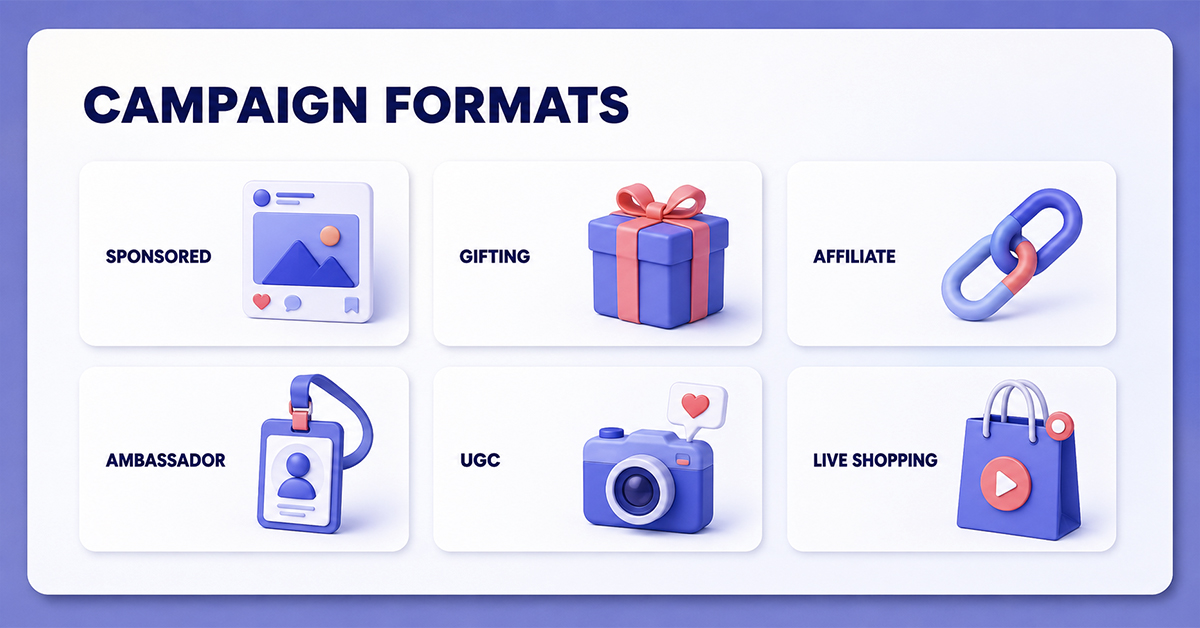
Once the fundamentals are clear, brands typically choose from a handful of proven campaign formats, often layering influencer content into a broader social media marketing strategy — sometimes combining more than one format at once:
-
Sponsored posts & Reels — a single post or Reel featuring the product, the most common entry point.
-
Gifting & unboxing — sending free product in exchange for an honest review or feature, ideal for nano and micro budgets.
-
Affiliate / commission-based deals — the influencer earns a commission on every sale made through their unique link or code.
-
Long-term ambassador programs — a creator represents the brand consistently over months or years, rather than in a single post.
-
Account takeovers — the influencer temporarily runs the brand's own social account for a day or event.
-
UGC licensing — the brand pays for the right to reuse an influencer's content in its own ads and website.
-
Live shopping / creator commerce — real-time product demos with an instant “buy now” option, growing fast on Instagram and TikTok.
-
B2B thought-leadership content — partnering with founders, executives, and subject-matter experts, mostly on LinkedIn; the fastest-growing subcategory in the industry at roughly 47% year-over-year growth.
Real Brand Case Studies: Influencer Marketing in Action
Numbers and frameworks only tell half the story. Here's how three very different brands actually used influencer marketing to grow — and what each one proves.
Case Study 1: Gymshark — From a Garage to a Billion-Pound Brand
Gymshark launched in 2012 as a small UK fitness apparel startup with no advertising budget to speak of. Instead of chasing celebrities, the founders sought out genuine fitness enthusiasts bodybuilders, vloggers, and gym-goers who were already passionate about the category and built long-term relationships with them rather than one-off deals.
Creators like Whitney Simmons and David Laid grew into true “Gymshark Athletes,” representing the brand for years, not weeks. That consistency, combined with community-driven challenges like #Gymshark66 and real-world events such as the Gymshark World Tour, turned an Instagram following into a global movement. Instagram-driven activity accounted for a meaningful share of the brand's early sales, and Gymshark scaled into a company valued at well over £1 billion within roughly a decade.
Case Study 2: Daniel Wellington — A $20,000 Bet That Became $200M+
When Filip Tysander launched Daniel Wellington watches in 2011, he had a modest personal investment to work with not a celebrity budget. His approach: gift watches to hundreds of micro-influencers with one simple ask post a photo wearing it, tag the brand, and share a unique discount code with followers.
No large cash payments changed hands in the early days, and influencers were given creative freedom to shoot the product in their own style. The result was a wave of authentic, varied
user-generated content that spread far wider than any single campaign could on its own. Within a few years, Daniel Wellington had sold over a million watches and crossed $200 million in revenue built almost entirely on a gifting-based micro-influencer model.
The lesson: you don't need a celebrity budget. Gifting plus a trackable discount code can outperform paid ads at a fraction of the cost.
Case Study 3: Mamaearth — India's ₹1,000-Crore Natural Beauty Story
Founded in Gurugram in 2016 by Ghazal and Varun Alagh, Mamaearth entered a personal care market long dominated by chemical-heavy legacy brands, with a simple pitch: toxin-free, natural products for babies and families. That pitch needed explaining to Indian consumers, and influencer marketing became the primary tool for doing it.
The brand leaned heavily on micro-influencers and parenting bloggers who could speak credibly about ingredients and everyday use, layering in selective celebrity association including Shilpa Shetty Kundra for broader awareness campaigns. Paired with a digital-first, direct-to-consumer approach and later expansion into Amazon, Nykaa, and offline retail, Mamaearth scaled into a brand valued in the thousands of crores and eventually listed publicly under Honasa Consumer.
The lesson for Indian brands especially: micro-influencer trust-building works even better when you first need to educate a market, before you can ask it to buy.
Measuring ROI: What the 2026 Data Shows
The industry average return is $5.78 for every $1 spent. Micro-influencers specifically outperform that benchmark at $7.14 per $1, and the best-performing beauty and fitness campaigns have reported returns as high as 11x.
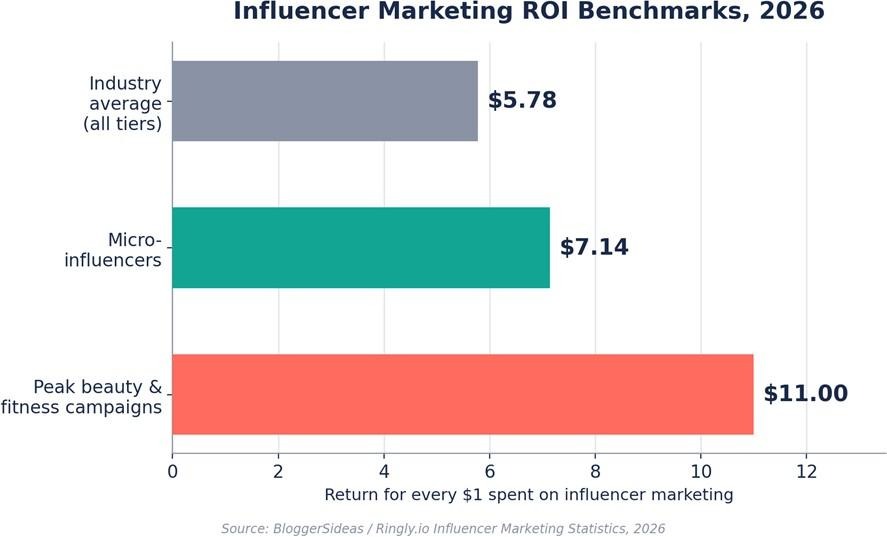
Figure 4: Influencer marketing ROI benchmarks by tier and category, 2026.
But revenue alone doesn't tell the whole story. A genuinely useful measurement plan tracks four layers:
-
Reach & impressions — top-of-funnel visibility; useful, but the weakest signal on its own.
-
Engagement rate — likes, comments, saves and shares relative to audience size; a far more honest signal of real interest than follower count.
-
Conversions & sales — tracked through UTM links, unique promo codes, or affiliate tags on every collaboration.
-
Cost per acquisition — what each resulting customer actually cost you, once creator fees and product costs are factored in.
One pattern worth flagging: sales tracking is the metric most marketers still neglect, even though it's the one that actually justifies budget to leadership. Reach and impressions look good in a report, but they rarely win the next quarter's approval on their own.
Pairing influencer content with strong search engine optimization fundamentals also helps that content keep earning traffic and trust long after the campaign itself has ended.
Building Your Influencer Marketing Strategy for 2026
Here's a practical, step-by-step framework you can apply regardless of your budget size:
-
Set one primary goal. Awareness, conversions, or community — pick one per campaign instead of chasing all three at once.
-
Match your audience, not your ego. Overlap between the influencer's followers and your actual customer matters far more than raw follower count.
-
Start small, then scale. Begin with nano and micro creators to protect budget and gather proof of what works, then layer in macro or mega reach once you know your numbers.
-
Brief, don't script. Give a clear goal and brand guardrails, then let the creator use their own voice — scripted content reads as an ad and consistently underperforms.
-
Track everything, from day one. Every single collaboration should carry a UTM link, unique promo code, or affiliate tag — no exceptions.
-
Play the long game. Long-term ambassador relationships consistently outperform one-off posts, as Gymshark's story shows.
-
Go where the format is going. Short-form vertical video still leads for attention, but don't ignore evergreen, search-friendly formats like optimized YouTube Shorts that keep working long after day one.
-
Review quarterly. Influencer marketing is not “set and forget.” Revisit performance every quarter and reallocate budget toward what's actually converting.
Influencer Marketing Trends to Watch in 2026
-
AI as a production tool, not a face — AI is speeding up editing, repurposing, and analytics, but audiences still want a real human personality leading the relationship, not a synthetic one. Use it to save time, not to replace the person.
-
Short-form video still dominates, but evergreen content is rising — vertical clips remain the top attention-grabber, but brands and creators are increasingly investing in searchable, evergreen formats designed to keep performing long after the first 24 hours.
-
Micro and mid-tier creators are professionalizing — mid-tier creators are increasingly running their pages like small businesses, studying their own analytics and building recurring income through affiliate partnerships.
-
B2B influencer marketing is the fastest-growing subcategory — growing at roughly 47% year-over-year, largely on LinkedIn, as B2B buyers increasingly trust subject-matter voices over traditional sales pitches.
-
Live shopping and creator commerce are scaling up — letting audiences buy directly from a video or livestream without leaving the app, moving from novelty to normal.
-
Fraud detection matters more than ever — with billions in ad spend estimated to be wasted annually on inflated followers and fake engagement, checking an influencer's real audience quality before signing is no longer optional.
Common Mistakes to Avoid
-
Chasing follower count instead of judging audience fit and engagement quality.
-
Skipping a clear brief and then being surprised when the content “doesn't feel on-brand.”
-
Running a campaign with no tracking link or code and being unable to prove the campaign actually worked.
-
Treating every deal as a one-off instead of building a lasting relationship that compounds over time.
-
Overlooking nano and regional creators in favor of only big names with broad, shallow reach.
-
Skipping a check for bought followers or fake engagement before paying for a partnership.
Tools That Help You Get Started
-
Discovery & vetting platforms — to search and filter creators by niche, audience demographics, and authenticity signals.
-
Analytics & fraud-detection tools — to flag inflated follower counts and fake engagement before you sign anyone.
-
Affiliate & UTM tracking tools — to tie every single post back to a measurable outcome.
-
Content rights & UGC licensing tools — to legally reuse strong influencer content inside paid ads and on your website.
If managing all of this in-house feels like a lot, that's exactly the gap a full-service digital marketing agency is built to close — discovery, strategy, creator outreach, and reporting, all under one roof.
Frequently Asked Questions
What is influencer marketing in simple words?
It's when a brand partners with someone who has built an engaged online following, so that person can recommend the brand's product to their audience in an authentic, relatable way rather than through a traditional ad.
How much does influencer marketing cost?
It varies enormously. Nano-influencers often work in exchange for free product worth a few hundred to a few thousand rupees, while macro and celebrity-tier deals can run into tens of thousands of dollars per post. Most brands starting out spend far less by focusing on nano and micro creators first.
Is influencer marketing worth it for small businesses?
Yes — arguably more so than for large brands. Nano and micro-influencer partnerships are typically the most affordable entry point, and they consistently post the highest engagement rates in the entire industry.
What's the difference between influencer marketing and celebrity endorsement?
A celebrity endorsement is usually a single, high-cost, broad-reach deal with someone famous for reasons unrelated to your niche. Influencer marketing typically involves someone who built their following specifically around a topic your audience already cares about — which is why trust and engagement per follower tend to run higher.
How do you measure influencer marketing ROI?
Attach a specific, trackable action to every collaboration — a unique discount code, an affiliate link, or a UTM-tagged link — and compare the resulting revenue or leads against what you spent on that creator.
Conclusion
Influencer marketing works because it doesn't feel like marketing. It works best when the creator's voice stays real, when audience fit matters more than follower count, and when every rupee or dollar spent is tied to something you can actually measure.
Whether your starting budget is a single nano-influencer gifting collaboration or a full multi-tier ambassador program, the fundamentals in this guide — clear goals, the right-fit creator, a trackable link, and a long-term relationship — are exactly what separate campaigns that make noise from campaigns that make sales in 2026.
If you're ready to turn this framework into a live campaign, get in touch with our team and we'll help you build and run an influencer strategy that actually moves the needle.