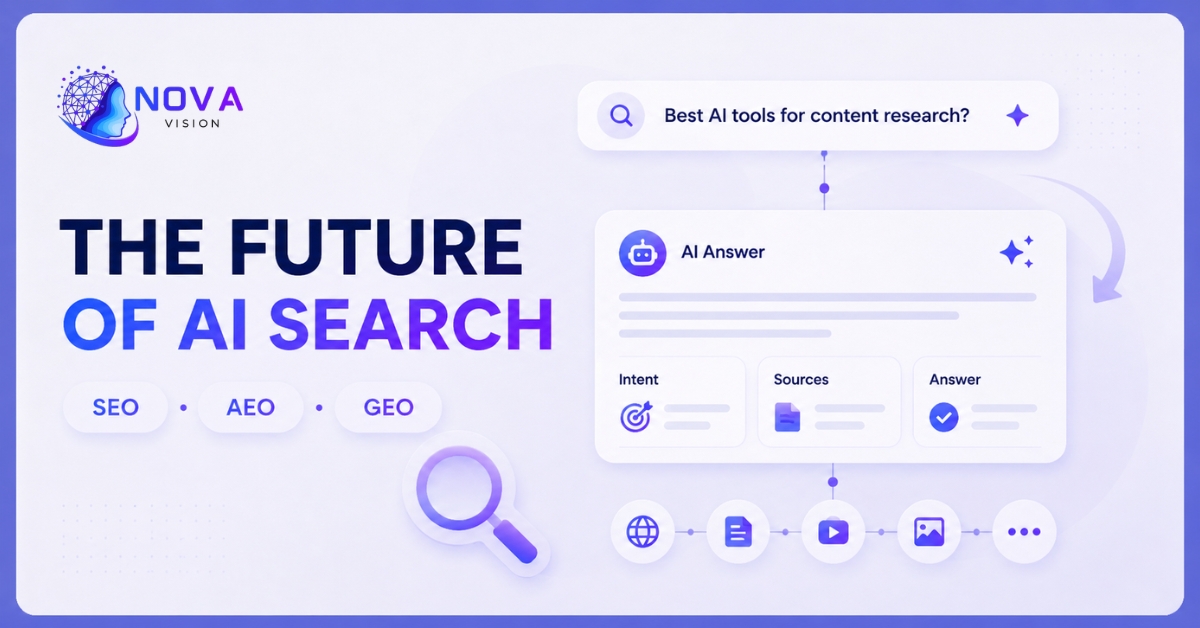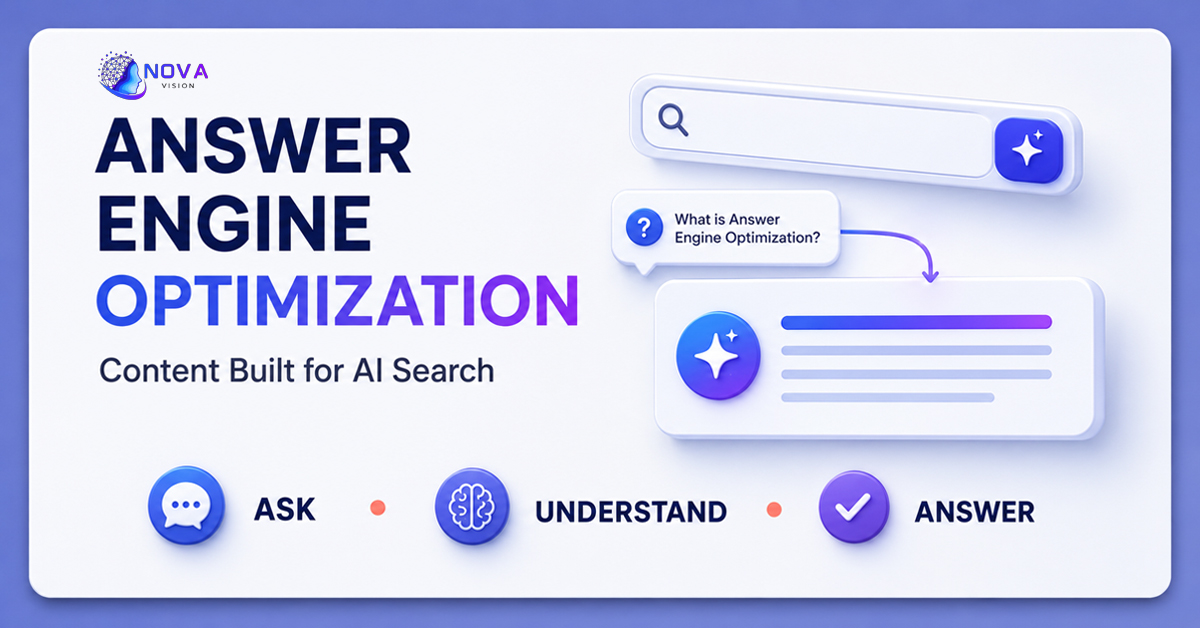
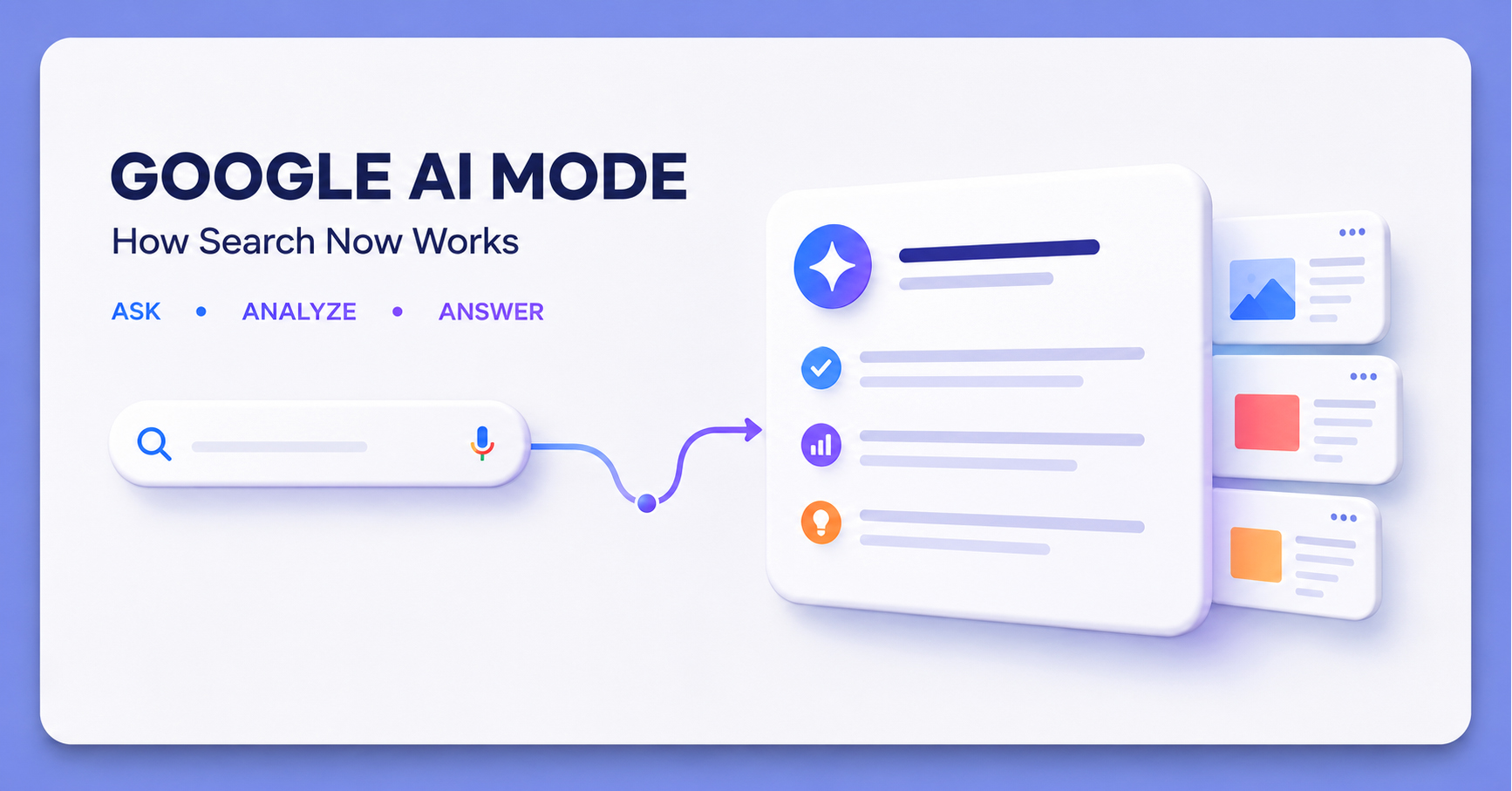
Google Search is evolving rapidly, and artificial intelligence (AI) is at the center of this transformation. With the introduction of Google AI Mode, users can receive conversational, context-aware, and detailed answers instead of simply browsing through a list of blue links. Rather than just pointing users to websites, Google can now generate comprehensive responses by analyzing information from multiple trusted sources.
For businesses, marketers, and website owners, this marks a significant shift in how people discover information online. Traditional SEO remains important, but optimizing content for AI-powered search has become equally essential. Businesses that understand how Google AI Mode works and adapt their content strategies are more likely to maintain visibility and attract qualified traffic.
At Nova Vision, we help businesses stay ahead of digital marketing trends by combining advanced SEO, AI search optimization, and content strategies that align with Google's evolving search experience.
What Is Google AI Mode?
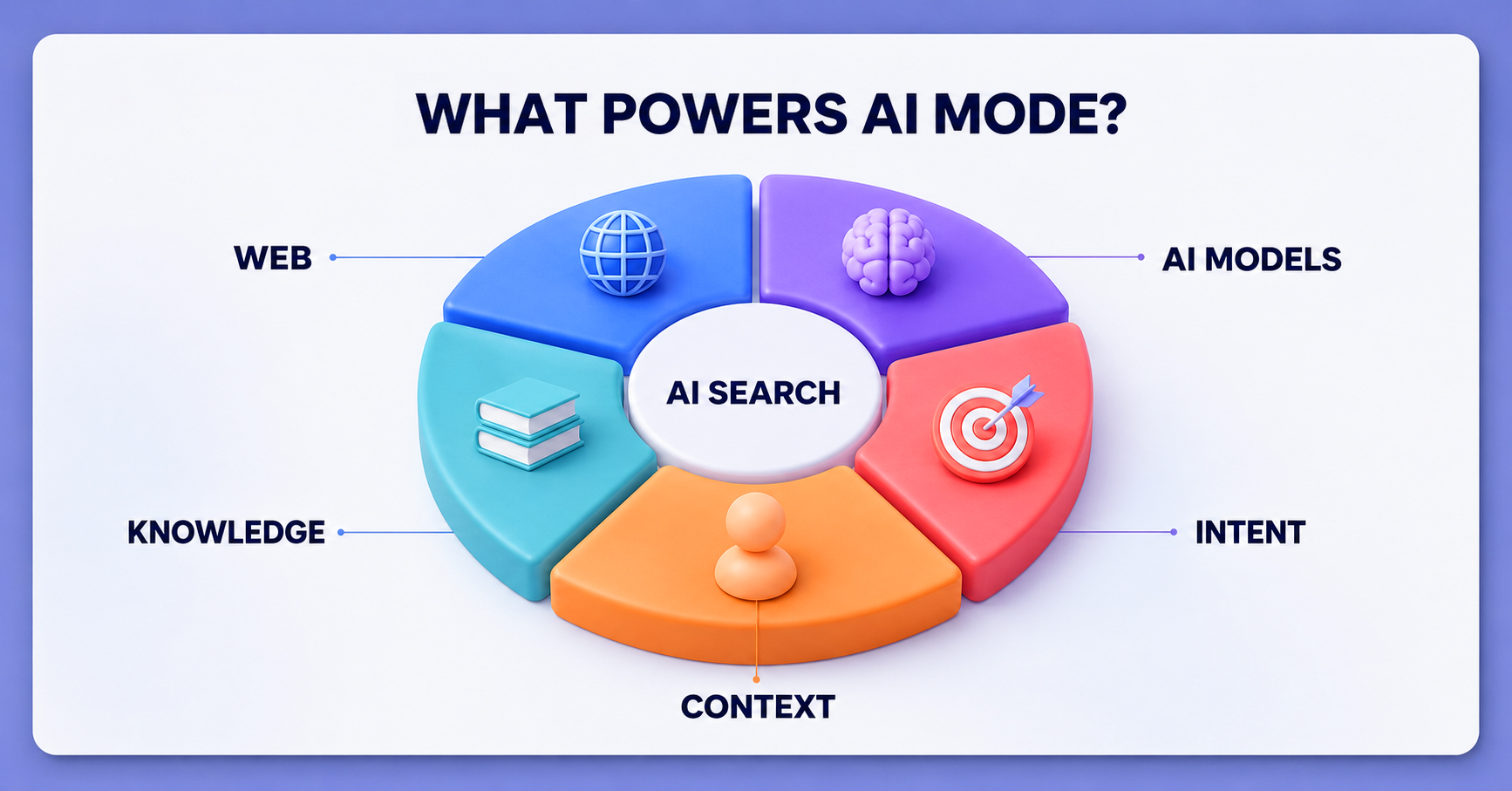
Google AI Mode is an advanced search experience powered by Google's latest artificial intelligence models. Instead of displaying only a list of websites, AI Mode generates conversational responses that answer complex questions in a natural and easy-to-understand way.
It combines:
-
Google's Search Index
-
Large Language Models (LLMs)
-
Knowledge Graph
-
Real-time web information
-
User search intent
-
Context from previous queries
This enables users to ask detailed follow-up questions and receive more personalized, in-depth responses without starting a new search.
How Google AI Mode Works
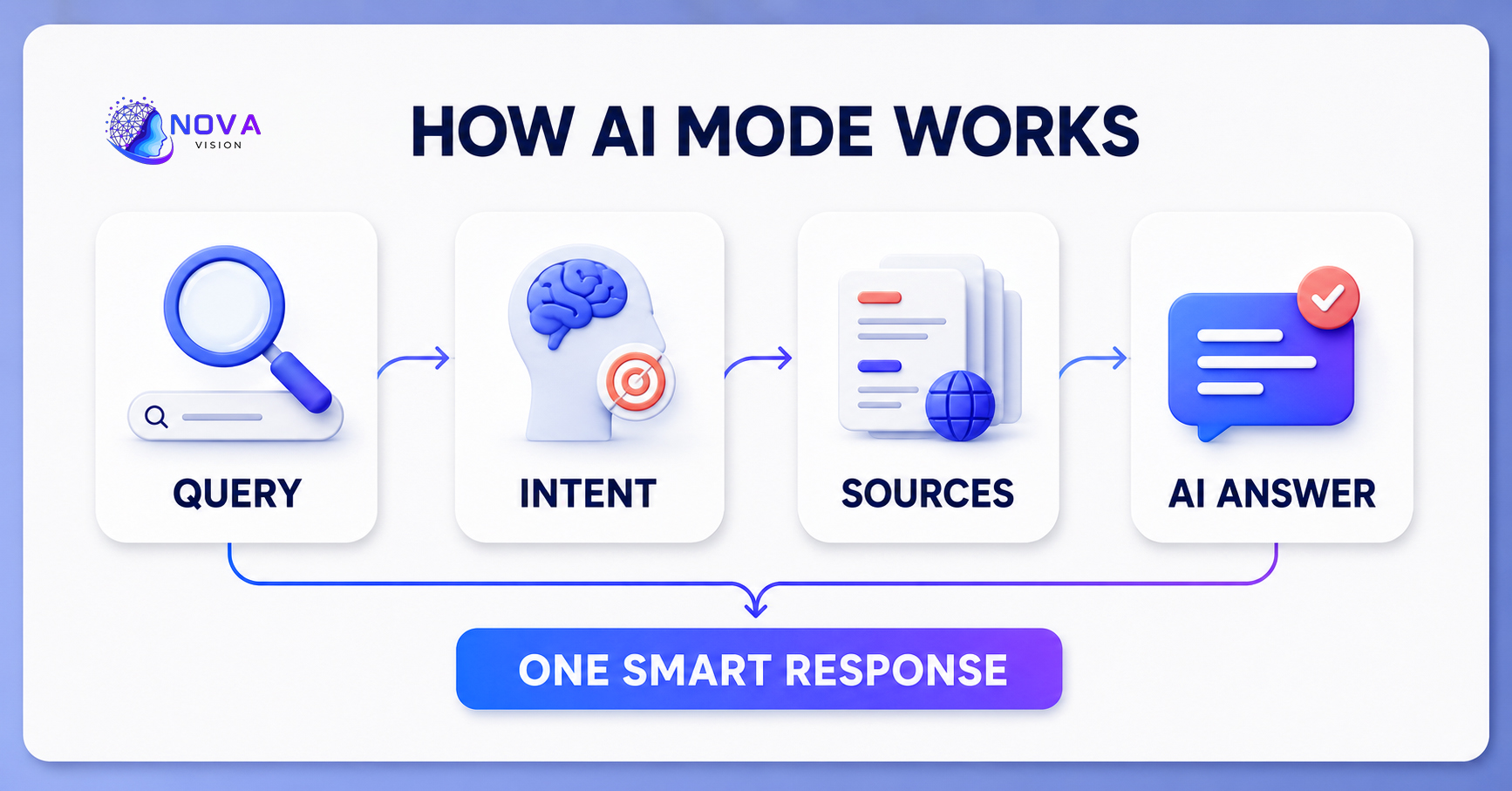
Google AI Mode follows several steps before generating an answer.
1. Understanding User Intent
The first step is understanding what the user actually wants.
For example, instead of simply matching keywords, Google analyzes:
-
Search intent
-
Context
-
Previous conversation
-
User behavior
-
Query complexity
A search such as:
"Which digital marketing strategy is best for a new business?"
is interpreted as a request for recommendations rather than definitions.
2. Breaking Down Complex Questions
AI Mode can divide one complicated query into several smaller searches.
For example:
"How can I improve my local business website using SEO, Google Ads, and AI?"
Google may internally analyze:
-
Local SEO
-
Google Business Profile
-
Google Ads
-
AI Search
-
Website optimization
-
User experience
It then combines these findings into one comprehensive answer.
3. Gathering Information from Multiple Sources
Instead of relying on one webpage, Google collects information from:
-
High-quality websites
-
Authoritative publications
-
Government resources
-
Trusted industry experts
-
Google's Knowledge Graph
-
Fresh indexed content
This allows AI Mode to create balanced and informative responses.
4. Generating an AI Response
Once enough reliable information is gathered, Google's AI creates a summary that directly answers the user's question.
Unlike traditional search, users don't always need to visit multiple websites to understand a topic.
However, Google often includes links to relevant websites for users who want to explore further.
5. Supporting Follow-Up Questions
One of AI Mode's biggest advantages is conversational search.
Instead of starting over, users can continue asking questions like:
-
Can you explain this further?
-
Give me examples.
-
What are the risks?
-
Which option is better?
Google remembers the conversation and provides contextual answers.
Key Features of Google AI Mode
Google AI Mode introduces several capabilities that change how users interact with search.
Conversational Search
Users can communicate naturally instead of typing short keyword phrases.
Example:
Instead of searching:
"SEO tips 2026"
Users may ask:
"How can a small business improve its Google rankings without spending much money?"
Multi-Step Reasoning
AI Mode can process complex questions requiring several logical steps before generating an answer.
This makes it useful for:
-
Business planning
-
Travel research
-
Product comparisons
-
Educational topics
-
Technical questions
Context Awareness
Google understands previous questions in the conversation.
This creates a more human-like search experience.
Personalized Results
Depending on permissions and user preferences, Google may personalize responses using:
-
Location
-
Previous searches
-
Interests
-
Language
-
Search history
Faster Information Discovery
Instead of opening five or six websites, users often receive summarized answers immediately.
Google AI Mode vs Traditional Google Search
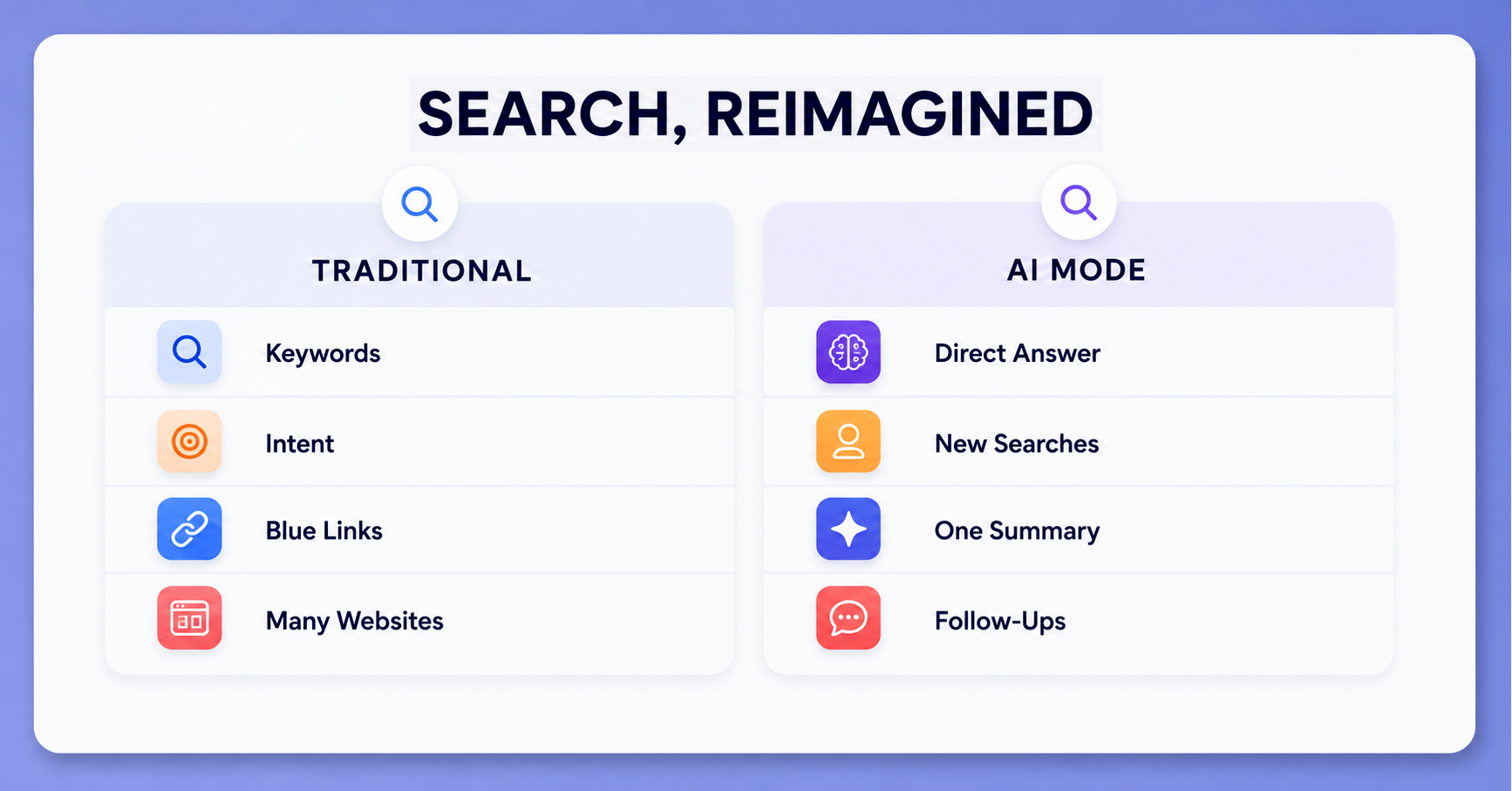
|
Traditional Search |
Google AI Mode |
|---|---|
|
Keyword matching |
Intent understanding |
|
Blue links |
AI-generated answers |
|
Multiple website visits |
One comprehensive response |
|
Limited context |
Conversational memory |
|
User compares websites |
AI summarizes information |
|
Manual research |
Faster decision-making |
How Google AI Mode Changes SEO
AI Mode changes how websites compete for visibility.
Instead of ranking only for keywords, websites now need to demonstrate:
-
Expertise
-
Trustworthiness
-
Original insights
-
Helpful content
-
Clear structure
-
Topical authority
Google increasingly rewards content that genuinely answers user questions rather than content written solely to rank for keywords.
Why High-Quality Content Matters More Than Ever
Google AI favors content that is:
-
Original
-
Accurate
-
Well researched
-
Easy to understand
-
Updated regularly
-
Written for users first
Thin or repetitive articles are less likely to be featured in AI-generated responses.

The Importance of E-E-A-T
Google evaluates content using the E-E-A-T framework:
-
Experience – Demonstrates first-hand knowledge.
-
Expertise – Shows subject matter understanding.
-
Authoritativeness – Comes from credible sources or brands.
-
Trustworthiness – Provides accurate, transparent, and reliable information.
Strengthening these signals increases the likelihood that your content will be referenced in AI-powered search experiences.
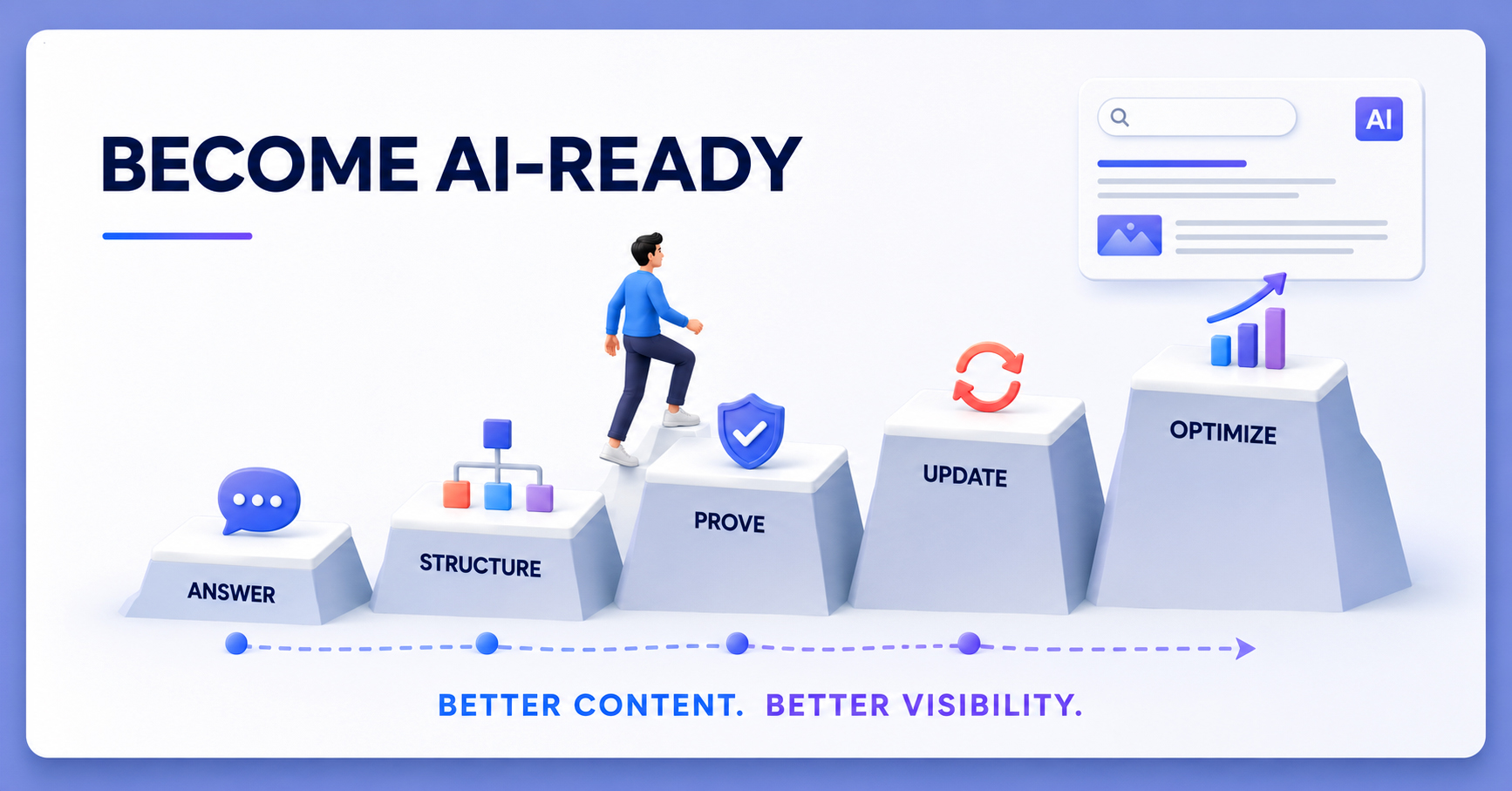
How Businesses Can Optimize for Google AI Mode
Businesses should adapt their SEO strategies to improve their chances of appearing in AI-powered search results.
Create Comprehensive Content
Cover topics in depth rather than publishing short articles focused on one keyword.
Answer Real Questions
Include FAQ sections and address the questions your audience actually asks.
Use Clear Heading Structure
Organize content with logical headings and subheadings so AI systems can easily interpret it.
Demonstrate Expertise
Support your content with practical examples, original insights, data where appropriate, and clear explanations.
Keep Content Updated
Regularly refresh articles to reflect current information, especially in fast-changing industries.
Improve Technical SEO
Maintain:
-
Fast loading speed
-
Mobile-friendly design
-
Secure HTTPS
-
Clean internal linking
-
Structured data where relevant
Technical quality helps search engines crawl and understand your site effectively.
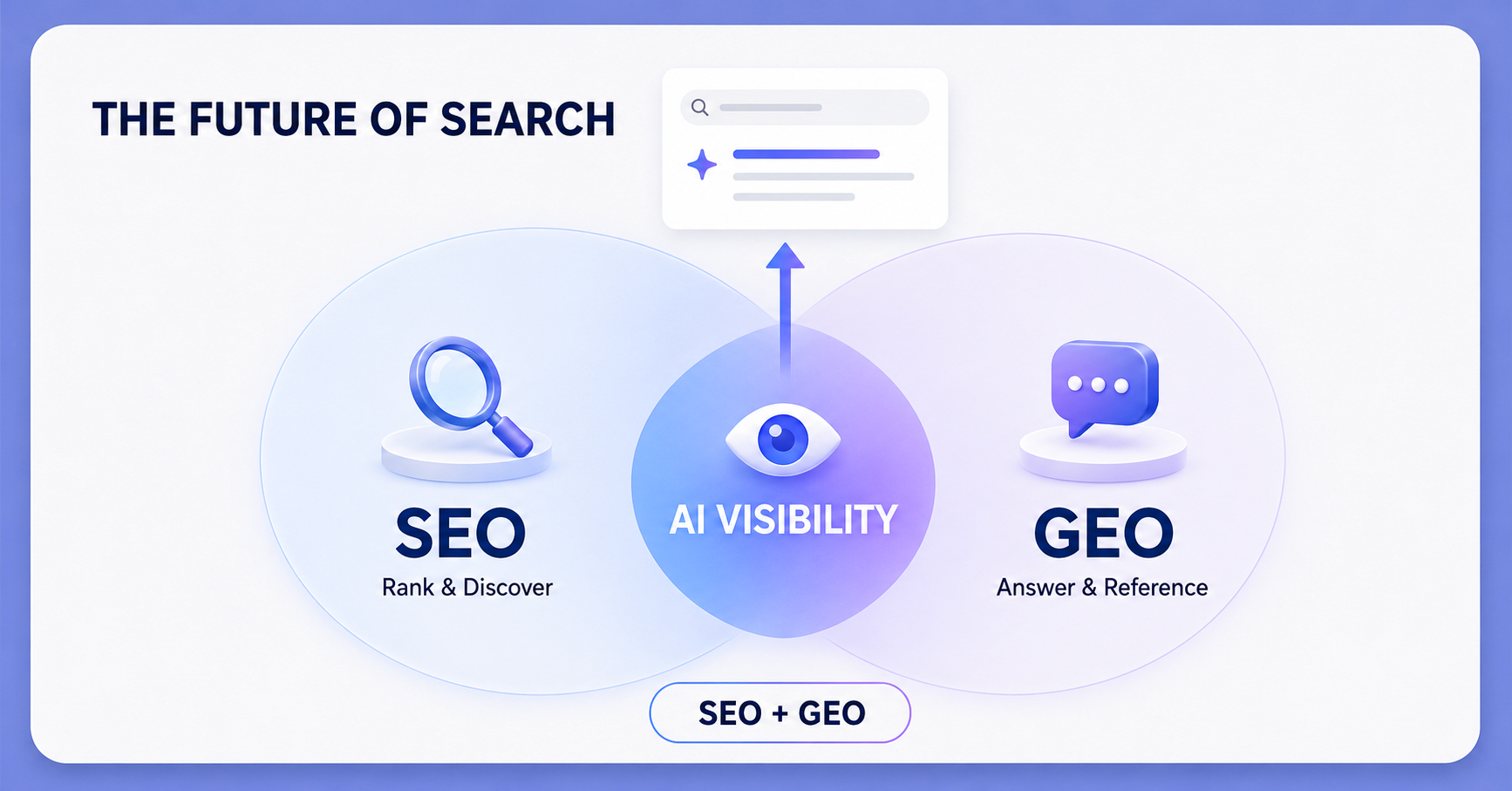
Generative Engine Optimization (GEO): The Next Step Beyond SEO
As AI search grows, Generative Engine Optimization (GEO) is becoming increasingly important.
GEO focuses on creating content that AI systems can easily understand, summarize, and reference.
Key GEO practices include:
-
Writing natural, conversational content
-
Answering questions directly
-
Covering topics comprehensively
-
Building topical authority
-
Maintaining factual accuracy
-
Publishing original perspectives
Businesses that combine traditional SEO with GEO are better positioned for the future of search.
Common Mistakes to Avoid
To remain competitive in AI-driven search, avoid:
-
Keyword stuffing
-
Duplicate content
-
Thin articles with little value
-
Clickbait headlines that don't match the content
-
Publishing outdated information
-
Ignoring user intent
-
Neglecting technical SEO
These practices can reduce both user trust and search visibility.
How Nova Vision Helps Businesses Succeed in the AI Search Era
At Nova Vision, we help businesses prepare for the future of search with strategies that combine traditional SEO best practices and AI-focused optimization.
Our services include:
-
AI Search Optimization
-
Search Engine Optimization (SEO)
-
Content Marketing
-
Technical SEO Audits
-
Local SEO
-
Google Business Profile Optimization
-
Website Optimization
-
Performance Marketing
-
Analytics and Reporting
By focusing on user intent, content quality, technical excellence, and long-term digital growth, we help businesses improve their online visibility in an increasingly AI-powered search landscape.
The Future of Google AI Search
Google AI Mode is expected to continue evolving with:
-
More personalized responses
-
Better multimodal search (text, images, voice, and video)
-
Deeper conversational capabilities
-
Improved reasoning and research support
-
Greater integration with Google's broader AI ecosystem
For businesses, this means success will increasingly depend on publishing trustworthy, user-focused content that answers real questions and demonstrates genuine expertise.
Conclusion
Google AI Mode represents one of the most significant changes to search in recent years. By combining Google's search index with advanced AI models, it delivers faster, more contextual, and more conversational answers to users.
For businesses, adapting to this shift requires more than traditional keyword optimization. Creating high-quality, authoritative, and user-first content—supported by strong technical SEO and Generative Engine Optimization (GEO)—will be key to maintaining visibility as AI-powered search continues to grow.
Nova Vision helps businesses navigate this changing landscape with future-ready SEO and digital marketing strategies designed to improve discoverability, strengthen brand authority, and drive sustainable organic growth in the age of AI search.