Social media has transformed the way businesses connect with customers. From brand awareness and audience engagement to lead generation and sales, social media platforms have become essential tools for companies looking to grow their online presence. However, one question continues to challenge business owners and marketers alike: Should you focus on organic social media marketing or invest in paid social media advertising?
The answer is not always straightforward. Both approaches offer unique benefits, and understanding their strengths and limitations can help businesses make informed marketing decisions.
At Nova Vision Mediatech, we frequently work with brands that struggle to decide where to allocate their social media budget. Some businesses want quick results through advertising, while others prefer building a loyal audience through organic content. The reality is that both methods play important roles in a successful digital marketing strategy.
This guide explores the differences between organic and paid social media marketing, helping businesses determine which approach aligns best with their goals.
Understanding Organic Social Media Marketing
Organic social media marketing refers to all unpaid activities performed on social media platforms. It involves creating and sharing content designed to engage followers, build relationships, and strengthen brand awareness.
Organic social media includes:
- Regular posts
- Educational content
- Reels and short videos
- Stories
- Infographics
- Community engagement
- Customer interactions
- Live sessions
- User-generated content
Unlike advertising, organic social media does not require businesses to pay platforms for visibility. Instead, success depends on content quality, consistency, audience engagement, and platform algorithms. The primary objective is to create long-term relationships with customers and establish trust.
Understanding Paid Social Media Marketing
Paid social media marketing involves promoting content through advertising budgets. Businesses pay platforms such as Facebook, Instagram, LinkedIn, and others to display their content to specific audiences.
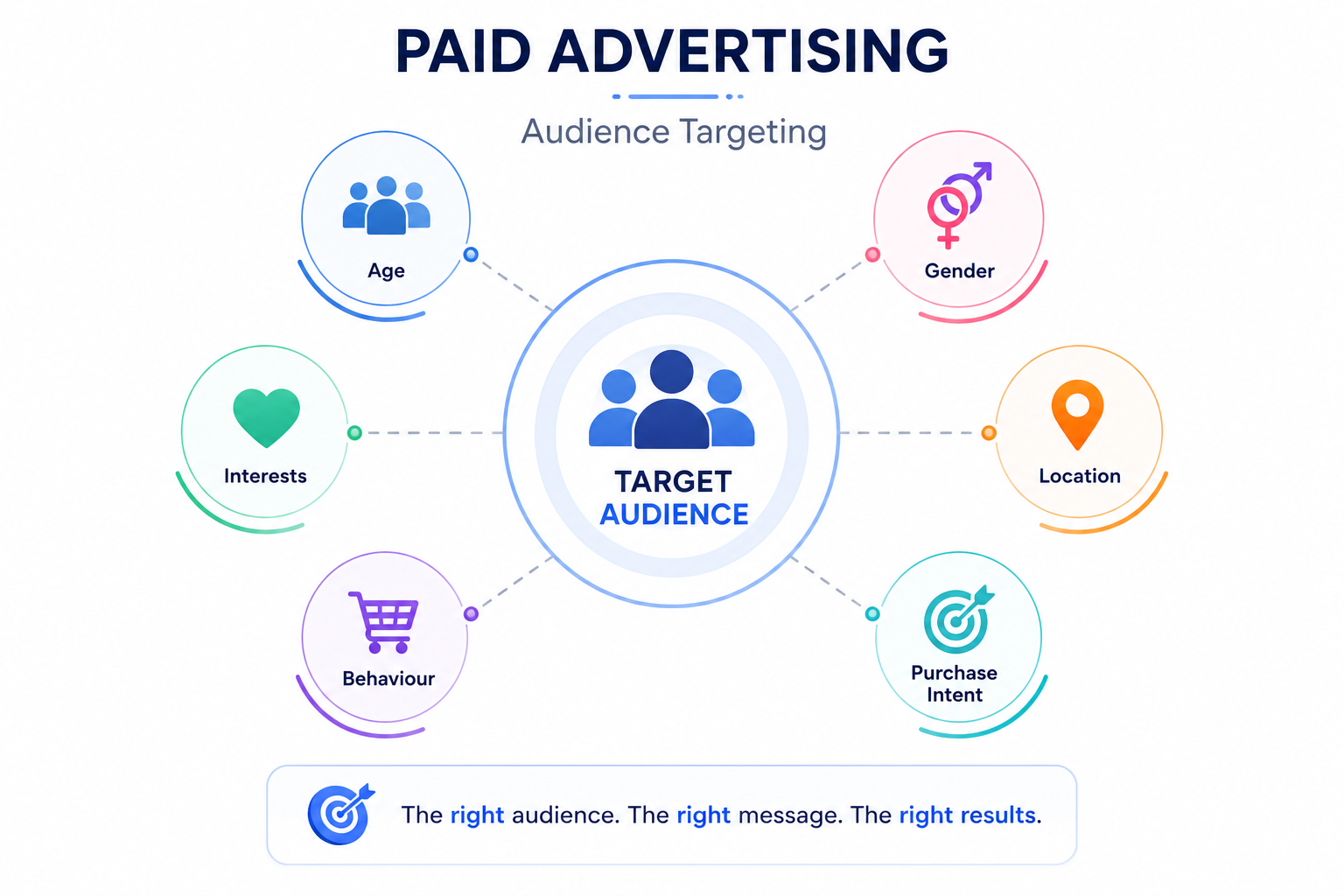
Paid campaigns can target users based on:
- Age
- Gender
- Interests
- Occupation
- Location
- Online behavior
- Purchase intent
- Device usage
At Nova Vision Mediatech, paid social media campaigns are often used to generate leads, drive website traffic, increase sales, and accelerate brand visibility through highly targeted advertising strategies.
The Evolution of Social Media Marketing
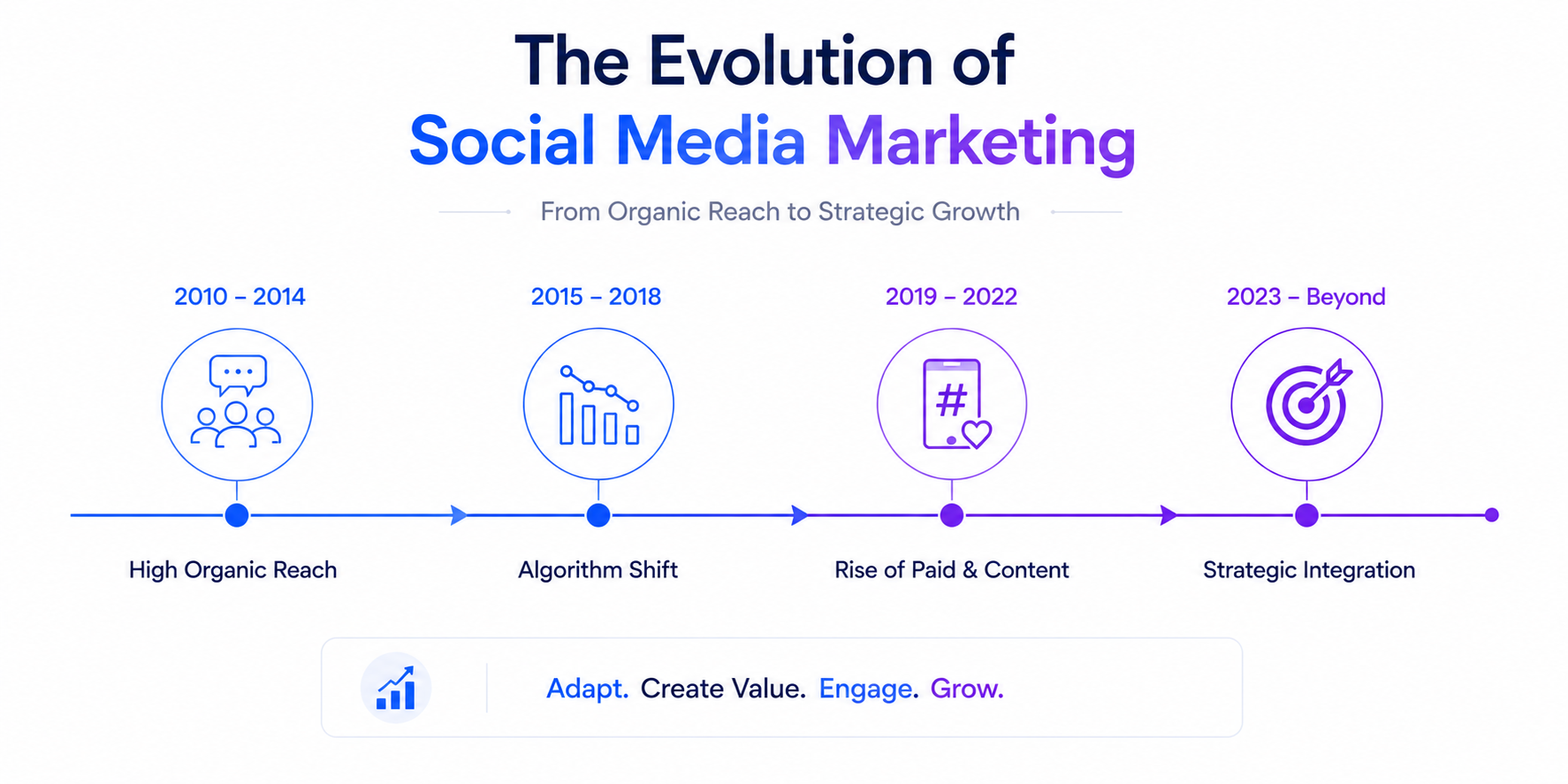
Several years ago, businesses could reach a significant percentage of their followers through organic posts alone. Today, social media algorithms prioritize content based on engagement, relevance, and user behavior.
As competition has increased, organic reach has declined significantly across most major platforms. This shift has encouraged many businesses to invest in paid advertising to maintain visibility.
Despite these changes, organic content remains essential because it builds credibility, trust, and community engagement that advertisements alone cannot achieve.
This evolution has led businesses toward a more balanced approach that combines both strategies.
Benefits of Organic Social Media Marketing
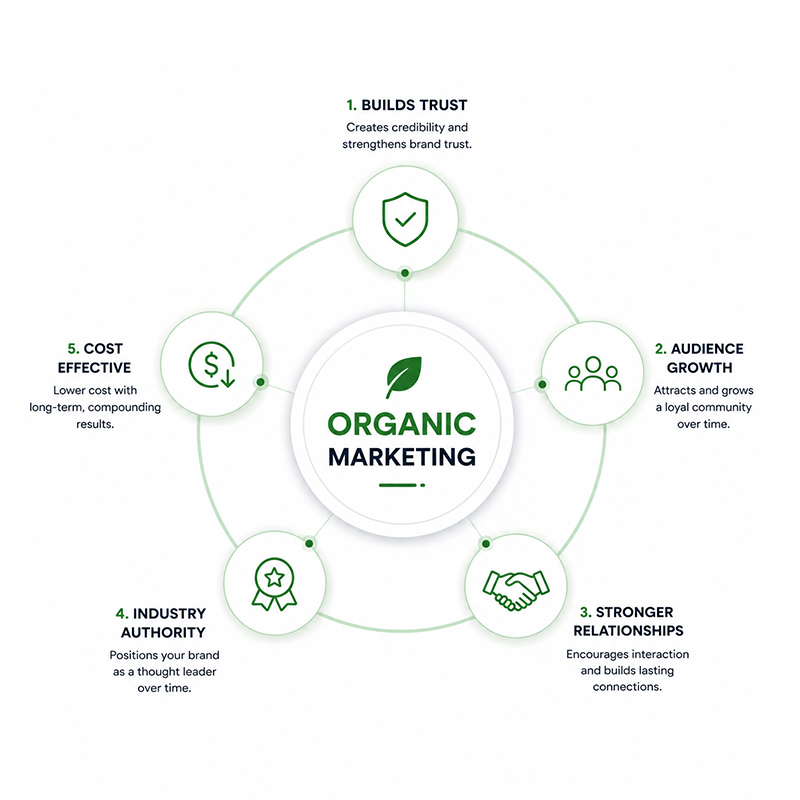
Building Brand Trust
Trust is one of the most valuable assets any brand can possess.
Organic content enables businesses to:
- Showcase expertise
- Share customer success stories
- Demonstrate company values
- Educate audiences
- Engage authentically
When followers regularly consume helpful content, they begin viewing the brand as a reliable source of information.
Trust often influences purchasing decisions more than promotional messages.
Cost-Effective Marketing
One of the biggest advantages of organic social media is affordability.
Businesses can:
- Create content
- Engage audiences
- Build communities
- Improve brand recognition
without directly paying for every interaction.
Although content creation requires time and effort, organic marketing remains accessible for startups and small businesses operating with limited budgets.
Long-Term Audience Growth
Organic social media helps businesses build audiences gradually.
Unlike paid campaigns that stop generating results once spending ends, organic content continues working long after publication.
Well-performing content can:
- Receive shares
- Generate comments
- Attract saves
- Reach new audiences
over extended periods.
Stronger Customer Relationships
Organic social media creates opportunities for direct interaction.
Businesses can:
- Answer questions
- Address concerns
- Gather feedback
- Build conversations
These interactions help strengthen customer loyalty and improve brand perception.
Establishing Industry Authority
Businesses that consistently publish educational content often become recognized as industry experts.
Examples include:
- Tutorials
- Industry insights
- Research findings
- Tips and strategies
- Case studies
Authority-building content increases credibility and encourages audiences to trust recommendations.
Challenges of Organic Social Media Marketing
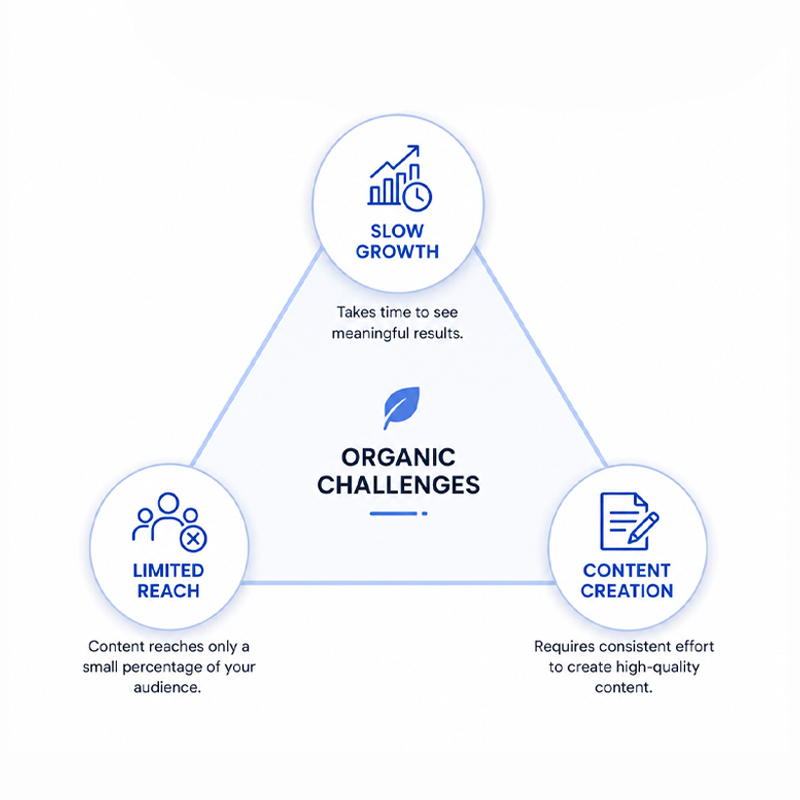
Slower Growth
Organic marketing takes time.
Building a loyal audience requires:
- Consistency
- Patience
- Strategic planning
- Regular engagement
Businesses seeking immediate leads may find organic growth slower than expected.
Limited Reach
Platform algorithms restrict the number of users who see organic content.
Even businesses with large followings may reach only a small percentage of their audience through unpaid posts.
This limitation often reduces visibility and engagement.
Continuous Content Requirements
Successful organic marketing depends on a steady flow of quality content.
Businesses must consistently create:
- Videos
- Graphics
- Articles
- Reels
- Stories
Maintaining this content schedule can be resource-intensive.
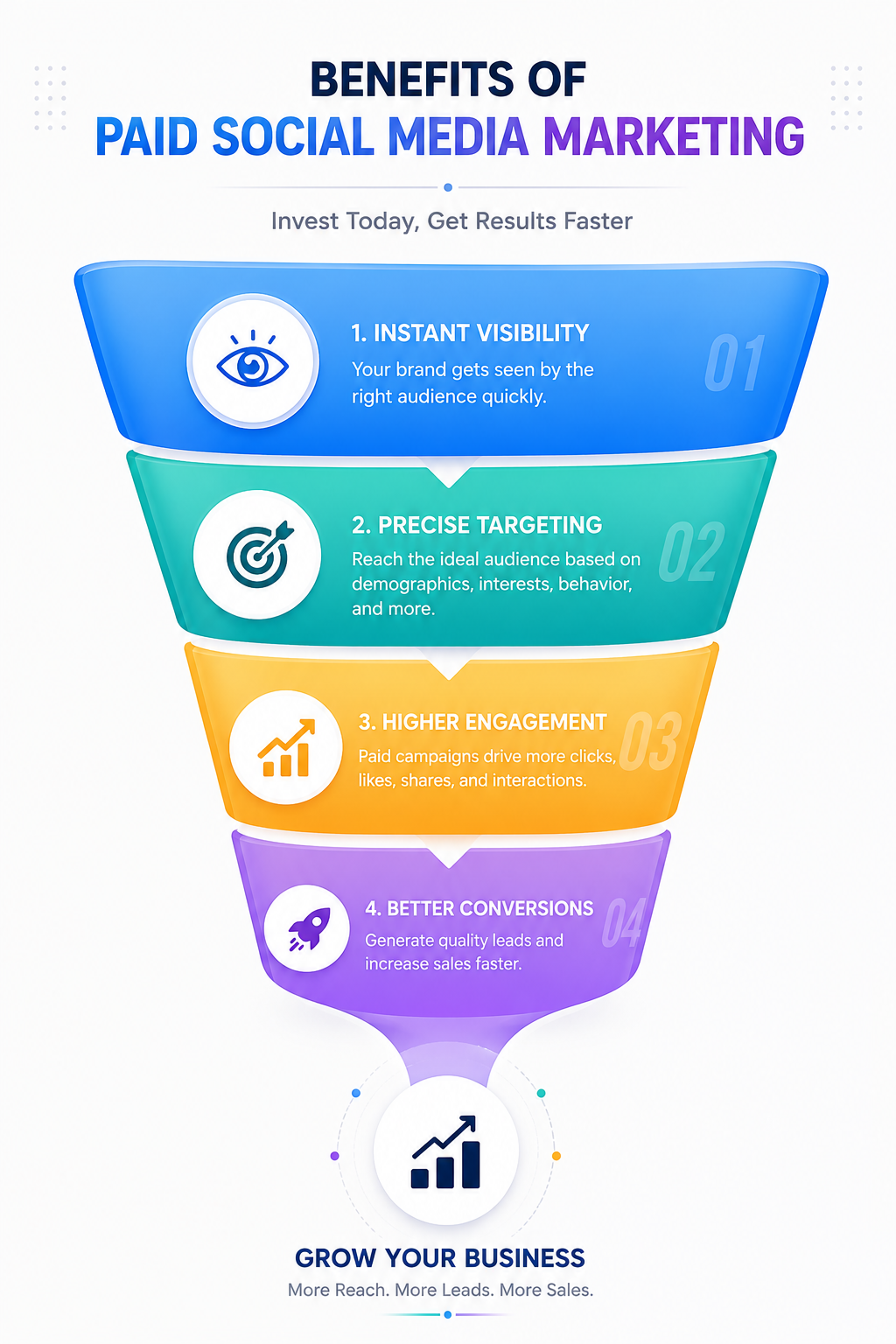
Benefits of Paid Social Media Marketing
Immediate Visibility
One of the biggest advantages of paid advertising is speed. A campaign can begin reaching targeted users within hours of launch. This makes paid advertising ideal for:
- Product launches
- Special offers
- Event promotions
- Seasonal campaigns
Advanced Audience Targeting
Paid social media platforms provide sophisticated targeting capabilities. Businesses can reach specific audiences based on:
- Interests
- Behaviors
- Demographics
- Purchase intent
- Previous interactions
This precision helps improve campaign efficiency and return on investment.
Faster Lead Generation
Businesses looking for immediate results often prefer paid campaigns. Advertising can generate:
- Website visits
- Form submissions
- Phone calls
- Sales inquiries
- Product purchases
much faster than organic efforts.
Scalability
Paid campaigns offer flexibility. Businesses can:
- Increase budgets
- Expand audiences
- Test new markets
- Launch multiple campaigns
as opportunities arise.
This scalability supports rapid growth initiatives.
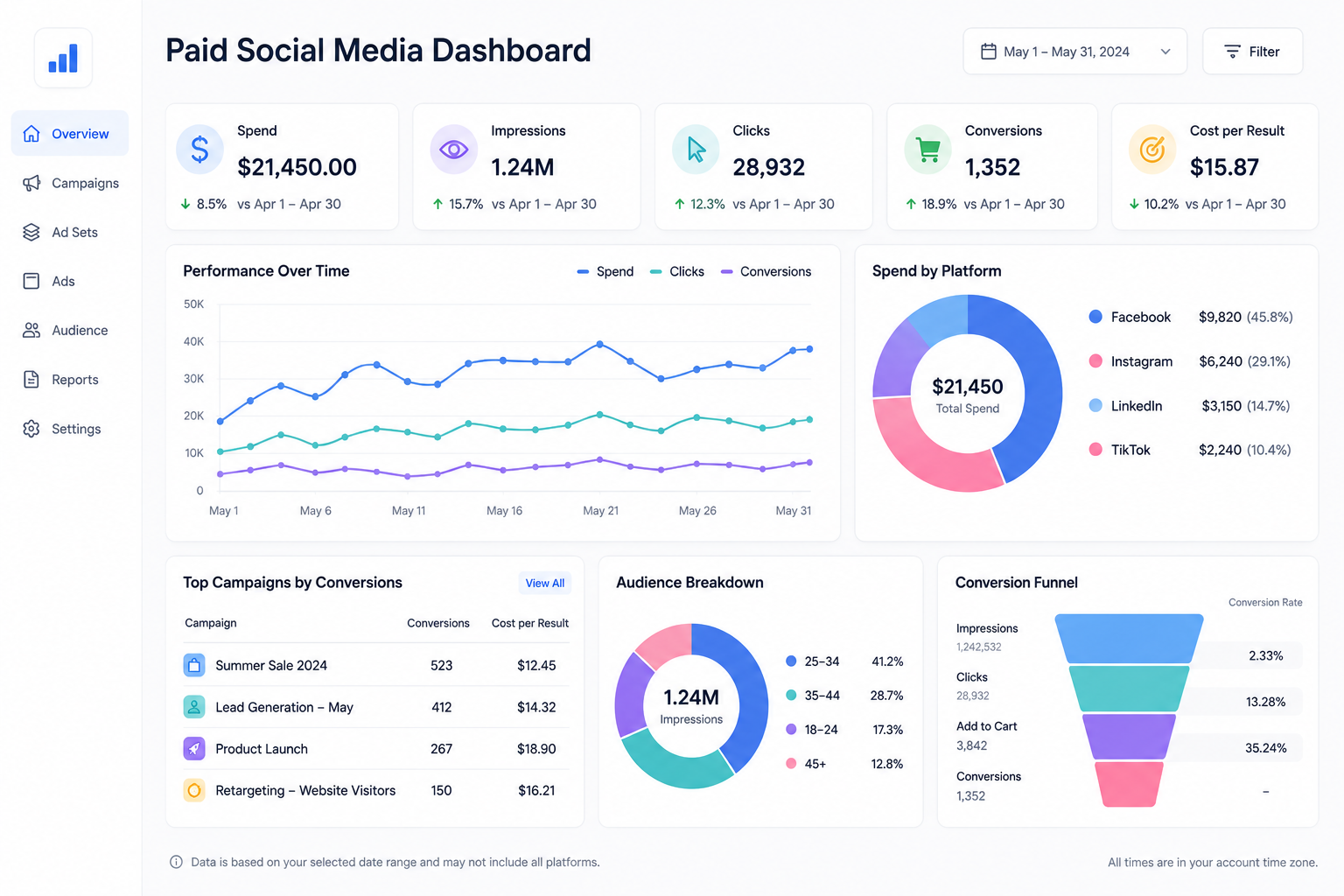
Detailed Performance Analytics
Advertising platforms provide extensive reporting capabilities.
Businesses can monitor:
- Click-through rates
- Cost per click
- Cost per lead
- Conversion rates
- Return on ad spend
These insights help marketers make data-driven decisions.
Challenges of Paid Social Media Marketing
Ongoing Costs
Paid advertising requires continuous investment.
Once campaigns stop, traffic and visibility often decline significantly.
Businesses must maintain budgets to sustain performance.
Increasing Competition
As more businesses advertise online, competition for audience attention increases.
This often leads to:
- Higher advertising costs
- Greater competition
- Increased customer acquisition expenses
Businesses must optimize campaigns carefully to remain profitable.
Ad Fatigue
Users may become less responsive after repeatedly seeing the same advertisement.
To maintain performance, marketers must continuously refresh:
- Creatives
- Headlines
- Visuals
- Calls-to-action
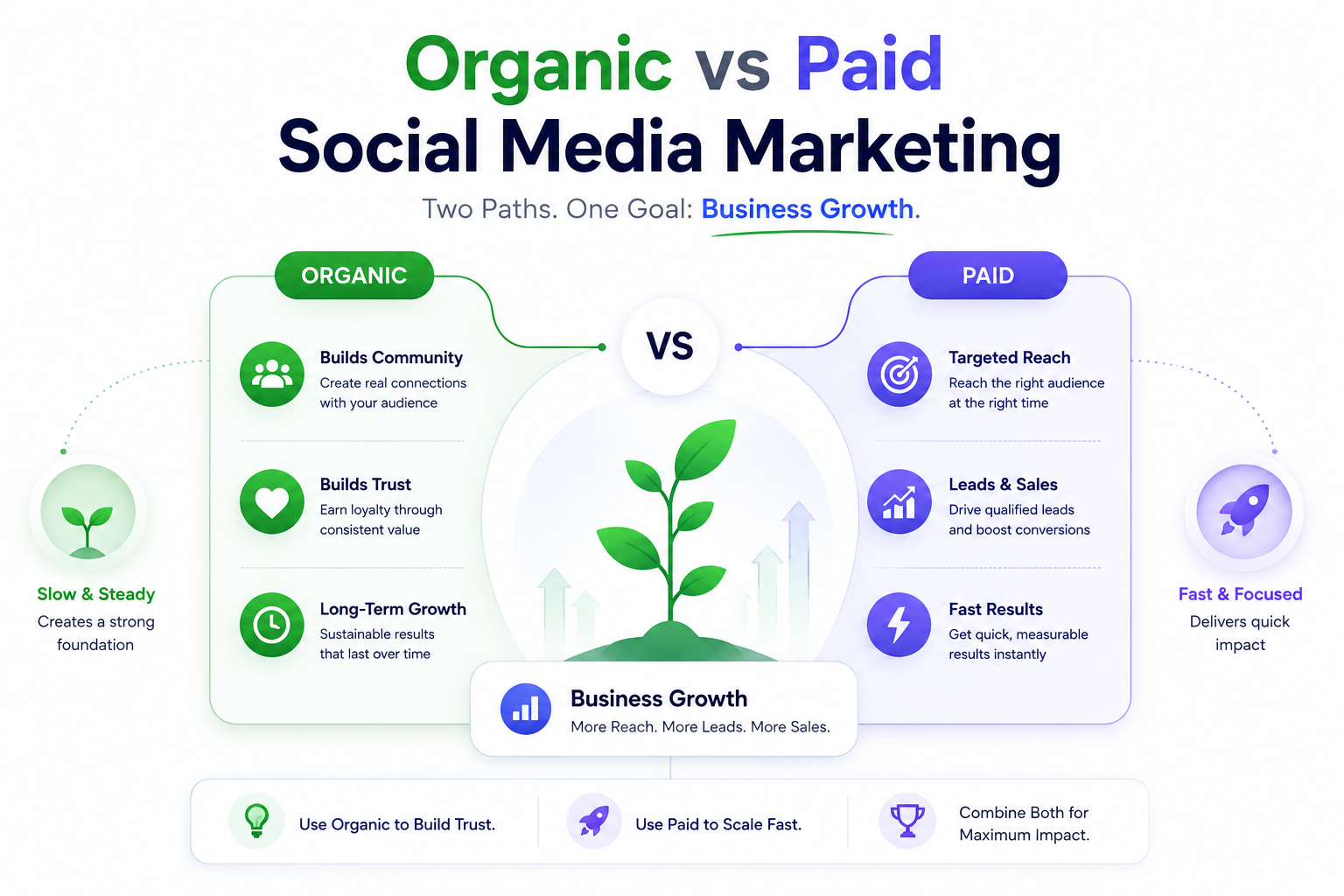
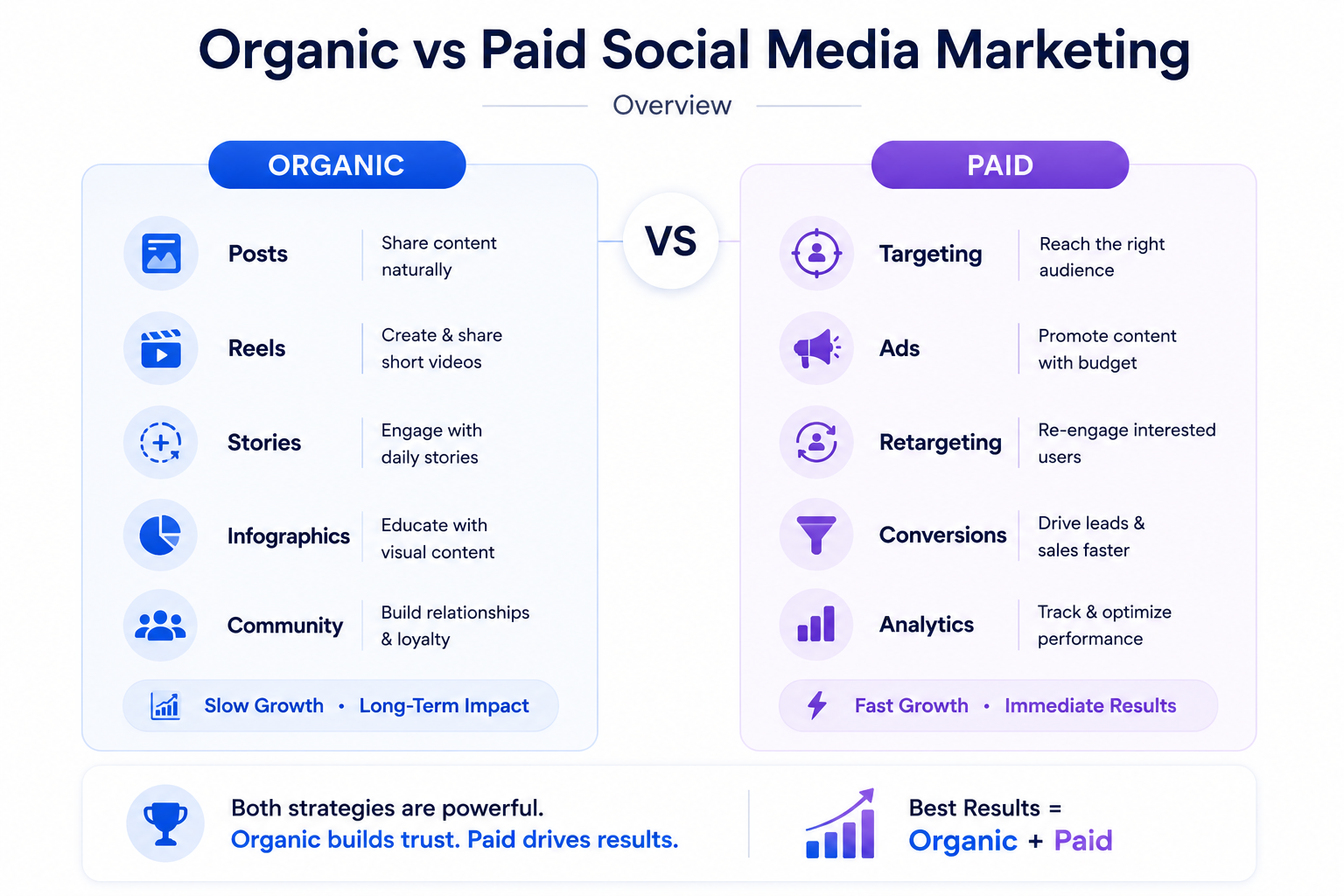
Organic Social Media vs Paid Social Media: A Detailed Comparison
Brand Awareness
Organic marketing builds awareness gradually through consistent engagement.
Paid advertising accelerates awareness by placing content directly in front of targeted audiences.
Winner: Paid social media for speed.
Customer Trust
Organic content fosters trust through authentic interactions and valuable information.
Advertisements often focus on promotion rather than relationship-building.
Winner: Organic social media.
Lead Generation
Organic marketing can generate leads over time, but the process is often slower.
Paid advertising allows businesses to target users ready to take action.
Winner: Paid social media.
Long-Term Value
Organic content continues generating value long after publication.
Paid advertisements stop producing results once spending ends.
Winner: Organic social media.
Scalability
Paid advertising enables rapid expansion and audience growth.
Organic growth typically occurs more gradually.
Winner: Paid social media.
Cost Efficiency
Organic social media requires time but not direct advertising expenditure.
Paid campaigns require ongoing budgets.
Winner: Organic social media.
When Organic Social Media Is the Better Choice
Organic marketing is ideal when businesses want to:
- Build brand credibility
- Establish thought leadership
- Strengthen customer relationships
- Create community engagement
- Support long-term growth
Businesses focused on brand development often benefit significantly from strong organic strategies.
When Paid Social Media Is the Better Choice
Paid advertising is highly effective when businesses need:
- Immediate visibility
- Quick lead generation
- Product promotion
- Event registrations
- Increased website traffic
Businesses seeking rapid growth often prioritize paid campaigns.
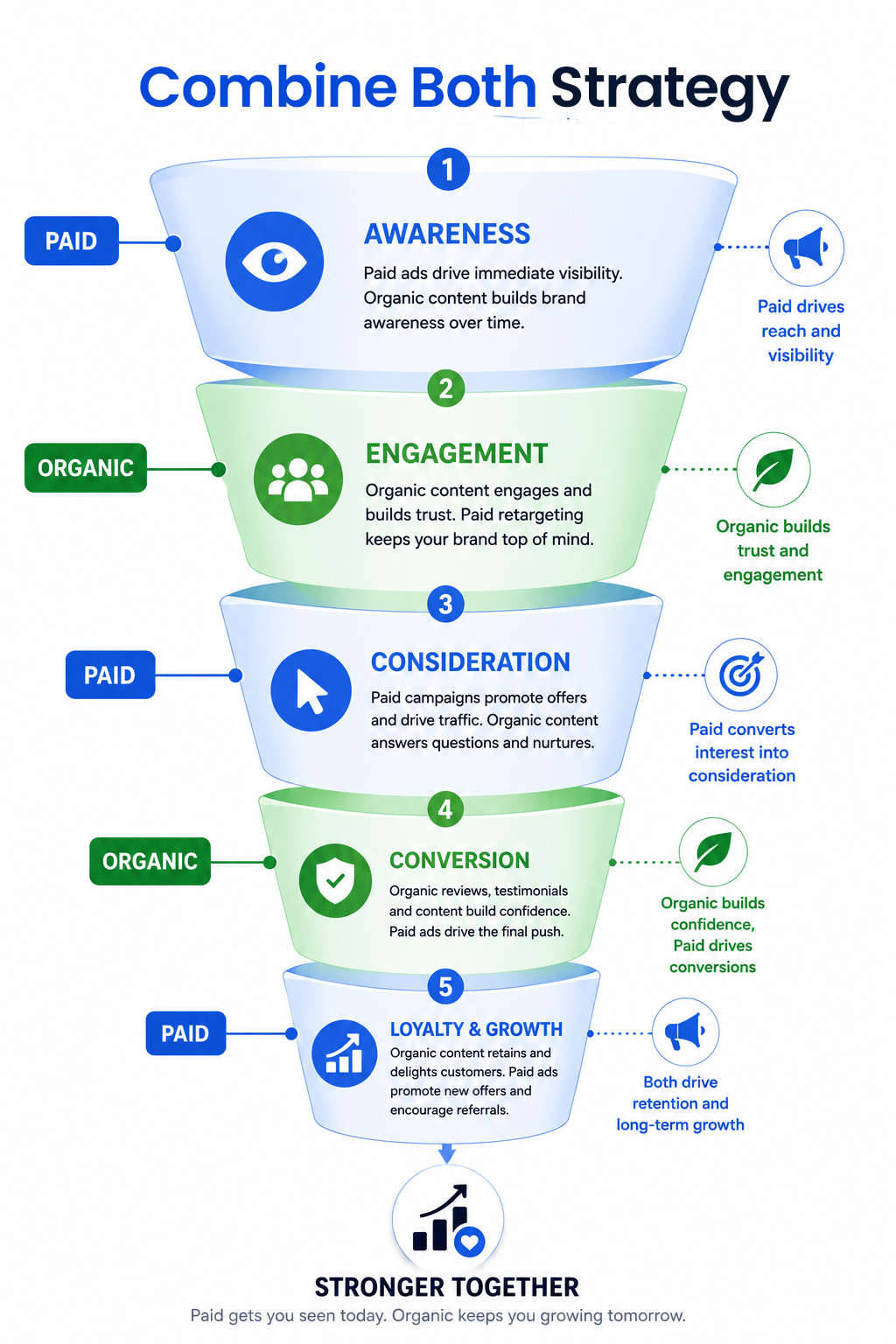
Why Businesses Should Combine Both Strategies
The most successful brands rarely choose one approach exclusively.
Instead, they integrate organic and paid social media marketing.
Organic content builds:
- Trust
- Community
- Credibility
- Brand authority
Paid advertising delivers:
- Reach
- Traffic
- Leads
- Conversions
Together, these strategies create a powerful marketing ecosystem.
Nova Vision Mediatech recommends combining organic engagement with strategic paid advertising to maximize results. This integrated approach allows businesses to build lasting relationships while accelerating growth through targeted campaigns. The agency's social media services are designed around both organic content management and paid advertising to help brands grow followers, engagement, leads, and sales simultaneously.
How Different Social Media Platforms Support Organic and Paid Marketing
Not all social media platforms function in the same way. Each platform offers unique opportunities for both organic engagement and paid promotion.
Facebook remains one of the most popular platforms for businesses looking to build communities and generate leads. Organic content such as educational posts, customer testimonials, and videos can help businesses engage existing followers. However, due to declining organic reach, many companies rely on Facebook Ads to expand visibility and drive conversions.
Instagram is highly visual and works exceptionally well for brands that can showcase products, services, or behind-the-scenes content. Organic growth on Instagram often comes from Reels, Stories, and engaging visuals. Paid Instagram advertising allows businesses to target highly specific audiences and drive traffic directly to websites or landing pages.
For B2B companies, LinkedIn is a powerful platform for both organic thought leadership and paid lead generation campaigns. Businesses can share industry insights, company updates, and professional content organically while using LinkedIn Ads to target decision-makers and professionals.
YouTube
Video marketing continues to dominate digital marketing strategies. Businesses can grow organically through educational videos, tutorials, and demonstrations. Paid YouTube advertising helps brands reach larger audiences and improve visibility quickly.
X (Twitter)
X enables brands to participate in real-time conversations and industry discussions. Organic engagement can build awareness, while promoted posts help businesses reach broader audiences.
Understanding platform-specific strengths helps businesses allocate resources more effectively and maximize marketing performance.
Common Misconceptions About Organic and Paid Social Media Marketing
Many businesses make decisions based on misconceptions rather than facts.
Myth 1: Organic Social Media Is Free
While businesses do not pay platforms directly for organic reach, creating high-quality content requires time, expertise, design resources, and strategic planning.
Organic marketing involves investments in:
- Content creation
- Graphic design
- Video production
- Community management
- Performance tracking
Therefore, organic marketing is not entirely free; it simply requires different types of investment.
Myth 2: Paid Advertising Guarantees Sales
Advertising can increase visibility and generate traffic, but success depends on multiple factors including:
- Audience targeting
- Ad quality
- Landing page experience
- Offer relevance
- Sales process
Even large advertising budgets cannot compensate for poor messaging or weak customer experiences.
Myth 3: More Followers Mean Better Results
Many businesses focus excessively on follower counts. However, engagement and conversion rates are often more important.
A smaller audience of highly engaged followers may generate better business results than a large audience with minimal interaction.
Organic Marketing Metrics
For organic campaigns, important indicators include:
- Engagement rate
- Shares
- Saves
- Comments
- Audience growth
- Website traffic from social media
- Brand mentions
These metrics reveal how effectively content resonates with audiences.
Paid Advertising Metrics
For paid campaigns, businesses should monitor:
- Cost per click (CPC)
- Cost per lead (CPL)
- Click-through rate (CTR)
- Conversion rate
- Return on ad spend (ROAS)
- Customer acquisition cost (CAC)
Tracking these metrics allows marketers to optimize campaigns and improve profitability.
At Nova Vision Mediatech, campaign performance is continuously monitored to ensure that marketing investments generate measurable business outcomes rather than simply increasing visibility.
The Role of Content in Both Organic and Paid Strategies
Content remains the foundation of successful social media marketing regardless of whether a business chooses organic or paid methods.
Strong content helps:
- Attract attention
- Build trust
- Encourage engagement
- Generate leads
- Increase conversions
Effective content formats include:
Educational Content
Informative posts help businesses establish authority and provide value to audiences.
Video Content
Videos consistently generate higher engagement rates across most platforms and are often prioritized by algorithms.
Customer Success Stories
Testimonials and case studies help demonstrate real-world results and strengthen credibility.
Interactive Content
Polls, quizzes, Q&A sessions, and contests encourage participation and increase engagement.
User-Generated Content
Content created by customers often performs exceptionally well because it appears authentic and trustworthy.
Businesses that invest in quality content creation often achieve stronger results from both organic and paid campaigns.
Why Social Media Marketing Is Essential for Modern Businesses
Consumer behavior has changed dramatically over the past decade. Today's buyers spend significant amounts of time on social media platforms researching brands, comparing products, and seeking recommendations.
A strong social media presence allows businesses to:
- Increase brand awareness
- Build customer relationships
- Generate qualified leads
- Support customer service efforts
- Improve online reputation
- Drive website traffic
- Increase sales opportunities
Companies that neglect social media marketing risk losing visibility to competitors who actively engage audiences online.
This is why businesses increasingly partner with agencies such as Nova Vision Mediatech to develop comprehensive social media strategies that combine organic growth and paid advertising for maximum impact.
How Nova Vision Helps Businesses Succeed with Social Media Marketing
Successful social media marketing requires more than simply posting content or launching advertisements.
Nova Vision Mediatech helps businesses develop comprehensive social media strategies that include:
- Audience research
- Content planning
- Community management
- Graphic design
- Video creation
- Paid advertising
- Performance tracking
- Conversion optimization
The agency combines organic content strategies with targeted advertising campaigns to create measurable business growth. By focusing on engagement, reach, lead generation, and return on investment, Nova Vision helps brands maximize the value of their social media presence.
Key Metrics Businesses Should Track
Regardless of whether a business chooses organic or paid social media, measuring performance is essential.
Important metrics include:
- Reach
- Impressions
- Engagement rate
- Follower growth
- Website traffic
- Click-through rate
- Conversion rate
- Cost per lead
- Return on investment
Tracking these indicators helps businesses identify what works and where improvements are needed.
Future Trends in Social Media Marketing
Social media continues to evolve rapidly.
Businesses should monitor trends such as:
- Short-form video content
- Artificial intelligence in advertising
- Social commerce
- Influencer partnerships
- Community-driven marketing
- Personalized customer experiences
- Interactive content
- Advanced audience targeting
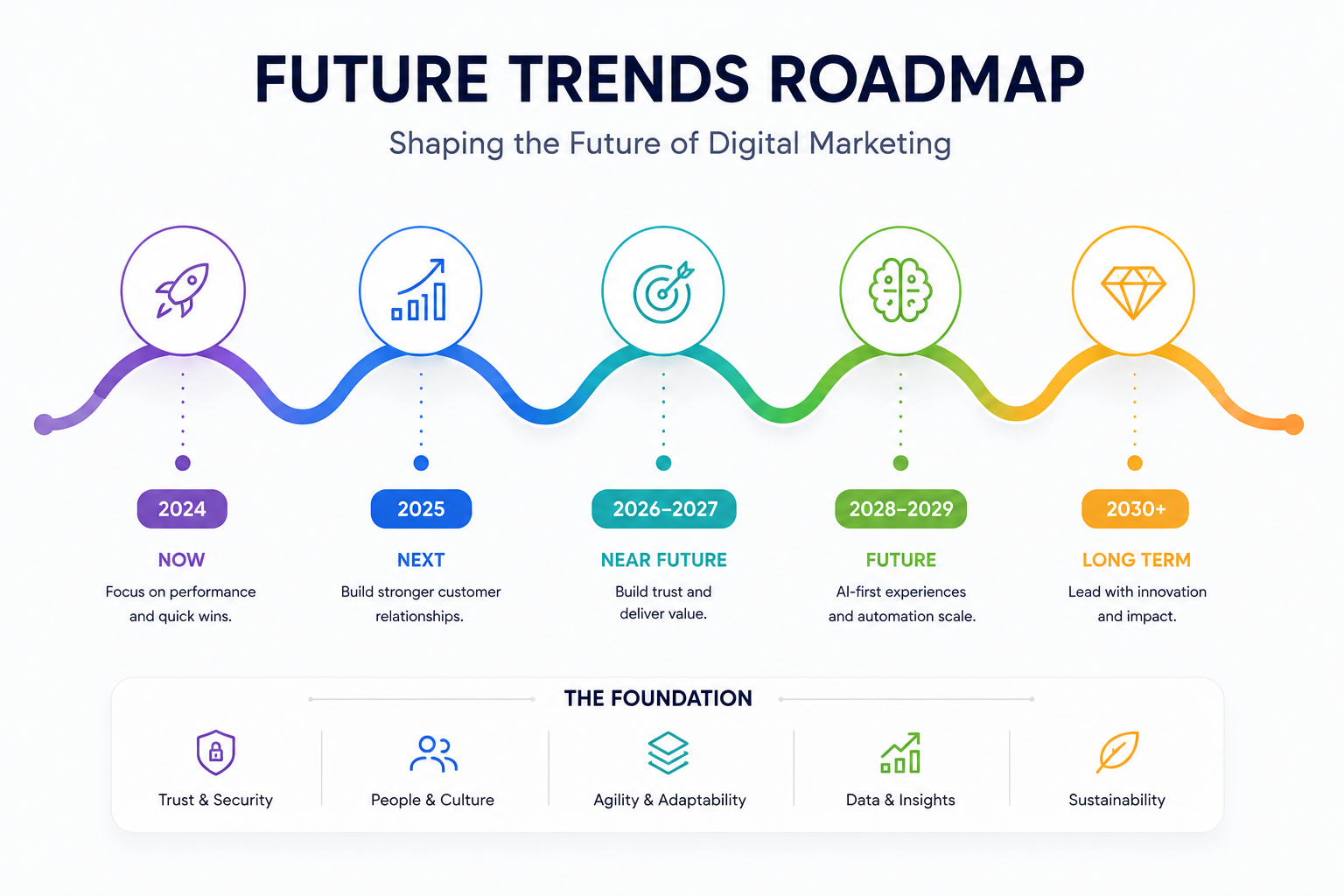
Organizations that adapt to these trends while maintaining strong organic and paid strategies will be better positioned to compete in an increasingly digital marketplace.
As platforms continue to change, businesses that balance authentic engagement with targeted advertising will have the greatest opportunity to achieve sustainable growth and long-term success.