In today's digital-first world, simply creating advertisements is no longer enough. Businesses need their ads to appear before the right audience, at the right time, on the right platform, and within the right budget. This is where digital media buying becomes one of the most valuable marketing strategies.
Whether you're launching a new product, generating leads, increasing online sales, or building brand awareness, digital media buying helps maximize every advertising dollar you spend. Instead of relying on guesswork, businesses can use data, audience insights, and real-time optimization to ensure their campaigns reach people who are most likely to convert.
As competition continues to grow across Google, social media, websites, streaming platforms, and mobile apps, businesses need a structured approach to buying digital advertising space. A professional media buying strategy not only improves visibility but also delivers measurable business results.
In this guide, we'll explain what digital media buying is, how it works, its benefits, and why partnering with Nova Vision can help your business achieve higher returns on advertising investment.
What Is Digital Media Buying?
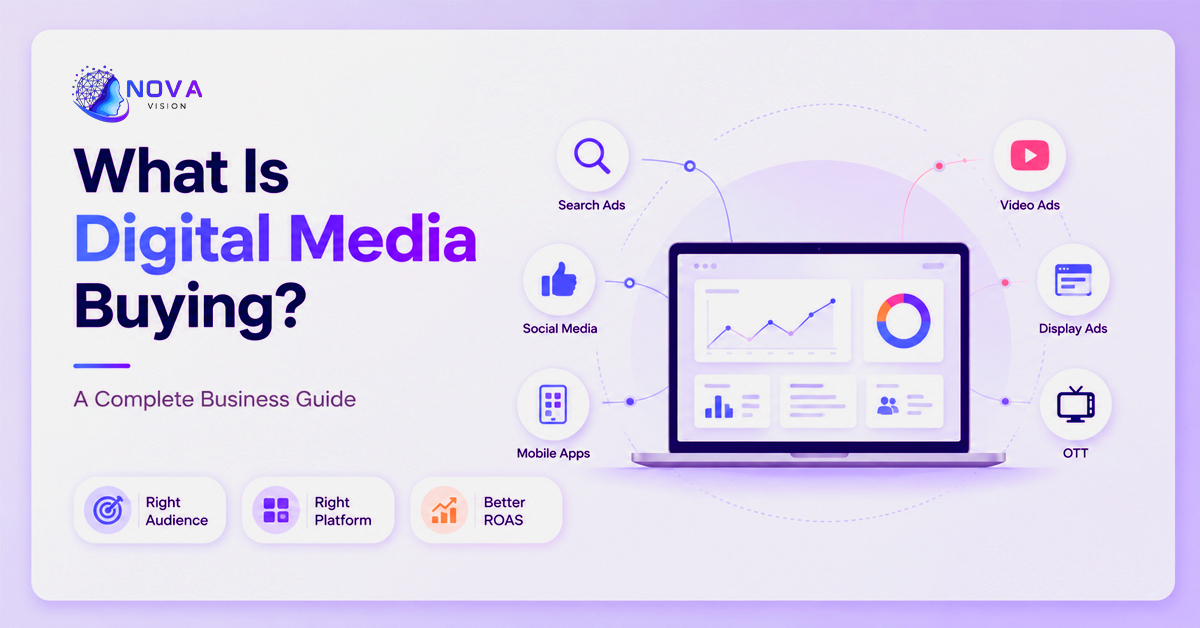
Digital media buying is the process of purchasing advertising space across digital channels to promote a business, product, or service. Instead of buying newspaper pages or television commercials, businesses purchase ad placements on online platforms such as:
-
Google Search
-
YouTube
-
Facebook
-
Instagram
-
LinkedIn
-
X (Twitter)
-
Display advertising networks
-
Mobile applications
-
News websites
-
Blogs
-
OTT platforms
-
Programmatic advertising platforms
The goal is simple:
Reach the right audience with the right message while achieving the highest possible return on advertising spend (ROAS).
Unlike traditional advertising, digital media buying uses audience data, demographics, interests, browsing behavior, keywords, devices, and locations to display highly targeted advertisements.
How Does Digital Media Buying Work?
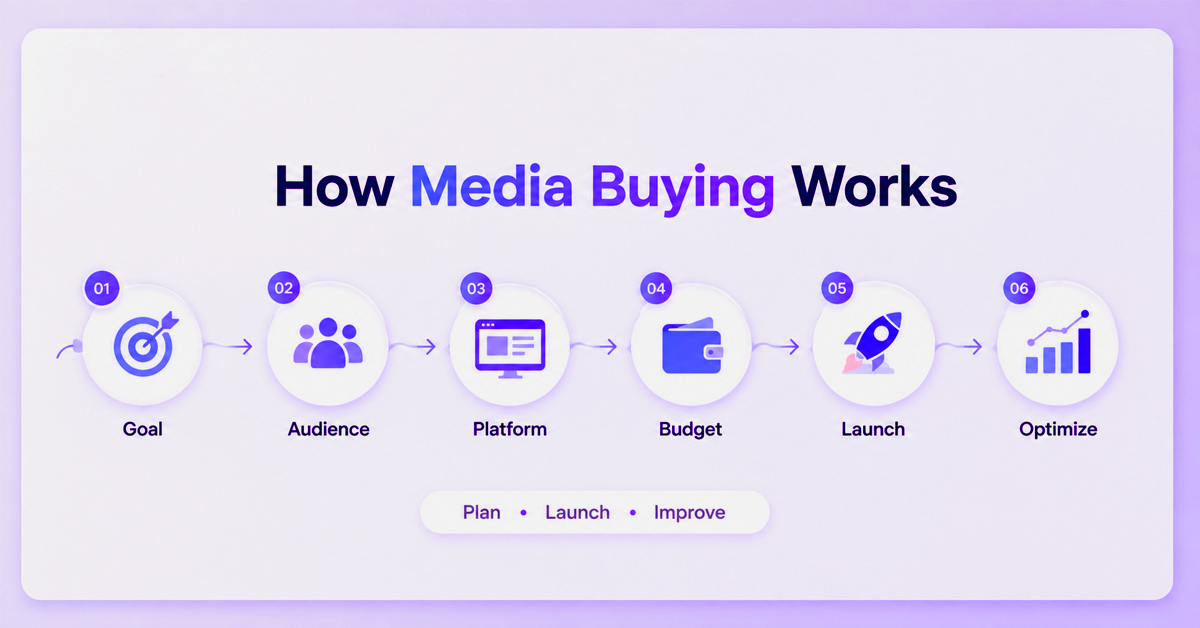
A successful media buying campaign follows several important stages.
1. Defining Campaign Objectives
Every campaign starts with a business goal.
Examples include:
-
Generate leads
-
Increase website traffic
-
Improve brand awareness
-
Drive online sales
-
Boost app downloads
-
Increase store visits
-
Promote an event
Clear objectives help determine the best platforms and advertising formats.
2. Understanding the Target Audience
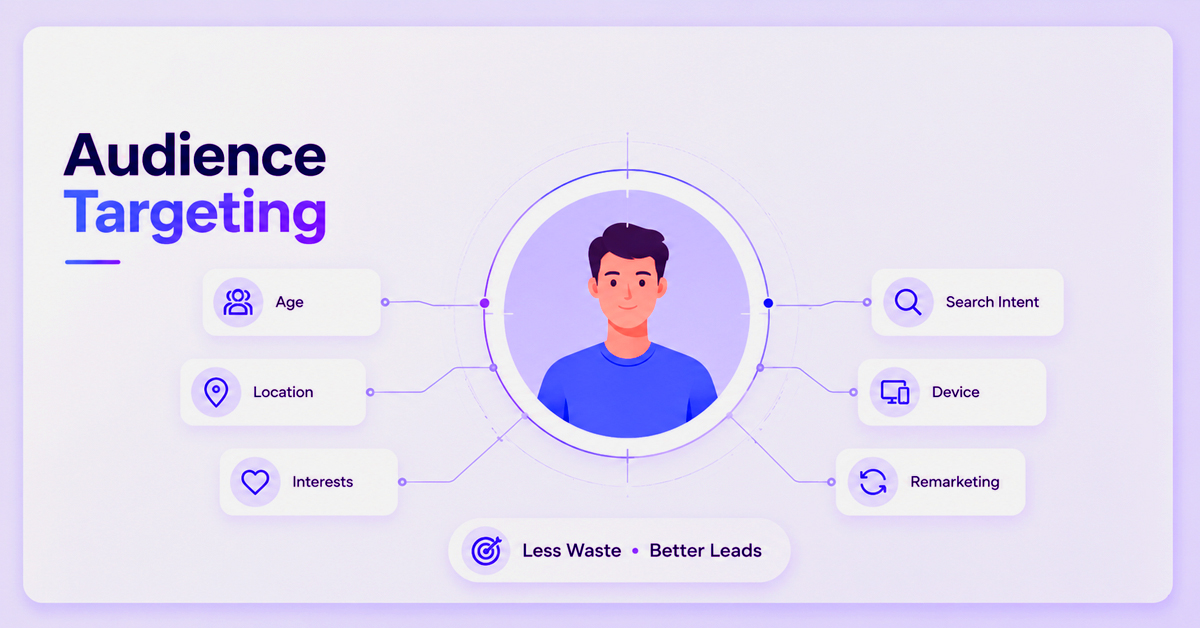
One of the biggest strengths of digital media buying is audience targeting.
Businesses can target users based on:
-
Age
-
Gender
-
Location
-
Language
-
Interests
-
Occupation
-
Purchasing behavior
-
Device usage
-
Previous website visitors
-
Customer lists
-
Search intent
This precision ensures advertising budgets are spent on users who are more likely to become customers.
3. Selecting the Right Advertising Platforms
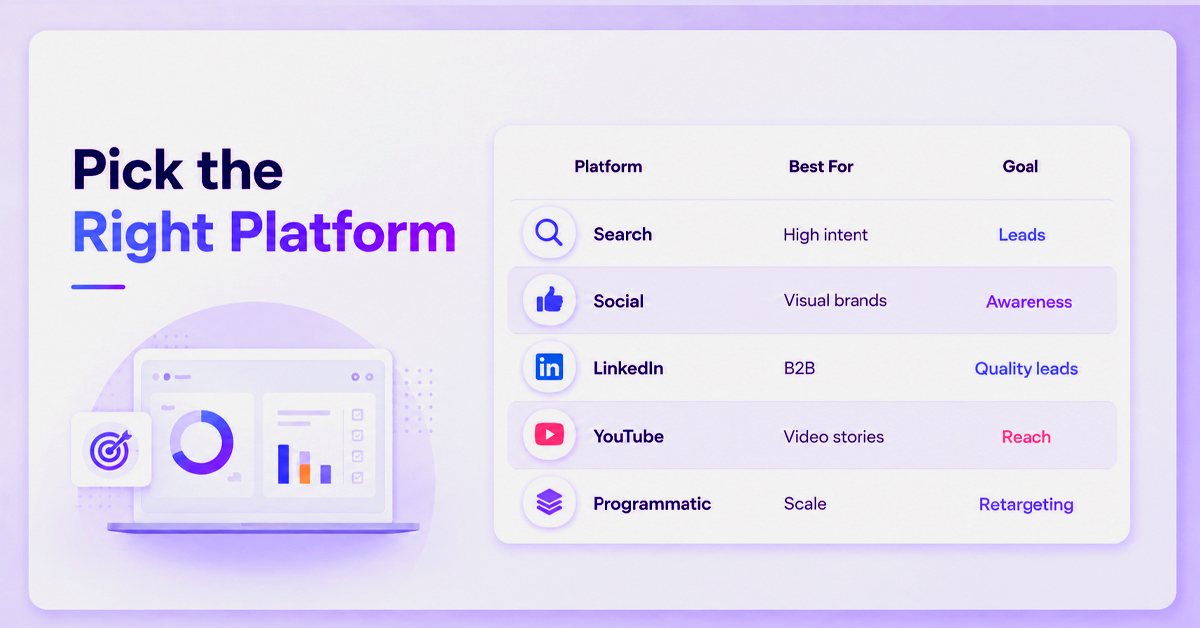
Every business serves different customers.
A B2B software company may perform better on LinkedIn and Google Search.
A fashion brand may generate better results through Instagram and Meta Ads.
An eCommerce store may benefit from Google Shopping campaigns and remarketing ads.
Digital media buying identifies where your audience spends time before investing your advertising budget.
4. Budget Planning
Effective media buying isn't about spending more.
It's about spending smarter.
Media buyers decide:
-
Daily budget
-
Monthly budget
-
Cost-per-click targets
-
Cost-per-acquisition goals
-
Bid strategies
-
Campaign priorities
The objective is to maximize conversions while minimizing advertising waste.
5. Campaign Launch
Once creatives, targeting, and budgets are finalized, advertisements go live across selected platforms.
Campaigns may include:
-
Search Ads
-
Display Ads
-
Video Ads
-
Shopping Ads
-
Social Media Ads
-
Native Ads
-
Banner Ads
-
OTT Advertising
6. Continuous Optimization
Digital media buying doesn't end after launching ads.
Professional agencies continuously monitor:
-
Click-through rate (CTR)
-
Cost per click (CPC)
-
Cost per acquisition (CPA)
-
Conversion rate
-
Return on ad spend (ROAS)
-
Impressions
-
Reach
-
Engagement
-
Quality Score
-
Landing page performance
Based on performance, campaigns are optimized to improve results over time.
Why Is Digital Media Buying Important?
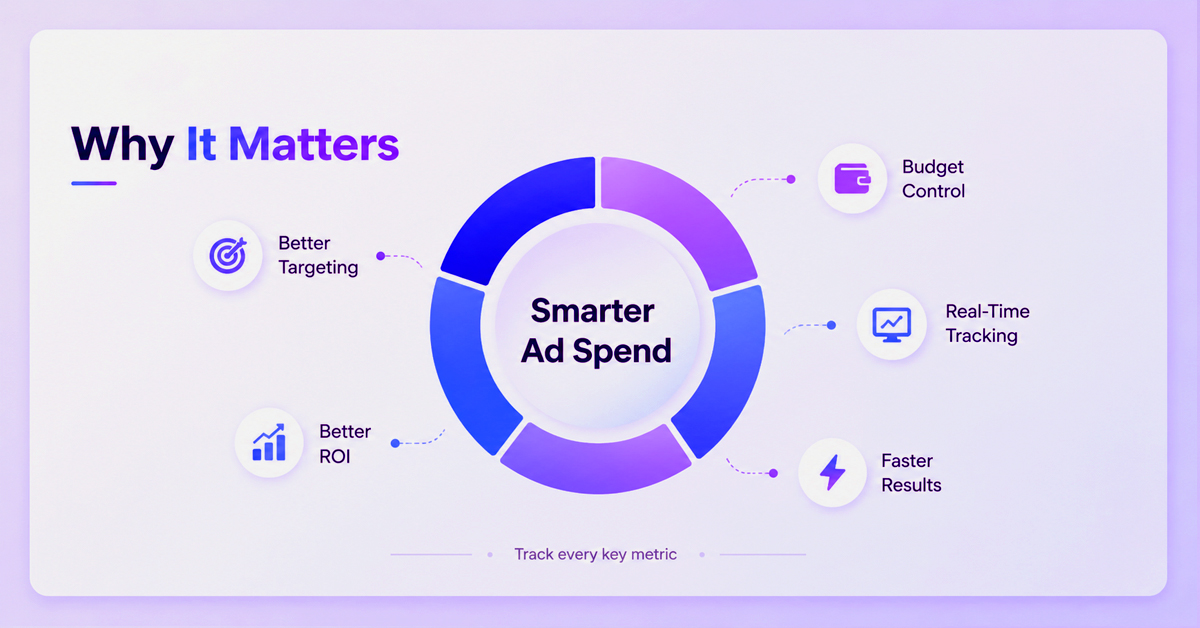
Many businesses waste advertising budgets because they rely on assumptions rather than data.
Digital media buying helps businesses:
-
Reach qualified audiences
-
Improve lead quality
-
Increase conversions
-
Reduce advertising waste
-
Improve return on investment
-
Scale successful campaigns
-
Measure every advertising dollar
Instead of hoping advertisements perform well, businesses can make informed decisions using real-time analytics.
Benefits of Digital Media Buying
Highly Targeted Advertising
Unlike traditional advertising, businesses can target very specific customer segments.
For example:
-
Women aged 25–40
-
Business owners in Delhi NCR
-
People searching for "digital marketing agency"
-
Users interested in fitness
-
Customers who abandoned their shopping cart
This improves campaign efficiency significantly.
Better Budget Control
Businesses have complete control over advertising spend.
Campaigns can be:
-
Increased
-
Reduced
-
Paused
-
Optimized
at any time.
There are no long-term advertising commitments.
Real-Time Performance Tracking
One of the biggest advantages is transparency.
Businesses can monitor:
-
Website visits
-
Leads generated
-
Sales
-
Phone calls
-
Revenue
-
Ad engagement
This helps identify which campaigns are delivering results.
Faster Results
Unlike SEO, which often takes months to build momentum, paid media campaigns can begin generating traffic and leads almost immediately after launch, making them ideal for product launches, seasonal promotions, and time-sensitive offers.
Improved Brand Visibility
Even when users don't click an ad immediately, repeated exposure across multiple platforms helps strengthen brand recognition and trust.
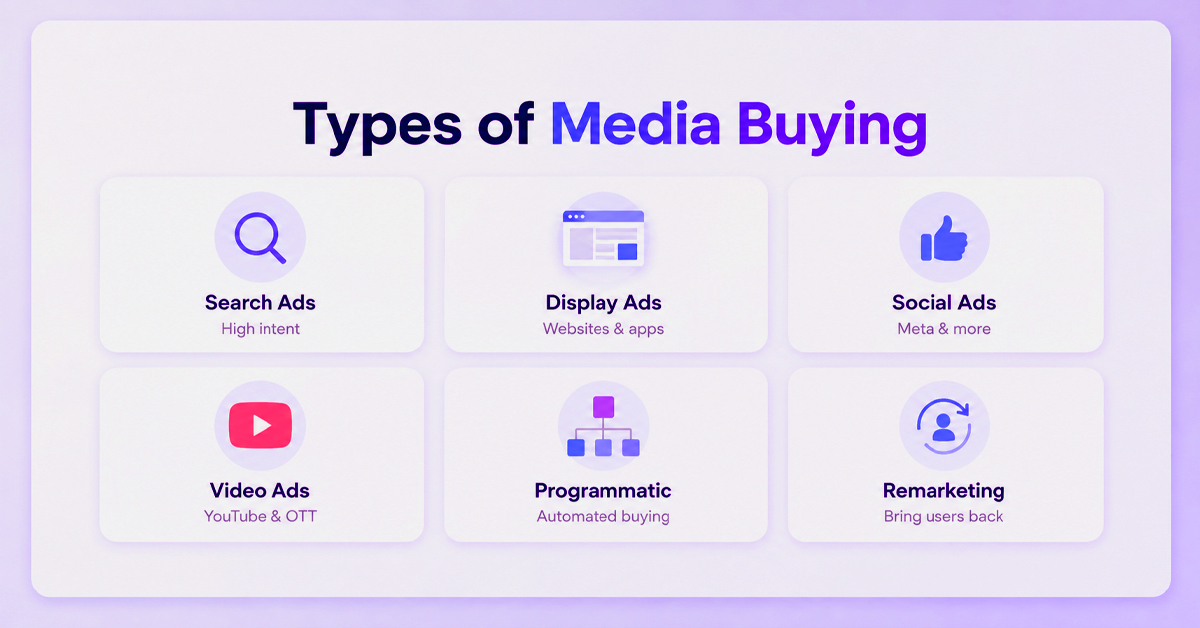
Types of Digital Media Buying
Businesses today have access to a wide range of digital advertising options:
Google Search Ads
Appear when users actively search for products or services.
Display Advertising
Visual banner ads shown across websites and apps.
Social Media Advertising
Ads on Facebook, Instagram, LinkedIn, Pinterest, X, and other platforms.
Video Advertising
Promotional videos displayed on YouTube and OTT platforms.
Programmatic Advertising
AI-powered systems that automatically purchase ad inventory in real time to reach targeted audiences efficiently.
Remarketing Campaigns
Reconnect with users who previously visited your website but didn't convert.
Native Advertising
Ads designed to match the look and feel of the content on the publisher's website, providing a less intrusive user experience.
Common Media Buying Mistakes Businesses Make
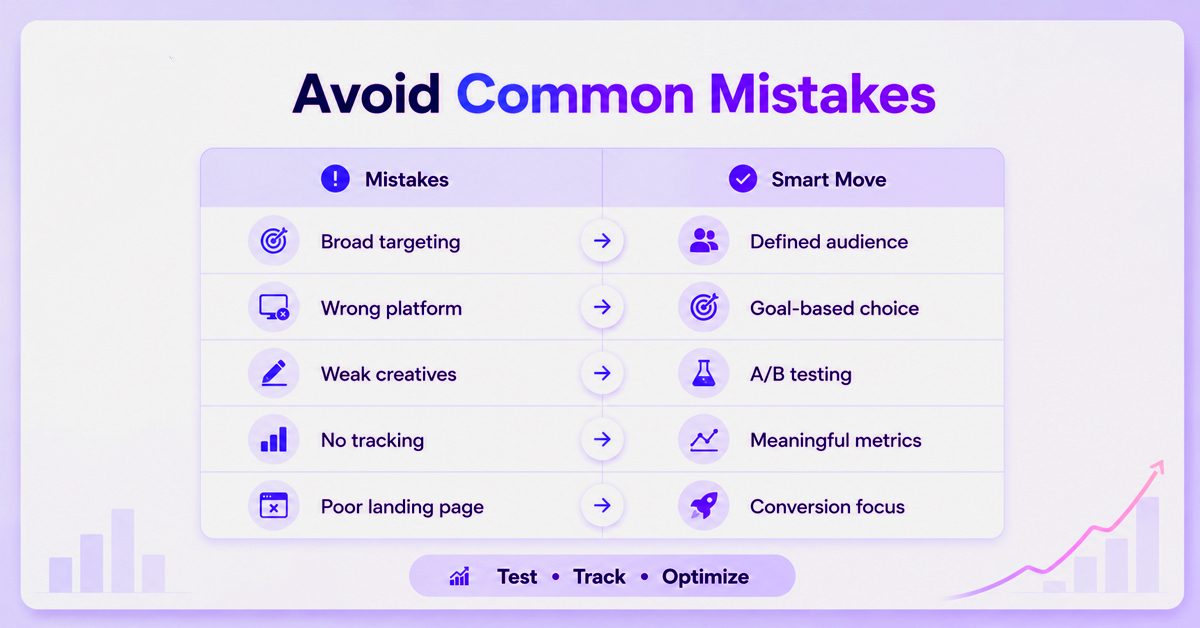
Without a clear strategy, businesses often encounter challenges such as:
-
Targeting overly broad audiences
-
Ignoring campaign performance data
-
Choosing the wrong advertising platforms
-
Using weak ad creatives
-
Sending traffic to poorly optimized landing pages
-
Failing to test different ad variations
-
Measuring vanity metrics instead of conversions
Avoiding these mistakes can significantly improve advertising outcomes.
Why Businesses Choose Nova Vision for Digital Media Buying
At Nova Vision, digital media buying is driven by data, strategy, and measurable performance—not guesswork.
Our team helps businesses:
-
Build customized media buying strategies
-
Select the most effective advertising platforms
-
Reach high-intent audiences
-
Optimize budgets for maximum ROI
-
Track meaningful business metrics
-
Continuously improve campaign performance
-
Scale campaigns based on real-time insights
Rather than focusing only on impressions or clicks, we prioritize qualified leads, sales, and sustainable business growth.
Whether you're a startup, local business, or established enterprise, our digital media buying services are designed to deliver measurable results.
Future Trends in Digital Media Buying
Digital advertising continues to evolve rapidly. Businesses should prepare for trends such as:
-
AI-powered campaign optimization
-
Increased use of first-party data
-
Cookieless advertising strategies
-
Omnichannel campaign management
-
Greater emphasis on video and connected TV (CTV)
-
Privacy-focused targeting and measurement
-
Predictive analytics for audience insights
Staying ahead of these trends helps businesses maintain a competitive edge in an increasingly complex digital landscape.
Conclusion
Digital media buying has become an essential part of modern marketing. It enables businesses to connect with the right audience, make efficient use of advertising budgets, and measure performance with precision. By combining strategic planning, data-driven targeting, and continuous optimization, businesses can achieve stronger brand visibility, higher-quality leads, and better returns on investment.
If your goal is to grow through paid advertising, working with an experienced partner can make all the difference. Nova Vision helps businesses create and manage digital media buying campaigns that are tailored to their objectives, optimized for performance, and focused on delivering measurable results. Whether you're looking to increase traffic, generate leads, or boost sales, a well-executed media buying strategy can help turn your advertising spend into long-term business growth.